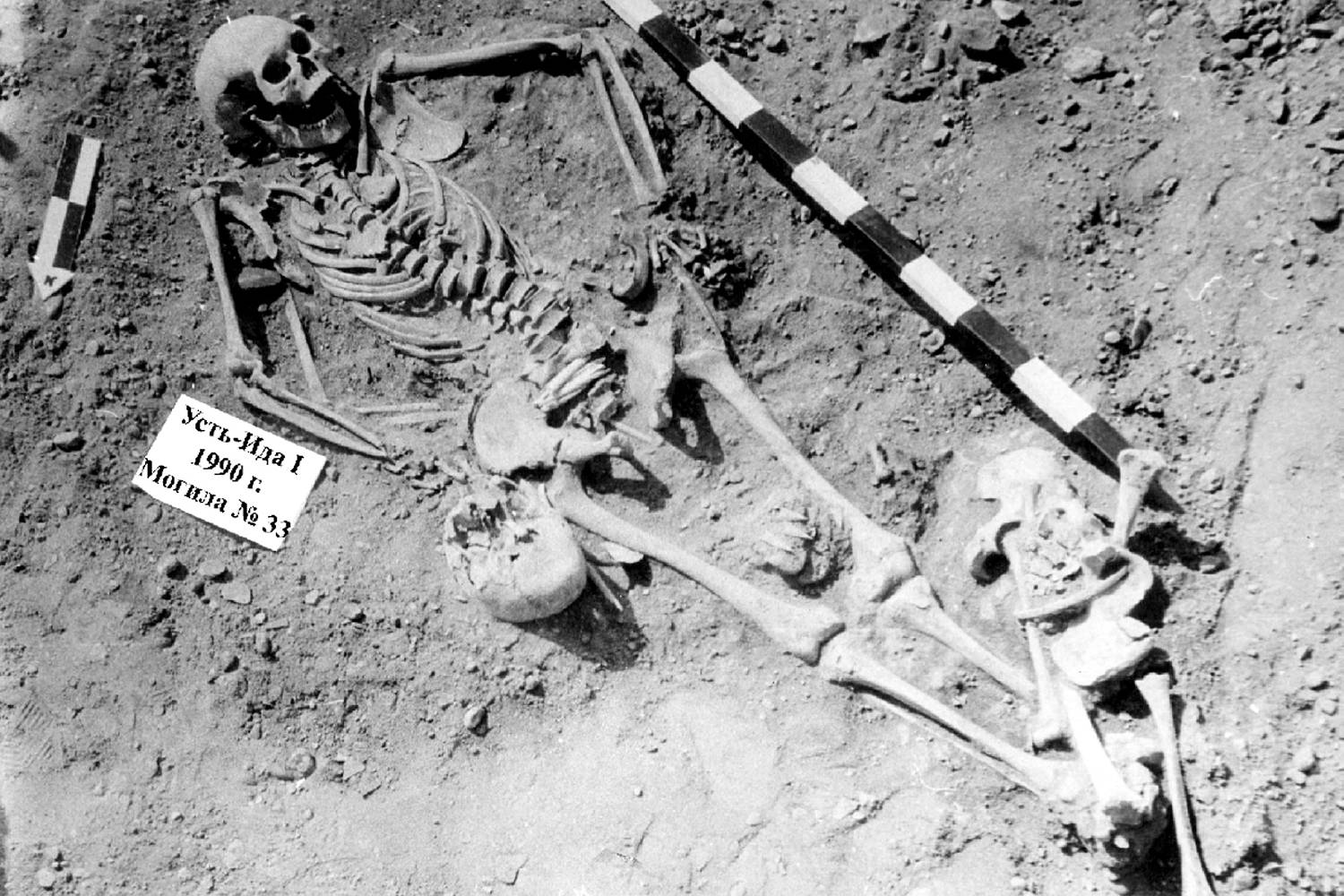
Five thousand years ago, a woman drew her last breath in a timber-framed house near the shifting banks of the Dniester River. We do not know her name, but we know the precise temperature of her final hours. Her blood burned. Her lymph nodes swelled into agonizing, dark plums. When she died, her community did not burn her possessions or flee the settlement. They laid her gently in the dirt, covered her with ochre, and placed a delicate ceramic vessel by her side.
For generations, historians assumed that the great shadow of human history—the plague—was a product of the crowded, filthy streets of medieval Europe. We blamed the rats of the 14th century. We blamed the trade ships sailing out of the Black Sea. We treated the Black Death as a penalty for urbanization, a modern horror born of density. Don't forget to check out our recent article on this related article.
We were entirely wrong.
Deep within the soil of modern-day Sweden, Germany, and Moldova, archeologists digging through Neolithic burial sites have found something that shatters our entire timeline of human suffering. They found the DNA of Yersinia pestis, the plague bacterium, locked inside the teeth of people who died millennia before the first stone of the pyramids was laid. To read more about the context here, CDC provides an in-depth summary.
The implications are staggering. This was not a disease of cities. It was a silent companion that stalked us through the wilderness, reshaping human migration long before we ever learned to build a wall.
The Secret in the Enamel
To understand how a microscopic killer can hide for fifty centuries, you have to look at
The Five Thousand Year Ghost in Our Blood
health, news
The dirt under our fingernails is full of secrets, but usually, it just tells us about life. It tells us what a person ate, the clay they shaped, the crops they tried to coax from a warming European continent at the end of the Stone Age. But sometimes, the dirt speaks of an ending so sudden that the breath practically leaps out of the soil.
Five thousand years ago, in a settlement tucked into what we now call Sweden, a twenty-year-old woman died. We do not know her name. We do not know if she loved the damp chill of the northern spring or if she feared the dark. What we do know is how she was buried. She was laid to rest in a passage tomb, surrounded by dozens of her people, all packed into a collective grave within a strangely short window of time.
For generations, archaeologists looked at these massive Neolithic burial sites—found scattered across Europe from Scandinavia to France—and saw a transition. They assumed these farmers were simply changing their spiritual habits, building grand stone monuments to honor their ancestors over centuries. It was a comfortable, clean theory.
It was also completely wrong.
When geneticists recently scraped the inner pulp from the teeth of that young Swedish woman, they did not just find her DNA. They found the signature of a killer. Lodged in her dental cavities was Yersinia pestis, the bacterium responsible for the bubonic plague. It is the oldest strain ever detected in human remains.
Suddenly, the cold rows of skeletons in the European earth stopped looking like an orderly cemetery. They started looking like a panic.
The Invisible Collapse
To understand the scale of what happened, we have to look at the world these people were building. This was the dawn of the "mega-settlement" era in Europe. In areas like modern-day Ukraine and Moldova, human beings were doing something entirely unprecedented: they were building cities for ten thousand, sometimes twenty thousand people.
They lived close together in timber houses. They kept livestock right next to their sleeping quarters. They traded along trade routes that stretched across thousands of miles. It was a triumph of human cooperation.
It was also the perfect incubator.
Consider a modern comparison: a crowded airport terminal during flu season. Now, strip away the running water, the hand sanitizer, the basic understanding of how germs spread, and replace the modern travelers with families living on dirt floors alongside their pigs and cattle. If a pathogen enters that environment, it does not just spread; it explodes.
Archaeologists have long been plagued by a mystery called the Neolithic Decline. Right around five thousand years ago, these massive, thriving European settlements just disappeared. The populations cratered. The cities burned down, often abandoned entirely. For decades, historians argued about why. Was it climate change? Did they over-farm the land? Did warfare wipe them out?
The teeth of the young woman in Sweden suggest a far more terrifying answer. The rise of human civilization did not just give us art, agriculture, and community. It gave the plague its first major highway.
Rewriting the Lineage of Terror
For a long time, we comforted ourselves with the timeline we had constructed. We believed the plague was a relatively modern nightmare. We associated it with Justinian’s Rome in the sixth century, or the Black Death that wiped out half of Europe in the fourteenth century, leaving bodies piled in the streets of Florence and London. We treated those tragedies as isolated, historical lightning strikes—terrible, but bound to a specific era of poor medieval hygiene.
The genetic data collected from these prehistoric graves shatters that narrative.
When scientists mapped the genome of the bacterium found in the Swedish tomb, they discovered it was the ancestral root of the entire plague family tree. It split off from its closest relatives right around the time the European mega-settlements began to decay. This means the plague was not a latecomer to the human story. It was an active participant from the very beginning of our urban experiments.
The implication is unsettling. The Black Death was not a freak occurrence. It was a recurring chapter in a book we have been co-authoring with microbes for millennia.
The Story in the Soil
Imagine the confusion of those early farmers. You have given up the nomadic life of your ancestors. You have cleared the forest, built a home, and planted barley. You believe you have mastered the world. Then, a fever strikes.
First, the groin and armpits swell with painful, dark lumps. The skin begins to blacken. Within days, a healthy adult is coughing up blood. Then, the person next to them falls. Then the children. Because they had no concept of microscopic organisms, they likely blamed the gods, or the stars, or the water.
The physical evidence left behind in these passage tombs is heavy with this unspoken dread. In the Swedish grave, the bodies were not laid out with individual care over decades. They were layered, one on top of the other, an assembly line of grief. When a community is dying faster than the living can dig graves, ritual falls away. Survival becomes the only objective, and eventually, even that fails.
The plague strain found in that twenty-year-old woman was likely an early, pneumonic version—meaning it spread directly through the air from person to person, rather than relying on fleas. It was a swift, airborne executioner operating in a world that had never seen a pandemic.
The Long Shadow
There is a profound vulnerability in looking at this data. It forces us to confront the fact that our progress has always carried a hidden tax. The moment we decided to stop moving, to cluster together, to trade across borders, and to live alongside animals, we inadvertently signed a contract with the microbial world.
We like to think of human history as a straight line of triumphs, where we constantly outsmart nature. But the dirt keeps reminding us of our fragility. The collapse of the Neolithic societies was so total that Europe’s population did not recover for generations. When the land finally re-populated, it was largely taken over by migrations of pastoralists from the Eurasian steppe—people who brought a different culture, a different lifestyle, and a different genetic makeup. The original builders of Europe's first cities were effectively erased.
The young woman in the Swedish tomb didn't just die of a disease. She died at the intersection of human ambition and biological reality. Her teeth held that secret for fifty centuries, waiting for a generation that could finally read the code she left behind.
We walk over these graves every day, entirely unaware of the ancient wars fought beneath our shoes, or how closely our own survival is tied to the ghosts still lingering in the soil.