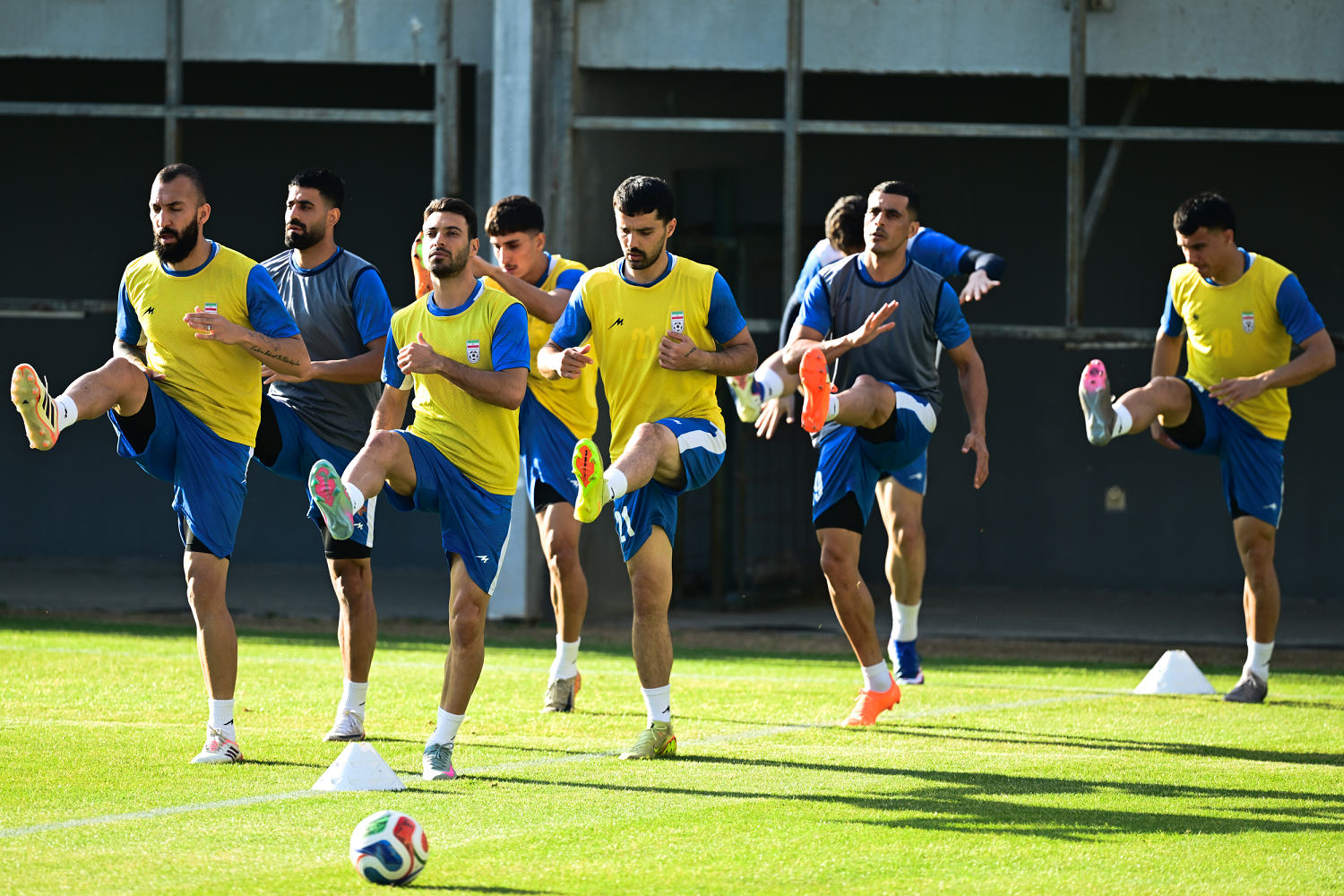
The Iranian national football team is currently preparing for its opening World Cup match against New Zealand in Los Angeles, but the squad is not staying anywhere near Southern California. Instead, the players are based across the southern border in Tijuana, Mexico. Under a strict protocol enforced by the United States government, Team Melli is prohibited from maintaining a training base on American soil, restricted to entering the country precisely one day before each scheduled match, and required to exit immediately after the final whistle. This unprecedented logistical hurdle is the direct consequence of an active, escalating military conflict between the United States and Iran that threatens to fundamentally disrupt the largest sporting event in human history.
For decades, the Federation Internationale de Football Association (FIFA) has aggressively peddled the corporate myth that international sport exists in a vacuum, entirely divorced from global conflict. The 2026 World Cup has permanently shattered that illusion. As American forces conduct retaliatory airstrikes against targets in Iran and Tehran maintains its blockade on the critical shipping lanes of the Strait of Hormuz, the tournament finds itself transformed from a global celebration into an volatile geopolitical theater. The restriction of the Iranian delegation is merely the opening salvo in a crisis where stadium security, diplomatic warfare, and the realities of modern state combat are colliding on the pitch. If you liked this post, you should check out: this related article.
The Logistical Warfare of Visas and Borders
The decision to bar the Iranian team from establishing a training camp in Tucson, Arizona—their original choice—was not made by sports administrators. It was dictated by the White House and the Department of State. While FIFA regulations typically guarantee equal treatment and unrestricted access for all qualified member associations, domestic sovereign law invariably supersedes sports federation bylaws during an active war.
The mechanism used to isolate the Iranian team is the selective denial and restriction of entry visas. Members of the administrative staff, training personnel, and technical delegation have faced outright visa rejections. For the players who did receive visas, the terms are deliberately punitive. The U.S. government has justified these measures under rigid national security exemptions, citing the statutory exclusion of individuals associated with state-sponsored entities. For another perspective on this development, see the latest update from Bleacher Report.
The practical impact on athletic performance is severe. High-performance athletes rely on meticulous environmental acclimatization, consistent training environments, and minimal travel fatigue. Forcing a squad to commute internationally via a heavily secured border checkpoint on the eve of a World Cup match is a deliberate calculated friction. Iranian sports officials have vocally condemned the policy as a malicious attempt to sabotage their competitive chances, while American officials maintain that the system will not be compromised to allow foreign actors to exploit sports credentials for espionage or political grandstanding.
Sportswashing Under Fire
The concept of leveraging major sporting events to project soft power, secure international legitimacy, or sanitize a domestic human rights record is deeply embedded in modern sports history. However, the current conflict introduces a far more dangerous dynamic. The tournament is no longer being used to quietly shift a public relations narrative. It is being actively weaponized as a tool of psychological and physical leverage while active military engagements are underway.
The United States, as a primary host country, is utilizing the opening ceremonies and high-profile matches to project domestic strength and reinforce international alliances. High-ranking government delegations, including the Secretary of State and leadership from Homeland Security, are prominently anchoring the opening events in Los Angeles. This deployment of political figures turns VIP boxes into wartime diplomatic suites. The objective is clear: to demonstrate that despite being engaged in a costly, unpredictable military theater in the Middle East, the American state retains the domestic stability, wealth, and operational capability to host the world.
Conversely, Iran views its mere presence on the pitch as an act of defiance. For a nation under an economic blockade and enduring heavy aerial bombardment, the national football team serves as a highly visible proof of life to the global community. Every minute of broadcast time captured by Iranian players represents an un-censorable platform. The pitch becomes one of the few places where a state under siege can face its adversary on formally equal terms, governed by neutral rules, in front of an audience of hundreds of millions.
The Stadium as a Battleground
The immediate challenge for local organizing committees across the host cities is the transformation of stadium bowls from fan zones into high-risk security sectors. The geopolitical tensions are not confined to government offices and military headquarters; they are highly concentrated within the stands.
Radicalized Fan bases and Political Espionage
World Cup matches involving politically sensitive nations have historically attracted intense activism. The current environment is significantly more volatile. Intelligence agencies and corporate security firms have identified multiple distinct threats that standard stadium security protocols are ill-equipped to handle:
- Targeted Stadium Disruptions: Activists and dissident groups are planning highly coordinated, visually disruptive protests designed specifically to hijack the global broadcast feed.
- Counter-Intelligence Demands: Stadium security architectures must monitor not just for flares or physical altercations, but for state-sponsored surveillance and electronic disruption targeting communication networks within the venues.
- Physical Confrontations: The risk of flashpoint violence between ultra-nationalist fan factions and anti-regime demonstrators inside the concourses is at an all-time high.
The task of managing these threats is further complicated by ticket management disputes. The Iranian football federation has already leveled allegations that verified tickets purchased by Iranian citizens and diaspora members for matches on American soil have been systematically canceled or revoked under the guise of security sweeps. This weaponization of access ensures that the stands themselves are subject to the same vetting processes as military checkpoints.
The Ultimate Nightmare Scenario on July Third
The structural design of the tournament group stages has created a scenario that tournament organizers are privately viewing with deep concern. If the competitive mathematics of the opening rounds progress along entirely plausible lines, the United States and Iran are on a direct analytical collision course to meet in the first knockout round on July 3rd.
The timing of this potential match could not be more incendiary. It falls precisely on the eve of America’s Independence Day, during a period of peak domestic nationalism and heightened military readiness. The cultural and political resonance of an American national team playing a direct sporting match against a nation its military is actively bombing—less than twenty-four hours before the country’s primary national holiday—presents an unprecedented security and public relations challenge.
[Group Stage Outcomes]
       │
       ├─► USA finishes 2nd in Group
       └─► Iran finishes 2nd in Group
               │
               ▼
   [Knockout Round Matchup]
         July 3rd
Such a match would instantly transcend the parameters of sport. The intense scrutiny on every gesture, the national anthems, the conduct of the players, and the inevitable political expressions from the crowd would overwhelm the athletic narrative entirely. FIFA possesses no protocol for managing a match where the two participating nations are in an active state of war. There are no guidelines in the referee's handbook for de-escalating a fixture weighted with the reality of real-world casualties and ongoing missile strikes.
The fiction that sport can remain pure, neutral, and disconnected from the harsh realities of geopolitical violence has been thoroughly dismantled by the realities of the 2026 tournament. As the matches begin, the Iranian players will continue their exhausting, daily cross-border transit from Tijuana to the stadiums of California. They are athletes caught in the machinery of statecraft. The whistle will blow, the ball will move, but the shadow of the drones, the naval blockades, and the realities of modern warfare will be hovering directly over the stadium lights.