Blaming a single presidential administration for wrecking a 6,500-year-old Indigenous sacred site in Arizona is lazy journalism. Worse, it is strategic malpractice.
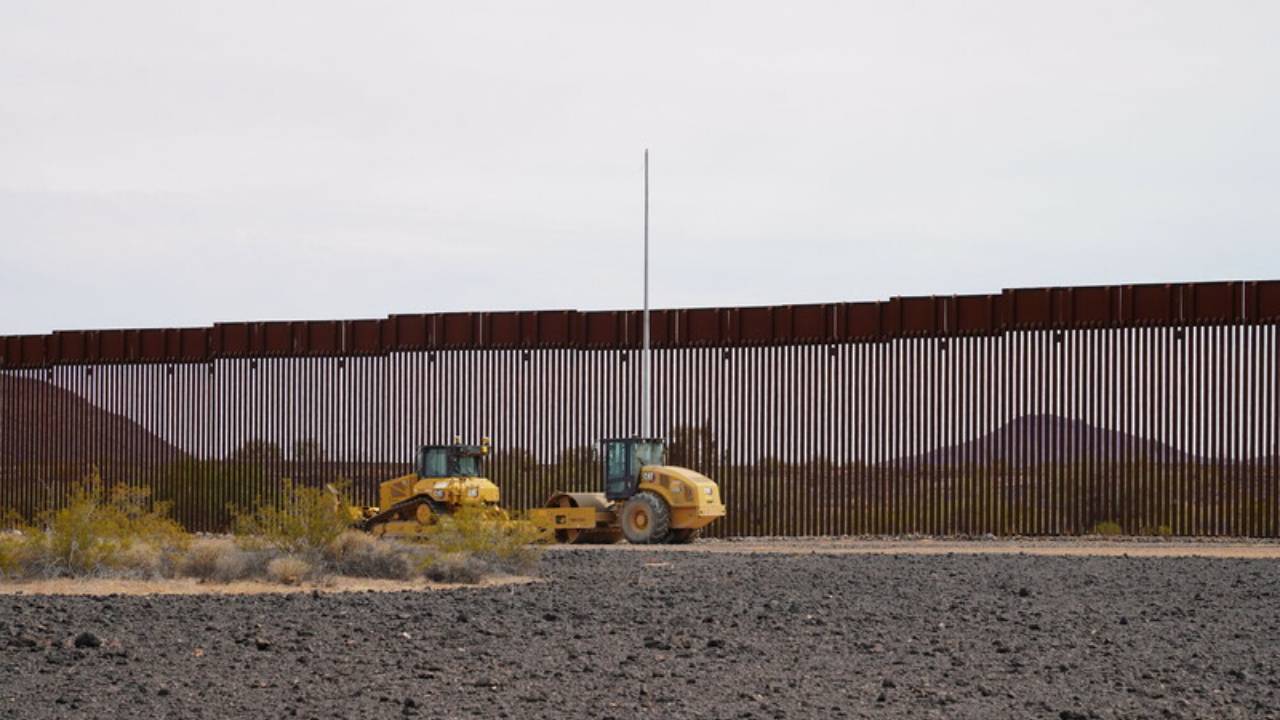
When headlines frame ancient desert destruction around the Trump administration’s border wall, they hand critics a neat villain and give everyone else a convenient exit ramp. Once the wall debate dominates the frame, the deeper structural failures that expose heritage sites to blasting, grading, and ecological shock fade into the background. A steel bollard or a concrete barrier is a visible target. Decades of statutory loopholes, fragmented land jurisdictions, and short-sighted infrastructure habits are much harder to photograph—and far more responsible for long-term damage.
Let’s be direct about what is happening on the ground in southern Arizona. The Sonoran Desert and adjacent borderlands hold some of North America’s oldest continuous human histories, including sites tied to ancestors of the Tohono O’odham Nation, such as Quitobaquito Springs near Organ Pipe Cactus National Monument, as well as ancient Archaic and Hohokam archaeological footprints across the region. When heavy construction hits fragile desert soils, ancient hearths, rock art, and water-fed cultural landscapes face real, irreversible harm.
Nobody serious denies that heavy machinery and explosives damage cultural resources. The lazy consensus lies in pretending that stopping one construction push—or pointing a finger at one White House—solves the underlying vulnerability.
The Lazy Consensus Around Border Wall Coverage
Standard coverage follows a predictable script. A sacred site is disturbed or blasted during border barrier work. Advocacy groups sound the alarm. Critics of the Trump administration condemn the construction as an assault on Indigenous sovereignty and ancient heritage. Supporters argue national security overrides preservation.
Both sides fight on familiar turf, and neither side addresses why the site was exposed in the first place.
If you treat border wall construction as an isolated aberration rather than the latest manifestation of long-standing federal power dynamics, you miss the mechanics of the failure. Border enforcement along the U.S.–Mexico line has expanded across multiple administrations, Republican and Democratic alike. Security infrastructure, vehicle barriers, lighting, surveillance towers, and access roads have reshaped desert corridors for decades.
Treating a 6,500-year-old sacred site as a partisan talking point distorts both history and law. Indigenous presence in these landscapes predates modern nation-states by millennia. The O’odham peoples lived across a territory that now straddles an international boundary drawn long after their trade routes, seasonal camps, and ceremonial places were established. When modern politics reduces six and a half millennia of human history to a single campaign-era wall project, it shrinks the story to fit a news cycle.
You Are Asking the Wrong Question
Most readers and searchers come to this topic asking a narrow question: Did the Trump administration’s border wall damage a 6,500-year-old Arizona sacred site, and how do we stop it?
That is the wrong question. It treats a symptom as the disease.
The better question is: Why can federal agencies override or fast-track environmental and cultural protections in sensitive desert corridors, and why do heritage rules remain reactive instead of protective?
To answer that, we need to look at how federal law actually operates along the border. Under the National Historic Preservation Act (NHPA)—specifically Section 106—federal agencies must consider the effects of their undertakings on historic properties and consult with Indian tribes that attach religious and cultural significance to them. Under the National Environmental Policy Act (NEPA), agencies typically evaluate environmental impacts before breaking ground.
Yet for border enforcement projects, Congress passed the REAL ID Act of 2005, granting the Secretary of Homeland Security sweeping authority to waive dozens of laws, including NEPA and NHPA provisions, to expedite barrier and road construction.
Think about what that statutory waiver means in practice. Consultation becomes optional or compressed. Mitigation plans get bypassed. Archaeological surveys that normally take years—especially in vast, arid expanses where surface artifacts tell only part of the story—can be truncated or set aside entirely under waiver authority.
Blaming one administration without reckoning with waiver statutes is like blaming a driver for speeding after disconnecting the brakes. The vehicle was built to move fast when statutory guardrails are turned off.
What People Also Ask—And Why the Premise Is Flawed
Did border wall construction destroy sacred Indigenous sites in Arizona?
Heavy construction, blasting, and grading along border corridors in Arizona have caused documented damage to archaeological deposits, natural springs, and culturally significant landscapes. Calling the issue settled or simple, however, misses how desert sites work. An ancient site isn't always a neat museum ruin sitting inside a rope line. It can be a sprawling cultural landscape—buried lithic scatters, grinding slicks, seasonal camps, and sacred water sources tied to oral tradition. Blasting rock or flattening caliche soil doesn't just move dirt; it erases context that archaeologists and tribal elders rely on to read the past.
Can tribes stop federal construction on ancestral lands?
Legally, consultation is not a veto. Even when Section 106 applies in full, federal agencies are required to seek ways to avoid, minimize, or mitigate adverse effects—not automatically halt a project simply because a tribe objects. When waiver authority is invoked, even standard consultation requirements can be set aside. That gap between being consulted and holding decision-making power is where Indigenous communities repeatedly lose ground.
Is national security automatically more important than historic preservation?
That framing sets up a false choice. National security is a legitimate government responsibility, and preserving irreplaceable heritage is a legal and moral obligation. Treating them as zero-sum forces policymakers into binary extremes—either build without constraint or leave borders unmonitored. Smart security planning and thorough cultural resource protection aren't opposites unless agencies design them to be.
Battle Scars From High-Stakes Land and Infrastructure Fights
I have spent years working around complex land-use conflicts, regulatory compliance, and infrastructure disputes where high-stakes deadlines collide with sensitive terrain. I have watched organizations blow millions of dollars on legal battles, emergency redesigns, and public relations triage because they treated cultural and environmental reviews as boxes to check at the eleventh hour.
When project leaders view heritage preservation as an obstacle rather than baseline risk intelligence, they pay for it later. Delays multiply. Courts get involved. Trust evaporates with local communities and tribal nations whose knowledge of the terrain is often deeper than any contractor’s map.
Even in non-border infrastructure—transmission lines, solar arrays, highways, and mining operations across the American Southwest—the same pattern repeats. Teams rush engineering plans before completing thorough ethnographic and archaeological work. Once heavy equipment rolls onto the site, the damage is permanent. You cannot glue a shattered petroglyph back together or restore a disrupted desert spring to its pre-industrial state with a press release.
Let’s define terms clearly so we don't confuse categories. Archaeological value refers to the physical material record—artifacts, features, stratigraphy, and spatial patterns—that researchers study to reconstruct past human lifeways. Sacred significance is broader and deeper; it reflects living spiritual, ancestral, and cultural meaning held by Indigenous peoples today. A site does not need monumental stone walls to be sacred, and a modern political boundary does not erase its importance.
The Mechanics of Desert Destruction
Why are 6,500-year-old desert sites uniquely vulnerable?
First, arid environments preserve fragile evidence at the surface. In wetter climates, dense vegetation and rapid soil buildup often cover or recycle material over time. In the Sonoran Desert, slow deposition and harsh sun mean ancient stone tools, hearth remnants, and camp surfaces can sit near or right on the ground for millennia. A single pass by a bulldozer or grader can churn through thousands of years of history in minutes.
Second, water and topography concentrate human history. Desert springs, washes, and mountain passes draw people across generations. In southern Arizona, places like Quitobaquito have sustained life in an extreme climate for thousands of years. Where water and travel routes converge, human activity layers over time. Modern infrastructure routes—roads, staging areas, and barriers—often follow those exact same natural corridors because flat ground or water access makes construction easier.
Third, subsurface and landscape scale evade quick surveys. Archaeologists and tribal monitors know that surface inspection alone cannot capture every buried feature or sacred connection across thousands of acres. Rushed timelines favor rapid clearance over deep investigation.
Thought Experiment: Imagine a scenario where a major infrastructure agency plans a highway or barrier across a desert basin containing ancient campsites and a sacred spring. Suppose the agency receives a statutory waiver letting it skip full cultural reviews to hit a construction deadline. Two years later, courts scrutinize the work, tribal leaders document lost heritage, and taxpayers face new remediation costs. Moving fast on paper often creates slow, expensive wreckage on the ground.
Heavy Hitters and Real Evidence
Serious scholars and preservationists have been warning about these dynamics for years. Archaeologists and historians who study the U.S.–Mexico borderlands—including researchers affiliated with institutions like the University of Arizona’s Arizona State Museum—have documented how border infrastructure, vehicle traffic, and land management policies affect fragile desert sites. Organizations such as the Advisory Council on Historic Preservation (ACHP) and the National Trust for Historic Preservation have repeatedly highlighted the tension between expedited border construction and Section 106 cultural review standards.
Tribal leaders from the Tohono O’odham Nation have likewise spoken consistently about protecting ancestral lands, sacred sites, and springs across their traditional homeland, pointing out that modern borders cut through communities and places of profound spiritual weight.
This is not a fringe debate among hobbyists. It sits at the intersection of federal administrative law, Indigenous rights, environmental science, and national policy.
The Downside of My Own Contrarian Take
Taking a contrarian stance that shifts focus away from partisan border-wall blame carries real risks, and I won't pretend otherwise.
First, it can sound like downplaying immediate harm. When people see sacred land damaged during a specific administration’s push to build a wall, telling them to zoom out to statutory waivers or multi-decade patterns can feel like deflection. If you sound detached while a site is being bulldozed, you lose moral credibility.
Second, systemic reform is slower and less dramatic than political outrage. Calling out a single politician or administration generates instant attention and clear lines of opposition. Explaining statutory waivers under the REAL ID Act or long-term land-management gaps requires patience that many readers—and campaigners—don't have.
Third, focusing too broadly on structural flaws can blur accountability. Laws don't enforce or waive themselves; leaders choose whether to push aggressive timelines, how to conduct outreach, and how to balance speed against preservation. Accountability still matters at every level.
Those trade-offs are real. Still, comfort shouldn't come at the expense of accuracy. If our goal is actually protecting 6,500-year-old sites rather than scoring political points, we have to look at the full machinery behind the damage.
Unconventional Moves That Actually Work
If you care about protecting ancient sacred sites in Arizona and across high-risk corridors, outrage alone is a weak tool. Here is what works better:
- Target the waiver statutes, not just the construction crews. Push lawmakers to narrow or repeal blanket statutory waivers that bypass cultural and environmental reviews, or require independent heritage oversight even when expedited authority is used.
- Fund tribally led mapping and cultural inventories before crises hit. Waiting until a project is announced puts preservationists on defense. Invest directly in Indigenous-led documentation of sacred landscapes, springs, and archaeological corridors in advance so their boundaries and significance are formally recorded before heavy equipment arrives.
- Require pre-construction micro-siting and geofencing. When infrastructure must be built in sensitive terrain, use high-resolution remote sensing, ground-penetrating radar where appropriate, and strict equipment geofencing with on-site tribal monitors—not token post-hoc paperwork.
- Separate security goals from destructive engineering. Insist on risk-based security designs—smart sensors, targeted enforcement, and careful route alignment—rather than default heavy grading across fragile ecosystems and ancient sites.
Stop letting partisan headlines flatten 6,500 years of history into a talking point—fix the legal loopholes and build protections that outlast every administration.