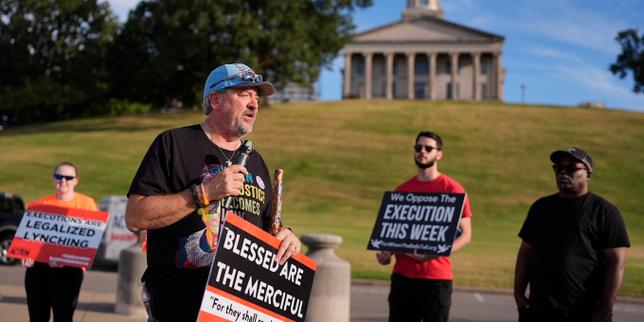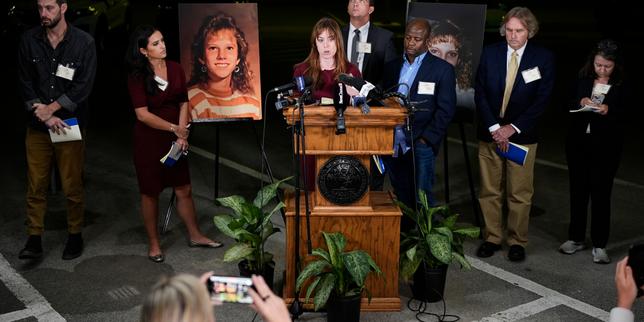
Capital punishment in America has always lived in the crosshairs of moral and logistical controversy. But every once in a while, a specific state-sponsored execution goes so horribly wrong that it forces even staunch supporters to look away. That is exactly what happened when Tennessee tried to execute Christa Pike.
When state executioners administer lethal drugs and the condemned inmate survives multiple doses while remaining conscious, gasping, and audibly snoring, the conversation shifts instantly. This isn't just about abstract legal theory anymore. It is about a mechanical failure of the state that exposes the raw, grim reality of modern execution protocols.
What Actually Happened on Death Row
To understand why this case reignited national fury, you have to look at the timeline. Christa Pike, incarcerated for a horrific 1995 murder she committed when she was just 18 years old, became the only woman on Tennessee's death row. Her execution date was set for September 30, 2026.
What followed inside the Riverbend Maximum Security Institution chamber was a procedural nightmare. Prison officials struggled for over an hour just to set an IV line, reportedly using at least seven needles across multiple sites. After officials administered the initial dose of pentobarbital, Pike remained responsive. She complained that her arm felt like it was about to burst, smiled, blinked, and kicked off her sheets.
Per state protocol, a second dose was administered. Yet, hours later, legal teams and media witnesses reported that she was still breathing and audibly snoring while emergency motions scrambled through the courts. Transported off-site to a hospital on a ventilator, Pike survived the state's attempt on her life.
The Legal and Political Fallout
The fallout was immediate. Tennessee Governor Bill Lee called for an independent, third-party review of the failed execution and halted the state's remaining lethal injections for the year. Meanwhile, the Department of Correction faced massive internal shakeups, including the resignation of its commissioner.
Public figures immediately seized on the failure to push opposing agendas. Some politicians argued that the state should abandon lethal injection entirely, floating alternatives like the electric chair. On the other side, Pike's defense attorneys filed emergency motions demanding commutation to life in prison, pointing out the psychological and physical cruelty of subjecting a human being to a botched execution.
The state, however, quickly moved to lock down information. Tennessee officials fought aggressively to block Pike's legal team from inspecting leftover vials of pentobarbital. The state argued that testing the drug residue could expose their confidential supplier, potentially cutting off their source entirely. Transparency collided head-on with the state's desperate need to protect its capital punishment supply chain.
Why This Case is Different
Opponents of capital punishment have long pointed to botched lethal injections as evidence of cruel and unusual punishment. But the Pike case carries distinct layers that ensure it won't fade quietly into the news cycle:
- Age and Background: Pike was a teenager when the crime occurred, and advocates have extensively documented her severe childhood trauma and abuse.
- The Rarity: She was the first woman facing execution in Tennessee in over two centuries, making the spectacle heavily scrutinized by international media and human rights groups.
- The Survival: Unlike past cases where executions were called off before drugs were given because teams couldn't find a vein, lethal chemicals were actively pushed into Pike's body twice without ending her life.
This isn't an isolated procedural hiccup. It represents the inherent tension of asking medical professionals to participate in a process that violates their oath to do no harm, forcing correctional staff to improvise complex medical procedures behind closed doors.
When the machinery of death breaks down so visibly, it forces a public reckoning. Whether you believe in the moral justification of the death penalty or view it as an outdated relic, the incompetence on display in Tennessee proves that clean, painless state executions are largely a myth. As legal battles continue over her medical isolation and remaining drug vials, the debate over capital punishment is hotter than it has been in decades. The state wanted to project finality, but managed only to highlight its own dysfunction.