The air in Canberra carries a different weight than the air in Beirut or the Galilee, yet the two are tethered by a thin, invisible wire of diplomacy that is currently vibrating at a frequency of pure panic.
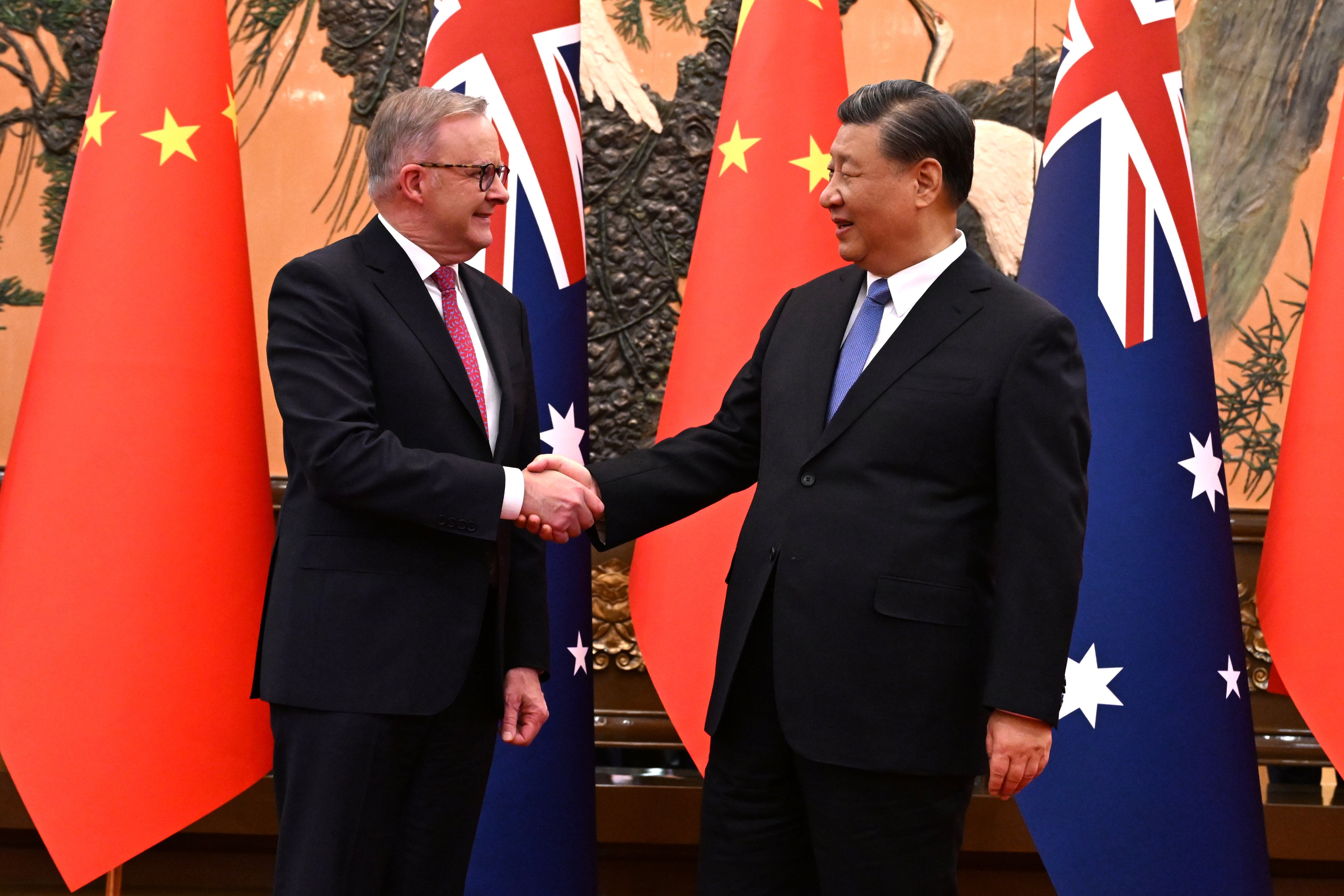
When Australian Prime Minister Anthony Albanese stepped toward the microphones this week, his voice wasn’t just carrying the dry directives of a head of state. It carried the frustration of a man watching a house of cards collapse while the world’s architects argue over the blueprint. He didn’t just ask for a pause. He pleaded for a stop.
The conflict between Israel and Hezbollah has shifted from a simmering tension into a fever dream of steel and fire. For a moment—just a heartbeat in geopolitical time—there was the hope of a ceasefire. It was supposed to be the oxygen the region needed to breathe. Instead, the strikes intensified. The smoke didn't clear; it thickened.
The Human Cost of a Missed Connection
To understand why Albanese is raising his voice now, you have to look past the maps and the missile trajectories. You have to look at the dinner tables.
Imagine a family in southern Lebanon. Let’s call them the Rahals. They aren't partisans. They don't have a seat at the negotiating table in New York or Tel Aviv. They spent their Tuesday afternoon packing a single suitcase with birth certificates, a handful of family photos, and enough bread to last three days. They heard the news of a potential ceasefire and, for three hours, they unpacked. They dared to think they might stay. Then the sky opened up again.
On the other side of the border, in a kibbutz in northern Israel, a woman named Sarah spends her nights in a reinforced room, listening to the thud of interceptions overhead. She wants the rockets to stop. She wants her government to ensure she never has to run for a shelter again.
When leaders talk about "military objectives" or "strategic depth," these are the lives they are bartering. Albanese’s intervention is a recognition that when a ceasefire is dangled and then withdrawn, the psychological toll is often heavier than the physical destruction. It breaks the one thing required for peace: the belief that peace is actually possible.
The Anatomy of an Escalation
The mechanics of this particular spiral are devastatingly simple and historically repetitive. Israel asserts that its intensified campaign is a necessary pressure tactic to force Hezbollah away from the border, ensuring that displaced Israeli citizens can return home. Hezbollah maintains that its actions are a direct response to the war in Gaza.
It is a closed loop. A circle of fire.
Albanese pointed out the obvious truth that many seem to be ignoring: you cannot bomb your way to a diplomatic solution when the very act of bombing destroys the diplomatic channel. Every strike that lands during a period of supposed negotiation acts as a brand-new grievance, a fresh reason for the other side to walk away.
The Australian government's stance isn't just about regional stability; it’s about the 15,000 to 30,000 Australian citizens currently in Lebanon. For the Prime Minister, this isn't a distant foreign policy puzzle. It is a domestic emergency. He is looking at a ledger of lives that includes his own constituents, people who are currently trapped between a closing border and an expanding war zone.
The Fallacy of the Final Blow
There is a dangerous seduction in the idea of the "decisive strike." Military history is littered with the ghosts of generals who thought one more week of heavy bombardment would break the enemy's will.
In reality, violence is rarely a sedative. It is a stimulant.
When the Middle East ceasefire was being discussed, it wasn't just a suggestion from a few concerned neighbors. It was a proposal backed by the United States, France, and a coalition of global powers. It was a bridge built over a chasm. By intensifying the attacks while that bridge was being walked upon, the message sent was clear: the bridge is irrelevant.
This is the core of the frustration radiating from Canberra. Australia, like many middle powers, relies on the "rules-based order." That’s a dry term for a simple concept: we all agree on a set of boundaries so we don't all go over the cliff. When those boundaries are ignored by allies and adversaries alike, the cliff starts to crumble for everyone.
The Weight of the Words
Albanese’s rhetoric has sharpened because the time for polite suggestion has evaporated. He isn't just "monitoring the situation." He is calling for an immediate cessation of the violence because he understands the math of the Middle East. For every day the ceasefire is delayed, the eventual terms of that peace become harder to reach.
Hate has a long memory. A child who spends their week hiding under a bed from the sound of drones does not grow up to be a moderate. A father who watches his livelihood burn in a "targeted strike" does not care about the strategic nuances of border security.
The Australian Prime Minister is essentially acting as the voice of the bystander. He represents the millions of people who are watching this unfold with a sense of helpless horror. He is stating, quite clearly, that the pursuit of a total military victory is a phantom that will only lead to a total human catastrophe.
The Invisible Stakes
What happens if the warning is ignored?
We see the beginning of a regional contagion. We see the displacement of hundreds of thousands of people, creating a humanitarian vacuum that will take decades to fill. We see the hardening of hearts across the globe, as communities in Sydney, London, and New York become proxies for the conflict, their social cohesion fraying under the strain of a war they cannot control.
The stakes aren't just about who controls a few kilometers of scrubland in the Middle East. The stakes are about whether or not the international community still has the capacity to stop a massacre before it reaches its peak.
Albanese is betting that there is still some value in the word of a friend. He is speaking to Israel as a partner, urging them to recognize that the security they crave cannot be built on the ruins of their neighbor. It is a plea for the long view in a moment defined by short-sighted survival.
The bombs are still falling. The suitcase in the Rahals' hallway is still packed. Sarah is still sleeping in her reinforced room. The wire is still vibrating.
The world is waiting to see if anyone has the courage to be the first to stop.