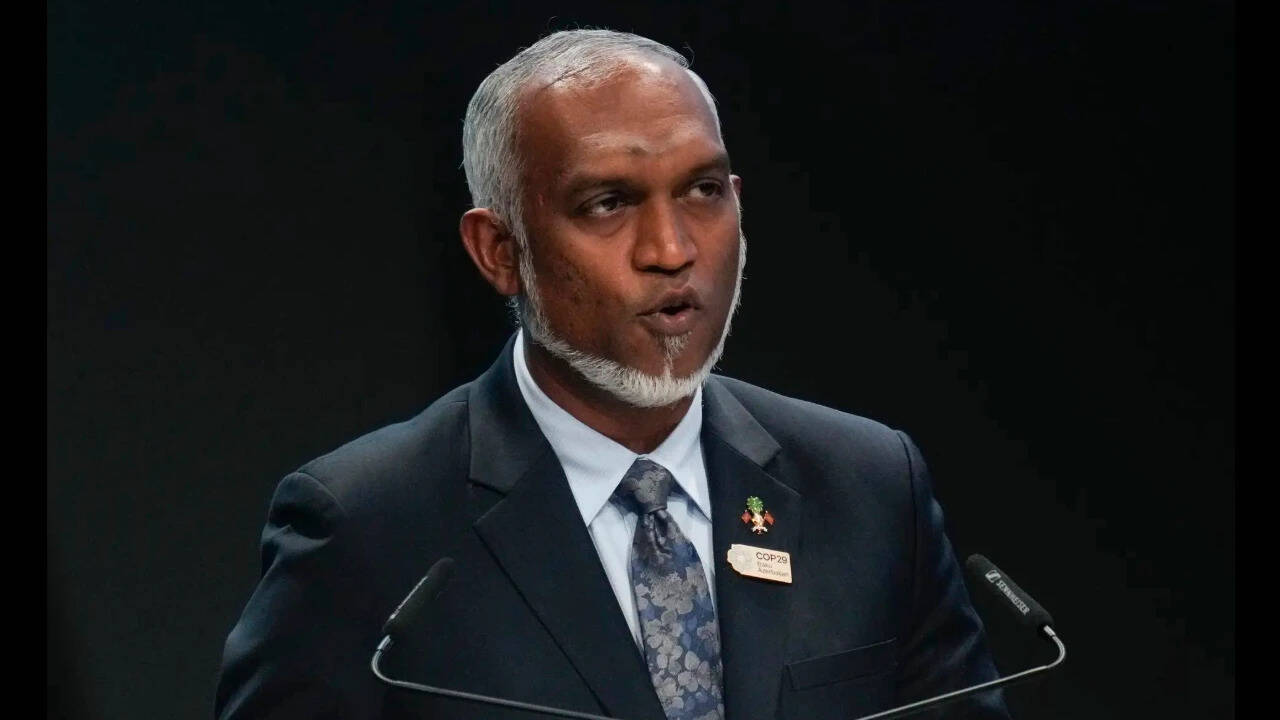
A decade-long diplomatic hiatus between a small Indian Ocean island nation and a South Asian nuclear-armed state rarely ends by accident; it ends when domestic constraints, external power shifts, and trade asymmetries force a recalibration of foreign policy. The core reality behind President Mohamed Muizzu's three-day visit to Pakistan—the first presidential trip from the Maldives to Pakistan in more than ten years—is that bilateral engagement between uneven states operates as a structural bargain rather than a ceremonial gesture. To understand what this visit actually accomplishes, analysts must strip away diplomatic formalities and examine the incentive structures driving both capitals: why a decade-long absence occurred, what strategic gaps each side seeks to close, and where structural limits cap the upside.
The Anatomy of a Decade-Long Diplomatic Freeze
A ten-year gap at the head-of-state level is not a single event; it is the cumulative outcome of shifting domestic coalitions, regional alignments, and opportunity costs. For a small island economy like the Maldives, foreign policy functions under tight resource constraints. High-level visits require preparation, ministerial bandwidth, and political capital. When domestic politics in Male or Islamabad turns inward—or when larger regional powers command immediate attention—bilateral channels with secondary or distant partners often atrophy without a formal rupture.
In small-state diplomacy, attention is a scarce input governed by an implicit return-on-effort calculation. A three-day presidential visit consumes diplomatic preparation across protocol, security, trade ministries, and bilateral agreements. Over the past decade, competing priorities in South Asia and the wider Indian Ocean—ranging from domestic political transitions and economic adjustments to broader strategic competition among major powers—crowded out routine high-level engagement between Male and Islamabad.
The first structural factor behind prolonged absence is opportunity cost in small-state foreign policy. Small states rarely maintain equal diplomatic momentum across every bilateral relationship simultaneously. Instead, they concentrate top-level bandwidth where immediate trade, security, tourism, or development financing intersect with domestic survival. When perceived short-term returns from a bilateral track appear modest relative to other diplomatic fronts, head-of-state visits default to postponement.
The second factor is domestic political realignment. In the Maldives, changes in government frequently bring recalibrations in external posture, rhetoric, and institutional priorities. A new administration often seeks to signal distinctiveness from predecessors, reallocate diplomatic missions, or pursue new strategic partnerships. Continuity across a decade is uncommon in competitive democracies, making multi-year bilateral momentum difficult to sustain unless anchored by durable economic or institutional incentives.
The third mechanism is asymmetric salience. For Islamabad, the Maldives is a maritime neighbor in the broader South Asian and Indian Ocean neighborhood, yet it does not sit at the center of Pakistan's core security or economic preoccupations. Conversely, for Male, engaging a major South Asian state carries distinct diplomatic signaling value, even when bilateral trade volumes remain modest. When salience is asymmetric, momentum depends heavily on deliberate political initiative rather than automatic institutional pull.
Asymmetric Incentives in Small-State Diplomacy
Any serious assessment of a presidential visit between the Maldives and Pakistan must account for structural asymmetry. The Maldives is a high-income-per-capita tourism and fisheries-driven economy characterized by small domestic market size, import dependence, and acute exposure to external shocks such as climate vulnerability, supply-chain disruptions, and debt dynamics. Pakistan possesses a large domestic market, an established industrial and agricultural base, significant diplomatic weight in multilateral forums, and deep institutional state capacity, while navigating macroeconomic stabilization and external financing pressures.
Asymmetric bilateralism creates a specific set of trade-offs. Large states often look for diplomatic alignment, regional support in multilateral institutions, niche export markets, or maritime goodwill. Smaller states look for diversification of external partners, technical cooperation, educational and professional exchanges, and hedging room in an environment crowded by larger regional actors.
What Male Seeks Through Recalibration
For a Maldivian presidency, breaking a decade-old precedent serves multiple strategic functions at once. First, it demonstrates diplomatic diversification. Diversifying high-level contacts signals that foreign policy is not locked into a single bilateral channel or hostage to past patterns. Even without immediate transformative contracts, broadening visible engagement expands a small state's diplomatic optionality.
Second, engagement with a major South Asian state reinforces regional visibility and autonomous agency. Small states face constant pressure to be viewed primarily through the lens of great-power or regional rivalry. Direct bilateral diplomacy on a state's own terms reinforces sovereign agency and underscores that Male sets its own calendar and priorities.
Third, high-level visits create institutional opening points across functional ministries. While heads of state do not negotiate technical details on the tarmac, their presence accelerates stalled memoranda of understanding, directs bureaucratic attention toward specific files, and establishes working-level contact points that civil servants can carry forward after the delegation departs.
What Islamabad Seeks From Renewed Engagement
From Pakistan's vantage point, hosting a Maldivian president after more than ten years offers low-cost diplomatic return with clear symbolic and practical dimensions. In South Asian diplomacy, consistent engagement across regional states—including Indian Ocean neighbors—supports broader regional outreach and multilateral positioning.
Economically and institutionally, Islamabad can explore targeted cooperation in areas where its capabilities align with Maldivian needs, such as specialized training, healthcare or technical services, trade facilitation, and cultural or educational ties. However, realistic strategists recognize that geographic distance, shipping logistics, and complementary rather than overlapping economic structures limit rapid surges in bilateral merchandise trade unless specific niches are deliberately engineered.
The key analytical point is that visibility is not volume. A three-day visit raises the diplomatic profile of the relationship immediately, yet trade flows, investment commitments, and institutional cooperation move on much slower timelines governed by commercial viability, regulatory alignment, and implementation capacity.
The Cost Function of Diplomatic Re-Engagement
Every diplomatic initiative carries a cost function—comprising political capital, administrative bandwidth, expectation management, and reputational exposure. Treating a high-level visit as cost-free is a common analytical error. When a leader travels abroad after a ten-year gap, expectations rise automatically among observers, domestic constituencies, and regional partners.
The primary risk in breaking a long silence is the expectation-delivery gap. If public messaging frames a three-day visit as a sweeping breakthrough while the concrete output consists of routine diplomatic pledges or exploratory discussions, domestic critics and external observers may view the trip as largely symbolic. Managing expectations requires matching rhetoric to realistic near-term deliverables.
A second cost element is signal interpretation in a crowded strategic environment. In South Asia and the Indian Ocean, external actors read bilateral moves for broader strategic implications—whether intended or not. A visit to Pakistan by a Maldivian president will inevitably be analyzed alongside Male's broader relationships with India, China, Gulf states, and Western partners. Calibration matters: a small state strengthens its position when its outreach reads as coherent diversification rather than reactive realignment.
The third bottleneck is post-visit execution capacity. Small administrations face real limits on how many bilateral tracks they can actively advance after a summit ends. Without clear ownership inside relevant ministries and measurable follow-up milestones, agreements signed during high-profile visits risk stalling in implementation.
Separating Known Facts From Educated Hypotheses
Rigorous analysis requires drawing a sharp line between verified facts and analytical inference. In evaluating a three-day presidential visit marking the first such trip in over a decade, several elements are clear structural facts, while others remain hypotheses to be tested against subsequent actions.
Known facts include the duration of the visit (three days), the core diplomatic milestone (the first presidential visit from the Maldives to Pakistan in more than ten years), and the basic structural asymmetry between a small island economy and a large South Asian state. These facts establish the baseline significance of the event: it ends a prolonged period without presidential-level contact and places the bilateral relationship back on the active diplomatic agenda.
Educated hypotheses concern why now and what comes next. One plausible hypothesis is that both sides see tactical value in refreshing regional diplomatic channels amid broader shifts in South Asian and Indian Ocean geopolitics. A second hypothesis is that functional cooperation—such as people-to-people links, institutional exchanges, or niche commercial contacts—offers the most realistic near-term avenue for tangible progress, whereas large-scale trade expansion faces structural friction.
A third hypothesis is that the visit's lasting value will be judged twelve to twenty-four months later by institutional follow-through rather than by arrival ceremonies or joint statements. Because diplomatic communiques routinely emphasize goodwill and shared interests, concrete follow-up—such as working-group meetings, regulatory steps, or specific bilateral initiatives—is the most reliable indicator of substance.
Operationalizing Bilateral Engagement After the Summit
For policymakers and strategists looking past the headline milestone, turning a one-off visit into a durable working relationship requires disciplined operational sequencing. Diplomatic momentum decays quickly without structured mechanisms that translate political intent into routine action.
- Define a narrow set of priority tracks. Attempting to advance ten bilateral themes at once dilutes focus in both capitals. Selecting two or three concrete areas with clear mutual interest—such as specific technical cooperation, institutional exchanges, or targeted trade and services facilitation—concentrates scarce administrative energy where results are feasible.
- Assign clear bureaucratic owners. Every stated objective needs named lead agencies and focal points on both sides with defined timelines. High-level visits lose traction when responsibility remains diffuse across foreign ministries and line agencies after delegations return home.
- Audit structural friction early. Before committing political capital to ambitious commercial targets, officials should map practical constraints such as shipping connectivity, payment and regulatory hurdles, and market size limits. Addressing bottlenecks upfront prevents frustration later.
- Calibrate external messaging consistently. Communications around the visit should emphasize constructive bilateral ties and regional engagement without overstating immediate economic transformation or inviting unnecessary geopolitical over-interpretation.
Boundary Conditions and Strategic Limits
No diplomatic framework eliminates structural constraints. Even well-executed engagement between Male and Islamabad faces clear boundary conditions. Geographic distance and small market scale in the Maldives place natural ceilings on certain types of bilateral commerce compared with much larger trading partners. Furthermore, economic pressures or shifting domestic priorities in either country can divert attention and resources away from secondary bilateral initiatives.
Diplomacy is an enabling instrument, not a substitute for economic fundamentals or domestic institutional strength. A three-day visit can reopen a door that has been closed to presidential traffic for over a decade, but what passes through that door depends on sustained follow-through long after the cameras leave.
The Strategic Play
The decisive move for Male is to treat this visit not as a symbolic reset of grand strategy, but as a low-risk institutional opening to test practical, high-feasibility cooperation while preserving balanced diplomatic autonomy across all major partners. By anchoring renewed contact in narrow, verifiable deliverables rather than expansive promises, the Maldives captures the signaling benefits of breaking a ten-year silence while keeping its diplomatic exposure tightly bounded.