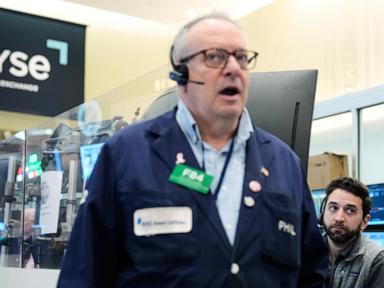
The floor of the Hong Kong Stock Exchange doesn't roar like it used to, but the silence is heavy. It is the kind of quiet you find in a room where everyone is holding their breath, waiting for a glass to shatter. On screens across the city, the numbers are flickering—a jagged, nervous green here, a dull, bruising red there. To the casual observer, it’s just data. To a trader like Elias, sitting in a glass-walled office in Central, it’s the sound of a world trying to decide if it’s safe to move.
Elias hasn't slept well. He watches the Nikkei 225 edge up by a fraction so small it’s almost insulting, while the Hang Seng slips. It’s a mixed bag. A mess. It’s the physical manifestation of indecision. Across the Pacific, the gears of diplomacy are grinding. The United States and Iran are reportedly looking at each other across a table, or at least thinking about it, and that single possibility is enough to paralyze the global flow of capital. In related updates, take a look at: Coal Market Volatility and the Iranian Friction Factor.
Market volatility isn't about math. It’s about the collective heartbeat of millions of people who are terrified of being the last ones holding a losing hand.
The Ghost in the Barrel
Consider the price of a single barrel of crude oil. It sits there, largely unchanged, hovering around a price point that satisfies no one and scares everyone. We think of oil as a commodity, a liquid we burn to move from point A to point B. But in the high-stakes theater of global finance, oil is a thermometer for war. The Economist has also covered this fascinating topic in extensive detail.
When rumors of US-Iran talks hit the wire, the thermometer stops climbing. It doesn't drop, either. It just waits.
If you are a logistics manager in Singapore, that stagnation is a riddle. You have ships to fuel. You have contracts to sign. But if the talks go well, the sanctions might ease, Iranian oil could flood the market, and the price you pay today will look like a reckless mistake by tomorrow morning. If they fail? The Strait of Hormuz becomes a choke point, and your costs skyrocket.
So, you wait. Everyone waits.
This is the invisible tax of geopolitical tension. It isn't just the cost of the fuel; it’s the cost of the hesitation. It’s the factory expansion that doesn't happen this week. It’s the hiring freeze at a mid-sized shipping firm. It’s the ripple effect of a hundred thousand "maybe laters" that eventually slows the pulse of the global economy.
The Weight of a Whisper
The "mixed" performance of Asian shares—Japan up slightly, South Korea down, China stumbling—reflects a deep-seated exhaustion. Investors are tired of reacting to headlines that never quite resolve into reality. We live in an era where a single tweet or a leaked memo from a State Department staffer carries more weight than a decade of corporate earnings reports.
Elias looks at his screen and sees the KOSPI in Seoul. It’s dragging. Why? Because South Korea is the canary in the coal mine for global trade. If the big players are bickering over nuclear deals and regional hegemony, the middle players get squeezed. The uncertainty acts like a fog. You can’t drive fast in a fog, no matter how powerful your engine is.
The numbers tell us that the Shanghai Composite is struggling to find its footing. There is a narrative here that goes beyond simple supply and demand. It’s a story of trust. Or rather, the lack of it. When the US and Iran are the focus, the market isn't just looking at oil; it’s looking at the stability of the entire Western-led order. If a deal is struck, it signals a return to a kind of predictable diplomacy. If the talks vanish into the ether, it’s a sign that the era of the "strongman" and the "unpredictable pivot" is here to stay.
The Human Cost of the Basis Point
We often talk about "investors" as if they are a monolithic block of soulless algorithms. Some are. But most are people like Sarah, a pension fund manager in Sydney. She isn't trying to "beat the market" for the sake of a high score. She is trying to ensure that forty thousand teachers can retire without wondering if they can afford heat in the winter.
When Sarah sees the Nikkei 225 waver, she feels it in her chest. A 0.2% shift might seem negligible to a news anchor, but to Sarah, it represents millions of dollars in future purchasing power vanishing or appearing based on a conversation happening in a closed room ten thousand miles away.
She watches the headlines about the US-Iran talks with the same intensity a sailor watches a darkening horizon. She knows that the "neutral" oil prices are a lie. They aren't neutral; they are suppressed. They are a spring being pushed down by the weight of a dozen conflicting interests. When that pressure lets up—one way or the other—the jump will be violent.
This is the psychological reality of the modern market. We are no longer trading based on the value of companies. We are trading based on our perception of how world leaders will behave at dinner. We are trying to price human ego, national pride, and historical grievances into a spreadsheet. It is a fool’s errand, yet we have no choice but to try.
The Mirage of Stability
There is a specific kind of tension in a market that is "little changed." It’s the tension of a standoff.
Imagine two archers with arrows notched, staring at each other. They haven't fired. Nothing has changed. The "price" of the peace is stable. But the muscles are shaking. The eyes are watering. That is the state of the Asian markets today.
The US-Iran talks represent a potential release of that tension. But talks are not a resolution. They are a process. And the market hates processes. It wants binaries. Yes or No. Deal or No Deal. War or Peace. The "mixed" results we see are the market’s way of saying it doesn't believe the hype, but it’s too scared to bet against it.
In Tokyo, the slight gains might be a sign of hope, or perhaps just a technical correction from yesterday’s pessimism. In Hong Kong, the dip might be a reaction to local property fears combined with global anxiety. But the common thread is a lack of conviction. No one is willing to plant a flag and say, "This is where the world is going."
The Empty Chair at the Table
What’s missing from the headlines is the reality of the people living in the regions most affected. While the "investors" watch for talks, the people of Iran are watching for a chance to rejoin the world. The small business owner in Tehran isn't looking at the Nikkei; he’s looking at the price of bread, which is tied to the same sanctions that the traders in Hong Kong are speculating on.
When the US sits down—or doesn't sit down—with Iranian officials, they aren't just discussing centrifuges and oil quotas. They are discussing the permeability of borders. They are discussing whether a generation of people will be integrated into the global economy or pushed further into the shadows.
The market senses this, even if it can’t put a price on it. There is a dawning realization that the old ways of "containing" problems don't work in a hyper-connected world. An oil shock in the Persian Gulf is a bankrupt trucking company in Ohio. A stock market crash in Shanghai is a canceled vacation in Queensland.
We are all connected by a web of invisible threads, and right now, those threads are being pulled tight.
The Long Game of the Short Term
Elias closes his laptop. The closing bell has rung in some markets, while others are just waking up. The "mixed" day is over, but nothing has been solved. The US-Iran talks remain a ghost in the machine—a promise of something that might never happen.
The tragedy of the modern financial news cycle is that it treats every day like a discrete event. "Shares mixed." "Oil flat." It ignores the cumulative erosion of confidence. It ignores the fact that every day we spend waiting for "talks" is a day we aren't building, creating, or moving forward.
The real story isn't the percentage point. It’s the hesitation. It’s the world sitting in a departure lounge, waiting for a flight that has been delayed indefinitely. We check the monitors. We buy a coffee. We look at our watches.
The screen blinks. A new headline appears. Another rumor. Another "source close to the matter."
The oil price doesn't move.
The traders don't move.
The world waits for a signal that may never come, terrified that if they look away for even a second, they will miss the moment the glass finally breaks.
Somewhere, a ship captain adjusts his course, a retiree checks her balance, and a diplomat reaches for a pen. The breath is still held. The waves are still coming.
The silence continues.