The global economy is broken because it is fighting a war with weapons made for a completely different century.
Look at how the International Monetary Fund (IMF) and the World Bank react when a country faces a crisis. They swoop in with emergency loans, attach strict austerity conditions, and expect the economy to stabilize within a few years. It worked well enough when trouble meant a single, isolated event. A sudden currency collapse. A distinct banking crisis. A catastrophic hurricane hitting an island nation.
But that world is gone.
Today we live in an era of overlapping, permanent disruptions. We have climate change creating predictable, recurring disasters. We have global supply chains fracturing over geopolitical rivalries. We have public health crises that ripple through markets for a decade. The international financial architecture was built to handle temporary shocks, not permanent turbulence. It is trying to fix a leaky bucket by slapping on a tiny band-aid while a flash flood rages around it. It is failing.
The Flawed Foundation of Fixed Post-War Thinking
To understand why the current setup fails, you have to go back to 1944. The Bretton Woods conference established our modern global financial order. The architects, including John Maynard Keynes and Harry Dexter White, designed a framework to prevent another Great Depression and rebuild war-torn Europe.
They did a brilliant job for their time. They created tools to manage short-term liquidity problems. The underlying assumption was simple. Markets are generally stable, but they occasionally suffer from sudden, brief interruptions. Once you provide a temporary bridge of capital, the system naturally resets to a peaceful baseline.
That baseline does not exist anymore.
When a developing nation experiences a severe drought, it is no longer a freak weather event. It is a recurring feature of a changing climate. If that same nation is also struggling with high inflation caused by shipping bottlenecks halfway across the world, it is not facing an isolated shock. It is trapped in a web of continuous friction.
The IMF reported that nearly 60% of low-income countries are now in or at high risk of debt distress. They are not falling into debt because of simple economic mismanagement. They are drowning because the cost of dealing with constant disruptions exceeds their economic output. The current system treats these nations like irresponsible borrowers rather than victims of an outdated global framework.
The Myth of the Self-Correcting Market
The big mistake central bankers and global institutions make is believing that markets always want to return to an equilibrium. They don't.
We see structural shifts instead. When the United States increases interest rates to fight domestic inflation, capital flees emerging markets immediately. In the past, this capital would return once the American rate cycle cooled down. Now, because of persistent geopolitical tensions and the fragmentation of global trade into rival blocs, that capital stays away or moves to safer havens. The traditional economic rubber band has snapped.
Why Emergency Lending is Making Things Worse
When a country faces persistent trouble, the traditional playbook dictates an emergency loan package. But these packages come with a heavy price tag. The standard recipe involves cutting public spending, raising taxes, and privatizing state assets to balance the books quickly.
This approach is actively destructive when applied to long-term disruptions.
Consider a nation trying to transition its energy grid away from coal while simultaneously dealing with regular flooding that destroys its agricultural sector. If the IMF demands deep cuts to public investment as a condition for a loan, the country cannot build the resilient infrastructure it needs to survive the next disaster. It is a vicious cycle. The austerity measures weaken the country's long-term ability to withstand the next inevitable blow.
[Traditional Shock] -> [Temporary IMF Loan] -> [Austerity Measures] -> [System Resets]

[Modern Reality] -> [Persistent Disruption] -> [Emergency Loan] -> [Austerity Weakens Infrastructure] -> [Next Disruption Destroys Economy]
We see the results clearly in parts of Sub-Saharan Africa and Latin America. Debt servicing costs now eat up a massive chunk of national revenues. Money that should go toward climate adaptation, healthcare, and education is funneled back to international creditors. The system functions as a wealth extraction mechanism rather than a stabilizing force.
The Problem with Short-Term Financing Windows
Most global financial assistance operates on short timelines. Programs like the IMF’s Stand-By Arrangements usually last between 12 to 24 months. The expectation is that you fix the immediate fire and get out.
But how do you fix a supply chain that has permanently shifted away from your region? How do you fix a agricultural sector when the rainfall patterns have changed forever? You can't do it in two years. Treating long-term structural decay with short-term liquidity is like using a bucket to bail out the Titanic.
How We Must Reform the Global Financial Architecture
We do not need minor tweaks to the existing system. We need a fundamental rewrite of how global capital is allocated during protracted crises. If we want an economy that survives the rest of this century, several structural shifts must happen immediately.
Introduce Automatic Debt Suspension Clauses
Every international loan agreement should have climate and geopolitical shock clauses built directly into the contract. If a country is hit by a disaster above a certain threshold, or if global trade routes are blocked by war, all debt service payments must pause automatically.
Barbados has championed this approach with its Bridgetown Initiative. It makes total sense. It keeps a government from having to choose between feeding its citizens after a disaster or paying back foreign bondholders. We need to make this a global standard for all sovereign debt, not an exception.
Shift from Loans to Outright Grants for Adaptation
Stop forcing vulnerable nations to take on more debt to solve problems they did not cause. A low-income country shouldn't borrow money at market rates to build sea walls or upgrade its electrical grid against global warming.
The money coming from multilateral development banks for climate resilience needs to be in the form of grants. If it must be a loan, it should feature nominal interest rates and 50-year repayment terms. The current practice of loading up fragile economies with dollar-denominated debt for non-revenue-generating infrastructure projects is financial madness.
Expand the Use of Special Drawing Rights
The IMF has a powerful tool called Special Drawing Rights (SDRs). It is essentially international reserve assets that can be allocated to member countries to boost liquidity without creating debt. During the pandemic, the IMF issued $650 billion worth of SDRs. It helped prevent a total global collapse.
We need a system where SDRs are issued regularly based on global vulnerability indexes rather than just during a once-in-a-century crisis. Wealthier nations, which receive the majority of SDRs due to quota rules, must permanently channel their allocations to a fund that low-income countries can access easily.
The Cost of Inaction
If the major shareholders of the IMF and World Bank—primarily the United States and European nations—continue to block deep structural reforms, the global economy will split apart.
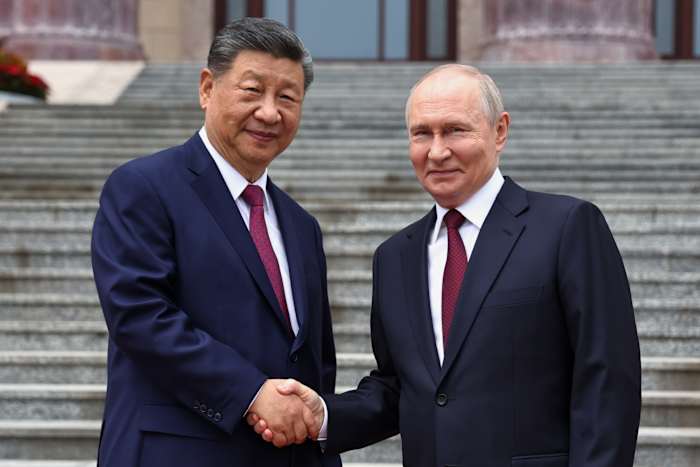
We are already seeing alternative systems emerge. Developing countries are turning to alternative lenders like China or joining the expanding BRICS alignment to seek financial lifelines that don't come with Western-mandated austerity. This fragments global governance and makes it harder to coordinate on global challenges.
The old world is gone. The era of isolated, temporary economic shocks is a memory. If we keep using an archaic financial playbook, we will see a cascading series of sovereign defaults, failed states, and economic migration that will destabilize the entire planet.
Actionable Steps for Global Policymakers
Fixing this requires concrete action from the G20 and international financial institutions.
- Audit all outstanding sovereign debt to identify nations where debt service exceeds health and education spending, then implement immediate restructuring.
- Mandate the inclusion of disaster clauses in all new private and public sovereign bond issues by the end of next year.
- Triple the capital lending capacity of the World Bank and regional development banks through increased contributions from wealthy member states, specifically earmarked for long-term structural resilience grants.