Salt.
That is the first thing you notice when you stand near a container terminal before dawn, even if you are miles inland. It rides the breeze off the shipping lanes, settling on steel cranes, damp asphalt, and the sleeves of dockworkers waiting for manifest sheets that now change hourly. For decades, most of us treated the machinery of global life as permanent weather. Ships moved. Code crossed borders in milliseconds. Tariffs were footnotes in finance sections that rarely touched the price of a loaf of bread or a child's asthma inhaler.
Then the weather turned sharp.
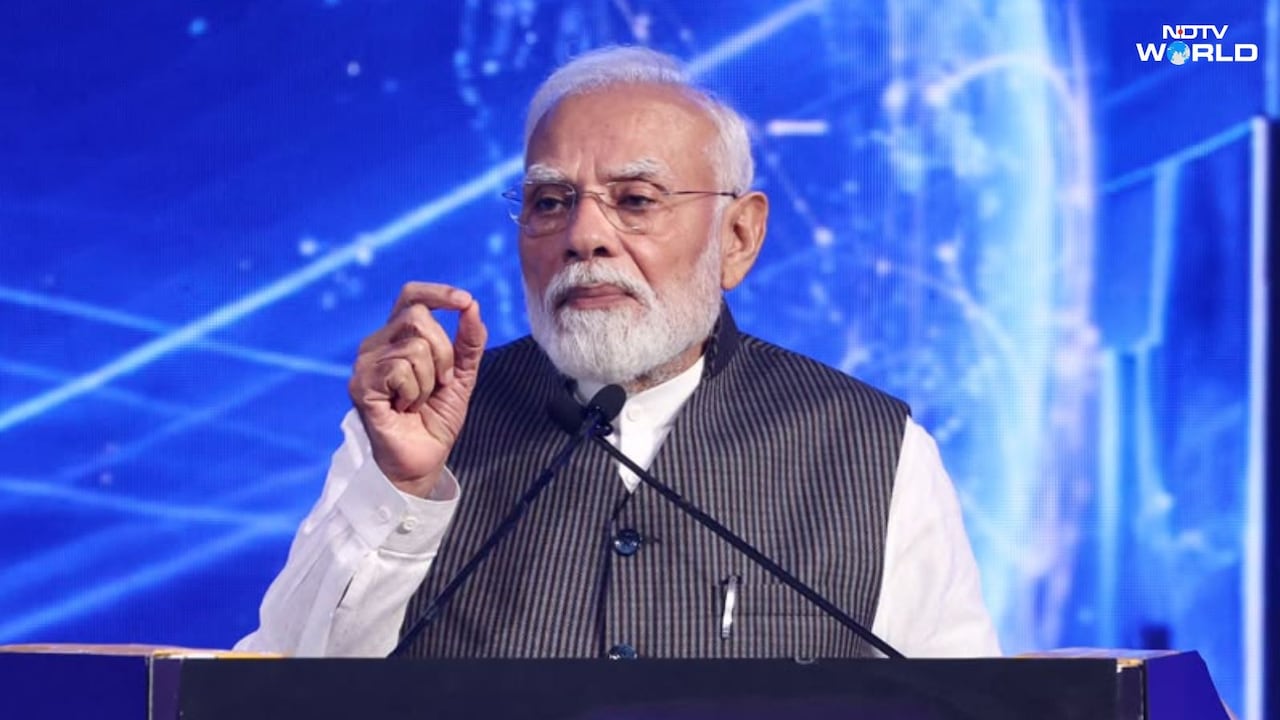
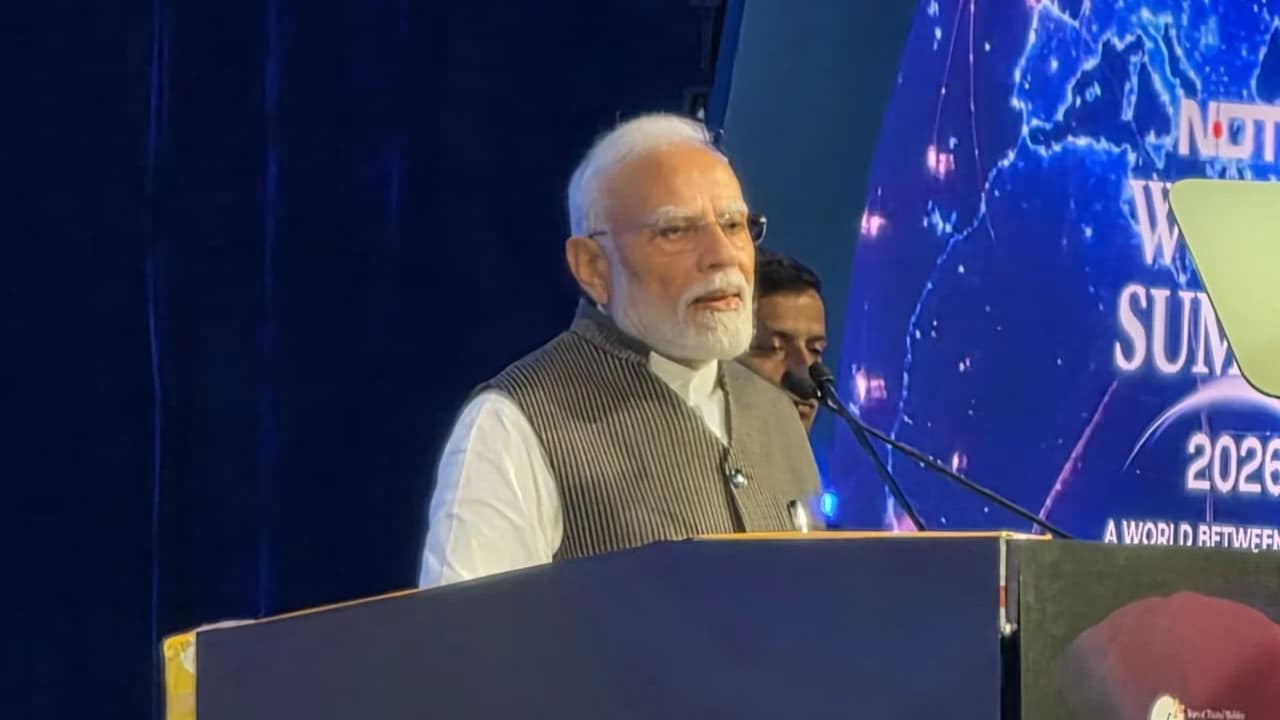
At the NDTV World Summit, Indian Prime Minister Narendra Modi put a blunt word to what people working in ports, server rooms, and factory floors have felt gathering pressure for years: weaponisation. Trade, technology, and sea routes—the very ligaments holding modern daily life together—are no longer neutral conduits. They are increasingly pulled taut, bent toward leverage, and turned into instruments of pressure when nations collide over influence, supply, and security.
Even if you never read a diplomatic transcript, you feel the draft under the door.
Let me admit something right away: trying to map a shifting global order while living inside it is disorienting. Sometimes the headlines feel too big and too abstract to hold onto, like watching clouds stack up over a distant mountain range when you are just trying to get home before dark. Experts toss around phrases like "supply chain realignment" or "strategic autonomy" as if they were chess moves on a clean wooden board. They are not. Behind every tariff line, export rule, or naval patrol sits a human routine—someone waking up to a delayed shipment, a frozen software license, or a freight bill that doubled overnight.
To see how abstract statecraft lands on ordinary ground, consider a hypothetical scenario grounded in real-world trade mechanics. Imagine a mid-sized precision-valve manufacturer outside Pune, run by a family that spent twenty years building trust with buyers across Europe and Southeast Asia. They do not make tanks or missiles. They make brass and stainless-steel valves that keep chemical plants, water treatment facilities, and cold-storage units running smoothly. On a Tuesday morning, everything looks normal: furnaces hum, lathes shave curled ribbons of metal, and a shipment of specialty alloy rods is scheduled to clear a transit hub and board a vessel bound for port.
By Thursday, nothing is normal. A customs hold slows the alloy rods because an upstream supplier changed origin documentation in response to a sudden trade restriction. Simultaneously, a firmware update for one of the factory's automated inspection sensors is delayed due to cross-border tech export friction, leaving a technician manually checking tolerances with calipers under fluorescent lights that buzz with quiet dread. Out at sea, rerouted vessels—dodging chokepoints and security risks—stretch transit times by weeks, forcing the family to choose between paying sky-high spot freight rates or telling a longtime customer their delivery will arrive late.
That family does not live in a war zone. Yet they are standing right on the fault line of a changing global order.
Why Quiet Plumbing Suddenly Roars
For thirty years after the Cold War, globalization felt like a well-oiled escalator. You stepped on, and efficiency carried you forward. Factories went where labor and land were cheapest; software engineers collaborated across time zones without thinking twice about whose server hosted the repository; merchant ships followed the shortest, calmest sea routes between ports. People called it interdependence, and many assumed that because everyone benefited from trade, nobody would dare break the machine.
That assumption ran headlong into human nature.
When nations feel threatened—economically, technologically, or militarily—the very things that once made them prosperous start looking like vulnerabilities. If your grid relies on foreign chips, a tech dispute stops being a commercial squabble and becomes a national security flashpoint. If your factories depend on a single maritime corridor, a disruption in those sea routes stops being a maritime delay and becomes an existential squeeze.
Think of global trade and tech networks like the copper pipes and fiber cables inside a house. While water flows and Wi-Fi holds, you never think about who laid the pipe or which wall hides the junction box. You only think about it when pressure drops to a trickle or a pipe bursts behind the plaster. Weaponisation happens when someone realizes they control the shut-off valve—and decides that turning it even a quarter-inch gives them bargaining power.
I have spent enough time watching how economic shocks ripple through working neighborhoods to know they rarely arrive with sirens. They arrive as a quiet email from procurement. A hiring freeze that lasts a month, then a quarter. A grocer quietly swapping one brand of cooking oil for another because import costs shifted. The drama is rarely loud at first; it is cumulative, grinding down margins and patience day by day.
Consider what happens next when sea routes become contested theaters rather than open highways:
A cargo ship carrying grain, fertilizer, electronics, or medical supplies does not care about geopolitical speeches. It burns fuel, follows charts, and answers to insurance underwriters. When tensions flare near vital maritime passages, war-risk premiums spike, schedules fracture, and vessels take longer detours. Every extra nautical mile burns more bunker fuel, ties up containers longer, and ripples backward into port congestion thousands of miles away. What looks like a map line on a television screen becomes empty shelves and higher freight bills in markets that had nothing to do with the original dispute.
Technology Is Not Just Code Anymore
If sea routes are the arteries of the physical world, technology is its nervous system.
Not long ago, people talked about tech as if it floated above borders—pure mathematics, light pulses in glass cables, weightless cloud servers. That was always a polite fiction. Every line of code runs on physical silicon, cooled by real water, powered by real electricity, governed by real laws. Today, semiconductors, artificial intelligence models, telecom gear, and critical digital standards sit right at the center of great-power rivalry.
When technology is weaponised, the squeeze feels strangely intimate. A country might restrict advanced chip-making tools, block access to specific computing infrastructure, or tighten rules around data and dual-use components. Suddenly, a startup founder or a hospital administrator discovers that a tool their team relies on has become a geopolitical bargaining chip.
To understand this without getting lost in jargon, picture a metaphor from everyday life: a master baker whose favorite oven uses a proprietary calibration dial made in one town, while the flour comes from another and the yeast from a third. As long as all three towns trade peacefully, the bread comes out warm and predictable every morning. The moment one town decides to ration the calibration dials or tax the flour to win a border argument, the baker cannot just wish a loaf into existence. Adaptation takes time, money, and trial-and-error—and dough does not wait patiently while diplomats argue.
That lag—the gap between a sudden policy shift and the years it takes to build alternative supply chains or domestic tech ecosystems—is where the real pain lives. You cannot conjure a semiconductor fab or a deep-water port out of thin air over a weekend. Building resilience takes capital, engineering talent, political steadiness, and nerve.
At the NDTV World Summit, Modi's framing resonated precisely because it named a pattern many leaders and citizens are grappling with simultaneously: the global order is not merely shifting in who holds influence; it is shifting in how influence is exercised. Rather than relying solely on traditional alliances or battlefield clashes, pressure increasingly runs through commerce, supply chains, maritime corridors, and technological chokepoints.
The Global South and the Weight of Choice
One of the hardest parts of living through a changing global order is being told—explicitly or implicitly—that you must pick a side.
For decades, smaller and developing economies often found themselves caught between larger powers, watching rules get written in capitals far away while bearing heavy costs whenever global markets sneezed. Today, major emerging economies like India stand at a delicate crossroads: deeply integrated into global trade and digital networks, eager to grow manufacturing and technological capacity, yet determined not to let external pressures dictate their domestic priorities or strategic choices.
Let us introduce another hypothetical character to see what that tension looks like at a human scale—say, Meera, a logistics planner in a coastal port city coordinating cold-chain exports of seafood and produce. Her days are a puzzle of reefer containers, customs clearances, flight and vessel slots, and shifting import rules in distant buyer countries. When trade policy turns combative or maritime routes get choppy, Meera is the one on the phone at midnight trying to save perishable cargo from spoiling in transit. She does not set foreign policy. She absorbs its friction.
People in Meera's shoes—and the millions like her across ports, warehouses, and workshops—understand something that armchair analysts sometimes miss: resilience is not a slogan. It is redundancy. It is having two suppliers instead of one, two shipping lanes instead of a single narrow bottleneck, enough domestic capability so a sudden shock does not paralyze daily life.
Yet building redundancy has a cost. Pure efficiency—putting every egg in the cheapest basket—used to be rewarded above all else. Now, resilience demands buffers, extra inventory, diversified partners, and higher upfront investment. That means prices can stay sticky, transitions can feel bumpy, and there are no easy, cost-free shortcuts.
I will be honest: watching major powers turn trade and technology into levers of coercion makes me uneasy. History shows that when nations treat every economic tie as a potential weapon, trust erodes fast—and once trust breaks, rebuilding it takes generations. Even smart, well-intentioned defensive moves can trigger counter-moves, leaving ordinary households caught in a tug-of-war they never voted to join.
What People Actually Want to Know Behind the Headlines
When a topic like this hits the news cycle, people usually ask a handful of practical questions beneath the grand rhetoric. They want to know whether this means an immediate collapse of global trade, why sea lanes matter so much to everyday prices, how ordinary businesses adapt, and what a "changing global order" actually looks like on the ground.
Global trade is not vanishing overnight. Most goods still move, most cables still carry data, and most countries still want prosperity more than perpetual confrontation. What is changing is the terms and fragility of that movement. Trade is becoming more conditional, more regionalized, and more tied to security calculations.
Sea routes matter so much because the overwhelming share of physical goods crossing the world still travels by water. Planes carry high-value, lightweight cargo; ships carry the heavy bones of civilization—energy, grain, ores, industrial components, and consumer goods. When a vital waterway faces threats, delays, or geopolitical friction, the ripple reaches far beyond nearby coastlines.
As for how businesses and nations adapt, the playbook is shifting from pure cost-cutting toward diversification and self-reliance in critical areas. Countries are pushing harder for domestic manufacturing, secure digital infrastructure, and broader trade partnerships so they are not left exposed to a single point of failure. Meanwhile, companies are learning to stress-test their supply chains the way engineers stress-test bridges—assuming loads will fluctuate and weather will turn rough.
None of this is neat. A changing global order rarely announces itself with a single dramatic event; it unfolds through dozens of overlapping pressures—a tariff here, a tech restriction there, a rerouted tanker, a summit warning that puts a name to the strain.
Where the Real Test Begins
Listen closely to what happens after the cameras at a global summit pack away.
Speeches frame the stakes. Markets react for an afternoon. Analysts debate what the shift means for diplomacy five years from now. The real test, however, happens in quieter places: in whether a small exporter can still reach fair markets without getting crushed by sudden rules, whether vital technology remains accessible enough to lift living standards rather than widen divides, and whether maritime corridors stay safe and open enough that a bag of grain or a shipment of medicine reaches the people who need it.
A ship's hull can take a beating from heavy swell if its ribs are strong and its crew knows the water. The question for our time is whether we build stronger ribs—fairer rules, real resilience, and enough restraint to keep commerce and technology from becoming blunt instruments—before the waves grow higher.
Out on the water before dawn, the tide still comes in. The cranes still lift. Somewhere, a dockworker pulls a collar tight against the salt wind and checks the next container number on a screen, waiting to see which way the current runs next.