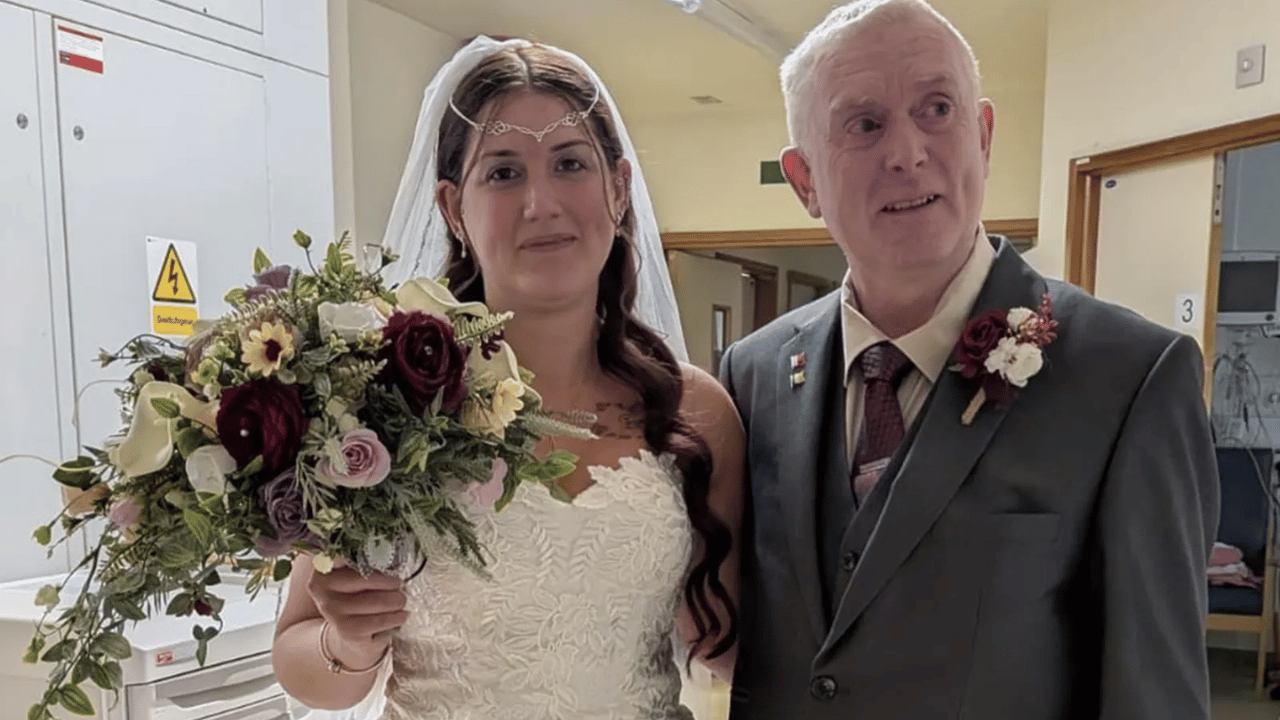
Most people look at a story about a UK bride dancing with her hospitalised dad on a medical ward and just hit the like button. They tear up for five seconds, share it to their group chat, and keep scrolling.
They're missing the real story.
When a bride refuses to let a sudden medical crisis rob her of a father-daughter dance, she isn't just making a sweet gesture. She's tearing up the rigid, overly commercialized wedding playbook that bankrupts couples and stresses families out for months. And the hospital staff who clear out space between IV poles and heart monitors to make that dance happen? They're proving that compassionate care isn't just about charts and medication dosages.
Let's be honest about what usually happens when illness strikes right before a wedding. Panic sets in. Vendors start quoting cancellation fees, seating charts fall apart, and couples feel immense pressure to push through with the venue they already paid for—even if the most important person in their life is stuck in a hospital bed miles away. Choosing to bring the wedding directly to the ward takes serious guts. It requires a bride and groom to look at tens of thousands of pounds worth of carefully laid plans and say, "None of this matters if Dad isn't there."
What Really Happens Behind the Scenes of a Hospital Ward Wedding
You don't just waltz into a National Health Service (NHS) ward in the UK with a white dress, a Bluetooth speaker, and an entourage. Hospitals are strict, sterile environments built around infection control, patient privacy, and emergency access.
Getting a wedding celebration approved on a ward takes quick thinking and genuine teamwork from frontline healthcare workers. Nurses, ward managers, and healthcare assistants have to juggle dozens of moving parts behind closed doors before the bride even steps off the elevator.
- Infection control protocols. Medical teams have to ensure visitors aren't bringing outside pathogens near immunocompromised patients, which often means limiting the guest list to immediate family and enforcing strict hand hygiene or mask rules.
- Clinical stability checks. Doctors have to sign off on the patient being well enough to sit up, stand briefly, or move safely without risking a drop in blood pressure or dislodging critical medical lines.
- Space and equipment management. Standard hospital bays are cramped. Staff routinely wheel away unnecessary carts, rearrange privacy curtains, and monitor oxygen tubing so nobody trips while the music plays.
- Privacy for other patients. A busy ward doesn't stop functioning for a private milestone. Nurses have to coordinate with neighboring patients and families to protect everyone's dignity while carving out a tiny pocket of joy.
When hospital staff help arrange a father-daughter dance under fluorescent ward lights, they're doing emotional labor that never shows up in a job description. In the UK, where NHS staff frequently deal with brutal shift patterns and severe understaffing, taking twenty minutes to coordinate a surprise dance speaks volumes about their humanity. It turns a sterile clinical space into a room full of life.
The Wedding Industry Has Conditioned Us to Care About the Wrong Things
Here's an unpopular opinion. Modern weddings have become so obsessed with aesthetics that we've forgotten what the day is actually about.
Couples spend months agonizing over floral arches, signature cocktails, golden-hour photography lighting, and calligraphy place cards. There's nothing inherently wrong with wanting a beautiful party. I love a great celebration as much as anyone. Yet when crisis hits, all that curated perfection instantly evaporates into background noise.
Think about the contrast between a luxury countryside estate and a NHS hospital ward. One has manicured gardens, string quartets, and crystal glassware. The other has linoleum floors, the steady beep of telemetry monitors, and plastic chairs.
Yet which moment do you think that bride will remember fifty years from now?
She won't care about the thread count of the reception tablecloths. She'll remember the grip of her dad's hand, the sound of nurses quietly clapping in the doorway, and the sheer relief of having him present on one of the biggest days of her life. By bringing the wedding to him, she stripped away every superficial distraction and left only the core truth of what marriage and family actually mean.
Why Hospital Milestones Are Becoming More Common
Stories of weddings, graduations, and birthdays happening inside hospital rooms aren't isolated flukes anymore. Healthcare charities and hospital trusts across the UK—and around the world—have increasingly recognized that emotional milestones directly impact patient morale and family coping.
In the UK, organizations like The Ambulance Wish Foundation UK and hospital-based palliative and acute care teams regularly help facilitate major life events for patients who can't leave medical care. Even outside end-of-life scenarios, sudden strokes, cardiac events, or post-operative complications frequently sideline parents right before major family events.
Medical researchers have long documented the link between strong social support and patient outcomes. According to guidance from organizations like the NHS and patient advocacy groups, maintaining a sense of normalcy and connection to family life reduces acute stress and anxiety during prolonged hospital stays. For a hospitalized parent, missing a child's wedding can trigger profound grief and feelings of helplessness. Having the bride bring the celebration straight to the bedside flips that script entirely. It restores the parent's role in the family at a moment when illness has stripped away their independence.
How to Plan an Emergency Hospital Wedding Visit If Crisis Strikes Your Family
Nobody puts "medical emergency" on their wedding planning checklist. You assume everyone will show up healthy, dressed to the nines, and ready to hit the dance floor.
If you or someone you love ever faces a sudden hospitalization right before a big day, don't freeze up and assume the moment is lost. You can adapt quickly if you focus on what actually matters.
- Talk to the ward sister or charge nurse immediately. Skip general hospital switchboards and speak directly to the nursing leadership on the floor where your family member is staying. Be honest about the situation and ask what is safely possible within their ward rules.
- Keep the entourage tiny. A hospital ward isn't a reception hall. Bring only the bride, groom, and perhaps one or two immediate family members so you don't overwhelm the space or violate visiting limits.
- Ditch the heavy logistics. Leave the massive bouquet, elaborate train, and professional lighting rigs at the venue. Bring a single phone with a pre-downloaded song and ask one family member to capture a quick video so everyone else can stay present in the moment.
- Build a buffer into your timeline. If you're visiting the hospital before heading to your ceremony or reception, add at least an extra hour to your schedule. Hospital elevators, security check-ins, and unexpected doctor rounds never run on a tight wedding itinerary.
- Check legal marriage rules if you want the ceremony itself moved. In England and Wales, getting legally married outside a registered venue requires a special license, such as a Registrar General's Licence, which is strictly reserved for cases where one of the couple is seriously ill and not expected to recover. When it's a parent who is hospitalized rather than the bride or groom, doing a symbolic blessing, a first look, or a father-daughter dance on the ward while holding the legal ceremony at your scheduled venue is usually the smartest, fastest route.
What Healthcare Workers Want Families to Know
If you're going to bring a wedding moment into a medical ward, approach the staff with patience and gratitude. Nurses and healthcare assistants genuinely love facilitating these moments—it's often the highlight of an otherwise grueling twelve-hour shift.
Still, medical emergencies always take priority. If a buzzer goes off down the hall or a doctor needs to check vitals right as your song starts, step back gracefully and let them work. Bring a box of sealed, store-bought treats for the nurses' station afterward as a thank-you, and make sure you ask permission before filming anywhere near staff members or other patients' beds.
Stop Waiting for Perfect Conditions to Show Up for the People You Love
The biggest takeaway from a bride dancing with her dad in a hospital ward has nothing to do with weddings at all. It's about refusing to let imperfect circumstances stop you from showing up.
Too many people postpone important conversations, skip visits because the timing feels awkward, or hold out for ideal conditions that never arrive. Life gets messy. People get sick, plans derail, and you rarely get the picture-perfect backdrop you imagined.
If you have a big milestone coming up—or even just an ordinary weekend—take a hard look at who matters most in your life right now. If someone you love can't make it to your table, pack up what matters and bring the celebration to theirs. You'll never regret choosing people over perfection.