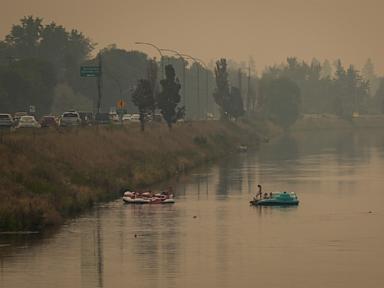
An explosive, fast-moving wildfire tore through British Columbia's Okanagan region, forcing more than 20,000 residents to flee and prompting the provincial government to declare a state of emergency. With the Canadian Armed Forces placed on standby to assist, the crisis highlights the terrifying speed at which modern firestorms can detonate under severe drought and high-wind conditions.
If you are trying to understand how a single fire can overwhelm a region in hours, you need to look at the unique meteorological cocktail driving these events. The Bald Range wildfire didn't just grow; it erupted.
The Anatomy of an Explosive Firestorm
When the fire ignited on a Friday evening, few anticipated the catastrophic trajectory it would take. Fueled by prolonged drought and dry timber, the blaze covered roughly 15 kilometers in mere hours, racing toward Okanagan Lake and catching entire communities off guard.
The fire became so intense that it generated its own weather system, complete with erratic winds and lightning. This phenomenon turns standard firefighting strategies upside down. Ground crews can't safely combat flames that shift direction instantly and throw embers hundreds of meters ahead of the main front.
Entire municipalities faced immediate evacuation orders. Summerland, housing roughly 12,000 people, and neighboring Peachland, which accounts for another 8,000, emptied out overnight. Roads clogged instantly. Families packed whatever they could into vehicles while orange skies turned day into an apocalyptic night.
Military Deployment and Emergency Powers
The sheer scale of the displacement forced the provincial government to trigger extraordinary measures. Premier David Eby declared a state of emergency to secure travel restrictions, coordinate regional resources, and handle emergency lodging for thousands of displaced citizens.
Behind the scenes, federal backing became essential. The Canadian Armed Forces were put on standby, ready to deploy logistical support, personnel, and heavy equipment if local emergency services reach a breaking point. Military intervention during Canadian wildfire crises usually involves air transport, supply chain management, and fire-guard construction, freeing up specialized wildfire fighters to attack active lines directly.
Tragically, the human toll mounted quickly. Royal Canadian Mounted Police launched investigations into a possible fatality linked to the fire zone, though hazardous conditions and active flames initially hindered recovery and confirmation efforts. Search-and-rescue teams worked behind active fire lines to locate residents who either missed alerts or found themselves trapped by walls of smoke and fire.
Navigating Evacuations and Safety Realities
Evacuating twenty thousand people is an administrative nightmare. Local infrastructure bends under sudden pressure. Evacuees scrambled to find temporary shelter, while the province introduced emergency financial supports, such as nightly accommodation allowances, to help displaced families find stability.
If you live in or near a wildfire-prone zone, waiting for an evacuation order to pack your car is a dangerous gamble. The speed of the Okanagan fire proved that lead times have shrunk to zero.
- Keep an emergency go-bag by your door during peak dry season months.
- Maintain a full tank of gas in your primary vehicle.
- Monitor official local emergency channels rather than relying entirely on social media rumors, which often exaggerate or mislocate active threats.
The crisis in British Columbia serves as a brutal reminder that seasonal preparedness is no longer optional. Pay attention to fire bans, respect evacuation alerts immediately, and recognize that when conditions turn explosive, seconds dictate survival.