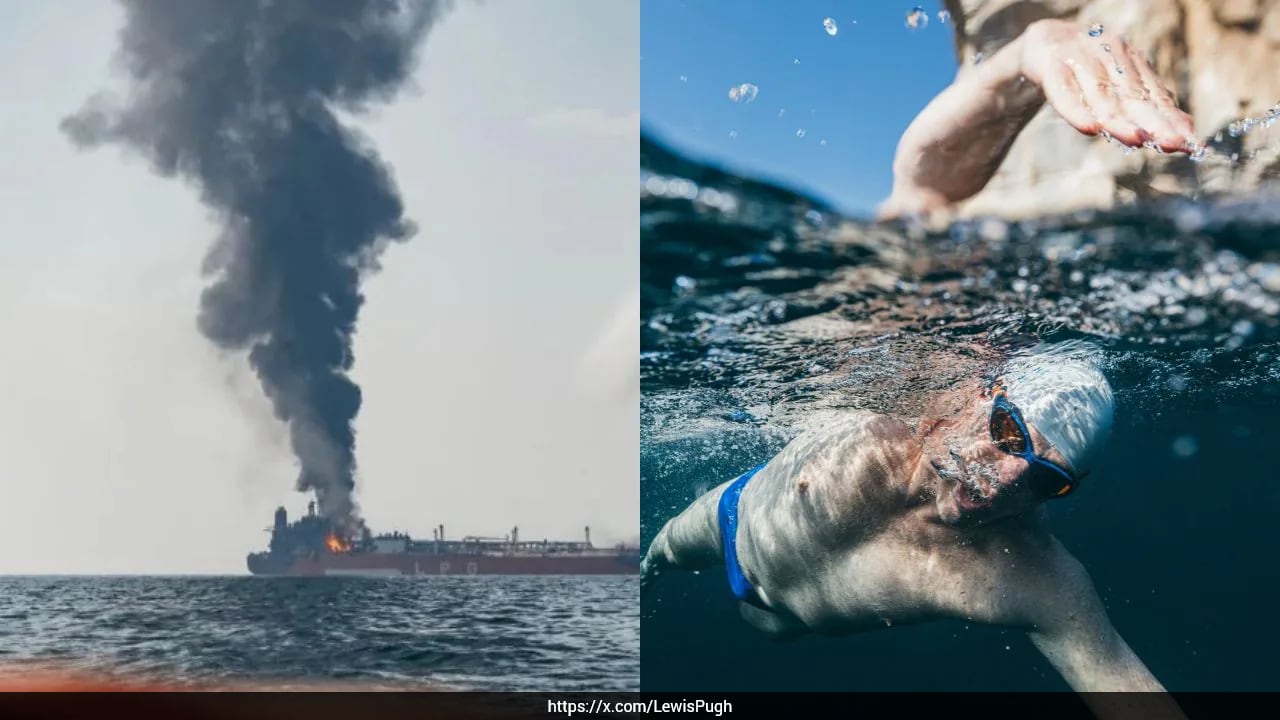
In the annals of extreme endurance sports, few feats carry the geopolitical weight or physical peril of swimming across the Strait of Hormuz. When British ultra-marathon swimmer Ross Edgley—or any elite open-water athlete attempting this crossing—enters the narrow waterway separating Oman and Iran, the primary threat isn't merely exhaustion or marine life. It is the intersection of extreme human physiology and one of the most heavily militarized maritime chokepoints on Earth. Athletes attempt this crossing to conquer an untouched frontier of open-water swimming, raise global awareness for marine conservation, and test the absolute limits of human resilience in a body of water defined by volatile currents and international tension.
To understand why an athlete would voluntarily slip into a shipping lane patrolled by naval gunboats, you have to look past the surface-level narrative of adrenaline junkies seeking clout. Open-water swimming has long moved beyond the English Channel. The Oceans Seven—the marathon swimming equivalent of the Seven Summits—has been conquered by dozens of athletes. For the modern endurance pioneer, legitimacy requires stepping off the established map. The Strait of Hormuz represents a rare convergence of geographical significance and raw, unscripted danger.
The Geopolitical Chokepoint as an Athletic Arena
The Strait of Hormuz is barely 21 nautical miles wide at its narrowest point. Through this slim corridor passes roughly a fifth of the world’s total petroleum consumption. Oil tankers, liquefied natural gas carriers, and naval vessels from multiple nations crowd the shipping lanes around the clock.
Swimming here is not a solo endeavor. It requires a logistical operation that resembles a diplomatic mission more than a sporting event.
- Maritime Clearances: Securing permission to put a support boat and a swimmer into these waters involves months of negotiation with coast guards, port authorities, and naval commands.
- Traffic Separation Schemes: Swimmers must navigate the Traffic Separation Scheme (TSS), an international maritime routing system designed to keep massive cargo ships from colliding. A human body in the water is virtually invisible on a supertanker's radar.
- Security Escorts: Depending on the regional climate, armed escorts or official naval observers are often mandatory to prevent misidentification by patrol boats operating on hair-trigger alerts.
When regional tensions flare—whether through drone strikes, tanker seizures, or proxy conflicts—the margin for error evaporates. A support vessel drifting a few hundred yards off course into contested territorial waters can trigger an international incident. Yet, for the swimmer, this high-stakes environment is precisely what elevates the crossing from a physical test to a historic expedition.
The Brutal Physiology of Persian Gulf Waters
Strip away the geopolitics, and the Strait of Hormuz remains an unforgiving physical environment. Most marathon swimmers train to combat hypothermia in the frigid waters of the North Channel or the Bering Strait. The Persian Gulf and the Gulf of Oman present the exact opposite threat, which is arguably more insidious.
Water temperatures in the region regularly exceed 30°C (86°F). In endurance sports, cold slows you down, but heat kills you.
When swimming in water warmer than normal skin temperature, the human body loses its primary mechanism for shedding excess heat. Sweating becomes ineffective because the sweat cannot evaporate into the surrounding liquid. As the swimmer maintains a high metabolic output—burning upwards of 800 to 1,000 calories per hour—core body temperature climbs steadily.
Hyperthermia in open water manifests subtly at first. Cognitive function degrades. Stroke mechanics fall apart. The athlete experiences confusion, dizziness, and eventually heat stroke, all while submerged. Hydration protocols must be calculated down to the milliliter, using cooled electrolyte solutions passed via feeding poles every 20 to 30 minutes to cool the body from the inside out.
Currents, Eddies, and Marine Hazards
The bathymetry of the Strait creates violent underwater dynamics. Water from the Indian Ocean rushes into the shallow Persian Gulf to replace high evaporation rates, creating complex, multi-layered currents.
Swimmers frequently encounter shearing currents, where the surface water moves in one direction while the water three feet below pulls in another. Navigation becomes a constant battle against lateral drift. A straight-line distance of 24 miles can easily stretch into 35 or 40 miles of actual swimming if a pilot misreads a tidal shift.
Then there is the wildlife. Unlike the predictable jellyfish blooms of the English Channel, the Strait of Hormuz hosts box jellyfish, venomous sea snakes, and apex predators like bull and tiger sharks drawn to the nutrient-rich upwelling currents. Support crews deploy electronic shark deterrents and maintain constant visual watch, though in choppy seas, visibility beneath the surface is often zero.
The Economics and Ethics of Extreme Expeditions
Critics within the maritime and athletic communities often question the ethics of staging endurance events in unstable regions. The counter-argument is blunt: putting a civilian support crew in harm's way for a sporting record is an unnecessary burden on regional search-and-rescue infrastructure.
If a swimmer suffers a medical emergency in the middle of a commercial shipping lane, diverting a coast guard cutter or a commercial vessel costs tens of thousands of dollars and pulls security assets away from critical duties. Insurers rarely underwrite these expeditions without exorbitant premiums and strict geographic exclusions.
However, the athletes and sponsors backing these swims operate on a different calculus. In an era where traditional sports broadcasting struggles to capture younger demographics, raw, high-risk adventure content commands massive digital engagement.
A successful crossing generates documentary deals, brand partnerships, and speaking circuits that fund an athlete's career for years. More importantly, many of these swims are tethered to environmental advocacy. By drawing cameras to a region defined in the public imagination solely by oil and conflict, swimmers highlight the fragility of local coral reefs, plastic pollution in major shipping lanes, and the impact of warming seas on marine ecosystems.
Execution Over Bravado
The public often views ultra-endurance athletes as reckless daredevils. Spend enough time around the boats that support them, and you realize the exact opposite is true. Recklessness gets you pulled from the water in the first two hours.
Successful crossings in hostile environments rely entirely on obsessive risk mitigation. Before a single stroke is taken, teams spend weeks analyzing satellite telemetry, tidal charts, and Automated Identification System (AIS) shipping data to find a narrow weather and traffic window.
- Redundant Navigation: Support boats run multiple GPS plotters alongside traditional dead-reckoning methods to account for GPS spoofing or signal jamming, which are common occurrences in the Strait of Hormuz.
- Medical Protocols: Onboard medics carry intravenous fluids, core-temperature monitoring telemetry pills swallowed by the swimmer prior to departure, and emergency trauma kits.
- Abort Triggers: Clear, non-negotiable red lines are established before the swim begins. If water temperature spikes past a certain threshold, if a naval patrol orders a halt, or if cognitive tests during feeds show delayed responses, the swim ends immediately.
The swimmer in the water is merely the visible tip of a massive logistical spear. Their job is reduced to the simplest, most primal mechanics: breathe, pull, kick, and trust the crew on the boat to keep them alive.
The Shifting Frontier of Human Endurance
As climate change alters ocean currents and geopolitical instability closes off traditional expedition routes, the nature of extreme athletics is changing. The era of pure, unencumbered exploration is over. Every major physical feat now requires navigating a dense web of international law, environmental regulations, and security protocols.
Swimming the Strait of Hormuz is a stark reflection of this reality. It demands the cardiovascular engine of an Olympian, the mental fortitude of a prisoner of war, and the diplomatic finesse of a foreign service officer. Whether the motivation is personal legacy, scientific data collection, or environmental awareness, the execution leaves zero room for ego. You do not conquer a body of water like the Strait of Hormuz; you simply negotiate temporary passage through it, one stroke at a time, until you reach the other side.


