The flour settles slowly on the counters of a quiet North York bakery, mixing with the scent of warm yeast and cinnamon that has comforted generations of families on Sunday mornings. But today, the smell of fresh bread competes with the acrid, lingering ghost of gunpowder. The front window is a spiderweb of shattered safety glass, star-fractured by a bullet that had no business being there.
Outside, the city moves with a tense, guarded rhythm. Building on this theme, you can find more in: The Price of Control When Steel Meets Strategy.
Consider what happens when abstract geopolitical malice metastasizes into a midnight drive-by on a suburban street corner. It looks like a dark SUV idling for a fraction of a second before a window caves in. It looks like two distinct locations of the same Jewish-owned bakery chain struck within an hour of each other under the cover of a July weekend. No one was sitting at those front tables when the shots cracked through the midnight air. No one bled out on the checkered tile. But the safety of ordinary, unremarkable routines was pierced just as cleanly as the glass.
Dawn breaks, and the narrative widens downtown. Analysts at The New York Times have provided expertise on this situation.
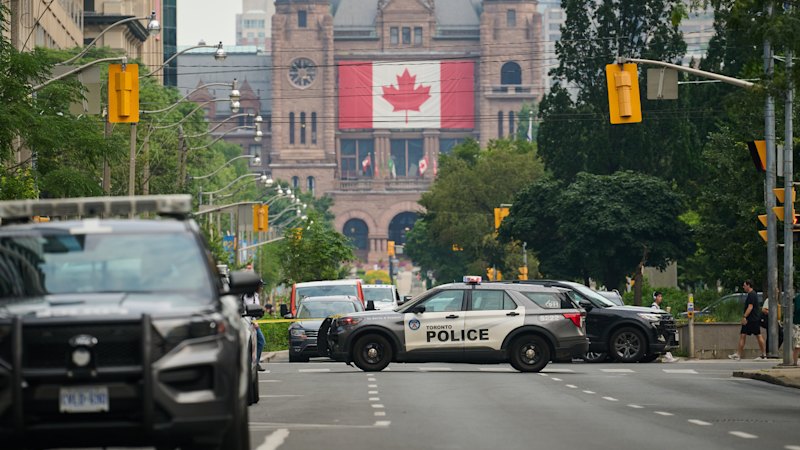
Just miles away on University Avenue, the United States Consulate stands under a heavy blanket of police tape. A single shell casing rests on the concrete, a calling card of violence that has visited this diplomatic fortress twice in a single year. A police cruiser sits idly with its blue and red lights pulsing against the stone facade, a permanent reminder that the thin blue line is stretched painfully thin across a city trying to make sense of the senseless.
Shots. Sirens. Screeching tires.
Behind these individual acts of violence lies a chilling operational reality that law enforcement officials are only beginning to expose to the light. These are not necessarily the spontaneous outbursts of localized bigots. According to Toronto Police Chief Myron Demkiw, investigators have increasingly linked these brazen midnight attacks—ranging from the consulate to local synagogues and now commercial bakeries—to sophisticated, multilayered gun-for-hire networks.
Think of it as a corporate franchise model for chaos.
Criminal syndicates outsource terror. They sit behind layers of encrypted messaging apps, dangling fast cash in front of vulnerable young adults. These recruits are handed a weapon, pointed at a cultural or diplomatic landmark, and ordered to film their own crimes as proof of execution before the digital payment clears. It is transactional destruction. The masterminds remain hidden behind screens thousands of miles away, while teenagers and young adults throw away their lives for pocket change, leaving shattered storefronts and traumatized communities in their wake.
The machinery behind the violence is terrifyingly industrial. Ballistics testing reveals that firearms used in these localized hits often trace back across the border, weapons smuggled from the United States that have been linked to dozens of separate shootings across the greater Toronto area. One gun, multiple tragedies. A grim conveyor belt of illegal hardware feeding an appetite for intimidation.
The human cost of this shadowy proxy war is real, heavy, and exacted in blood as well as fear. Last month, that violence claimed the ultimate price when a veteran officer, Constable Marc Pinizzotto, was fatally shot during a high-stakes search warrant execution tied directly to the escalating investigation. An officer gone. A family shattered. A community left to mourn a protector who walked into the dark so others could sleep safely.
Yet, the bakeries open their doors again. The dough is mixed. The ovens are fired up.
In the face of encrypted threats and imported firearms, the response from the street is stubbornly ordinary. Mayor Olivia Chow calls the attacks brazen and vows that law enforcement will hunt down those responsible. Federal, provincial, and municipal forces, alongside international partners like the FBI, are piece-by-piece dismantling the networks of proxy shooters. But the lingering question remains in the empty spaces between the brickwork and the shattered glass: how do you protect an open society from those who use its openness as a weapon against itself?
The answer is still being written in the quiet resolve of neighbors who refuse to board up their windows forever.
Toronto police investigate after two incidents damage Jewish-owned bakery chain
This video provides a direct look at the ongoing police response and neighborhood impact following the weekend shooting incidents at Toronto establishments.
http://googleusercontent.com/youtube_content/1