The maritime charts call it the Strait of Hormuz. For ship captains, it is a twenty-one-mile-wide choke point of black water, sheer cliffs, and nerves. For the global economy, it is the carotid artery.
Consider a hypothetical merchant captain named Marek, standing on the bridge of a 150,000-ton liquefied natural gas carrier. Below his feet is enough fuel to heat a major European city for a winter. Outside his windows, the Persian Gulf heat is a physical wall. But it is not the temperature that makes his palms sweat against the steel railing. It is the silence.
For weeks, Marek and hundreds of mariners like him believed a piece of paper signed in a quiet diplomatic room had bought them safety. It was a Memorandum of Understanding (MoU), a fragile bridge built out of sheer necessity to pause a grinding, destructive conflict. The central, non-negotiable rule of that paper was simple: do not pull the trigger on the merchant ships.
Then, the rockets began to fly again.
The Fragile Anatomy of a Broken Word
What happens on the high seas is rarely a misunderstanding; it is a calculated gamble. The United States and Iran had entered a sixty-day cooling-off period. The agreement was designed to let the global economy breathe, to let oil tankers pass without the shadow of drone strikes, and to give diplomats in Qatar a room where they could speak without the roar of jet engines in the background.
But a ceasefire is only as strong as the restraint of the person holding the trigger.
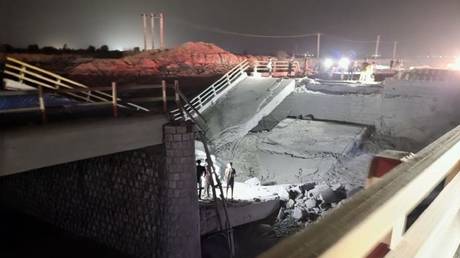
The peace shattered when commercial hulls once again registered the concussive shocks of incoming fire. In the dry language of international relations, this is called a "material breach." In the reality of the open water, it means a fire on a deck, a crew scrambling for survival suits, and the sudden, violent return of the United States Navy.
White House Press Secretary Karoline Leavitt stood at the briefing podium on Thursday afternoon to clarify the geometry of this collapse. The message she delivered was dual-pronged: a heavy fist wrapped in an open hand.
The recent barrage of American air strikes—targeting coastal defense networks, missile storage bunkers on Qeshm Island, and port facilities near Bandar Abbas—was not an act of random aggression. It was the direct, promised consequence of Iran violating the very document they had agreed to uphold. They fired on the ships they promised to protect.
Yet, behind the smoke of the burning batteries, something unexpected is happening.
The Paradox of the Silent Phone
War usually silences the diplomats. When the missiles launch, the embassies empty, the hotlines go cold, and the language of compromise is replaced by the mathematics of targeting.
Not this time.
Even as U.S. warships enforce a strict, targeted naval blockade on Iranian ports, and even as American stealth fighters fly sorties to degrade the Islamic Revolutionary Guard Corps' capabilities, the phone lines between Washington and Tehran are still humming.
"Iran very much continues to talk to the United States of America," Leavitt revealed, reflecting a conversation she had with President Donald Trump just prior to taking the podium.
The regime in Tehran, according to the White House, is actively expressing a desire to return to the negotiating table to hammer out a lasting deal. They are talking because the alternative is rapidly becoming unlivable. The military pressure applied by the U.S. is not a prelude to total invasion, but a brutal, exhausting lever designed to squeeze the Iranian economy until the cost of defiance exceeds the cost of concession.
It is a dizzying, terrifying dance. One hand pulls the trigger; the other dials the phone.
The Human Toll of High-Stakes Leverage
For the policy architects in Washington, the strategy is working. The blockade has starved Iranian ports of shipping traffic. The military strikes have degraded their missile batteries. The administration is demonstrating that the "America First" doctrine does not mean withdrawal from global security, but rather a transactional enforcement of terms. If you break a promise to America, you pay a tax in fire and steel.
But for those caught in the gears, the theoretical leverage is deeply personal.
Think of the families of the merchant sailors of various nationalities, waiting in port cities thousands of miles away, watching the news ticker for updates on the Strait of Hormuz. Think of the civilian populations in the region, hearing the thunder of air-defense sirens as the cycle of retaliation ripples outward to Jordan, Bahrain, and Kuwait.
This is the messy, terrifying reality of modern coercive diplomacy. It is not a clean, antiseptic board game. It is a high-risk gamble where a single miscalculation—a missile hitting a civilian vessel instead of splashing nearby, a defensive battery overreacting to a drone—can turn a controlled escalatory ladder into a freefall toward absolute regional war.
The Choice Ahead
The White House has made its posture clear. The United States will not tolerate the blockade of international waters, nor will it permit acts of asymmetric warfare against the global supply chain. The naval blockade on Iranian ports remains absolute, a direct punishment for the broken MoU.
But the door is explicitly, almost desperately, left unlocked.
The coming days will reveal whether Tehran’s back-channel whispers of wanting a deal are a genuine pursuit of survival or merely a delaying tactic to rebuild their battered coastal defenses. Until then, the ships will continue to navigate the narrow waters of the Strait, their crews watching the dark horizons, caught between the hope of a quiet phone call in Washington and the fear of a sudden flash in the night.