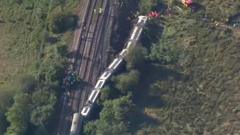
Aerial footage showing a derailed train is fast becoming a routine fixture of the evening news, a haunting visual of twisted steel and rising smoke that captures public shock before fading into the next headline. A train derailment is never just an isolated accident. It is the violent manifestation of structural neglect, deferred maintenance, and an industry operating past safe margins.
When freight cars leave the tracks, the immediate coverage focuses on the wreckage, the spilled cargo, and the local evacuations. Cameras zoom in from helicopters to display the carnage. Yet the real story lies far away from the crash site, buried in boardroom decisions made years prior, regulatory blind spots, and aging infrastructure that spans thousands of miles of hidden track.
Understanding why these catastrophic events continue to plague modern transportation requires looking past the smoke and examining the systemic vulnerabilities of a rail network pushed to its absolute limits.
The Anatomy of a Freight Collapse
Track failure is rarely sudden. Steel rails suffer from microscopic fatigue long before they snap under heavy loads. Every time a hundred-ton car rolls over a joint, the metal undergoes minute stresses. Over decades, those stresses compound.
Rail companies rely on automated inspection cars equipped with ultrasonic sensors to detect internal flaws before they cause a derailment. However, the sheer scale of the network means these inspections happen infrequently. A track section might pass inspection in January, endure punishing winter freezes and heavy spring traffic, and develop a critical fissure by August.
Operators lean heavily on data analytics to prioritize repairs, but software cannot replace physical ballast replacement and tie renewal. When a rail breaks completely, the wheelset of a moving car drops into the gap. The resulting impact shears off bolts, splinters wooden ties, and triggers a domino effect that pulls subsequent cars off the alignment in seconds.
The Economics of Precision Scheduling
Modern freight logistics runs on a model known as precision scheduled railroading. The philosophy sounds efficient on paper. Move more freight with fewer locomotives and smaller crews, cut operating ratios, and speed up turnaround times.
In practice, this operational strategy places immense strain on both equipment and personnel. Crews face unpredictable schedules, chronic fatigue, and longer work hours. Trains have grown longer and heavier, often stretching over two miles in length. These mega-trains distribute forces unevenly across the slack between cars, creating sudden surges and compression spikes that can lift a light car right off the rails during a turn or a hard brake application.
When a company trims its mechanical workforce to satisfy short-term shareholder returns, the time spent inspecting cars in classification yards drops from minutes to seconds. A cracked wheel bearing or a dragging brake rig that a seasoned mechanic would have caught in the yard now goes unnoticed. It rattles down the line until it catastrophic failure occurs miles away from civilization.
Regulatory Blind Spots and Outdated Oversight
Federal safety regulations often lag behind industry practices. Rules governing brake systems, hazardous material transport, and crew sizes were written decades ago, long before the era of the twelve-thousand-foot freight monster.
Regulatory bodies operate with limited staffing and resources, making proactive oversight difficult. Most enforcement happens reactively. An agency investigates a derailment after the fact, issues fines that amount to pocket change for multibillion-dollar rail corporations, and issues safety advisories that lack teeth.
Moreover, the classification of hazardous materials transported by rail has not evolved to match the toxic complexity of modern chemicals. When a train carrying industrial solvents or compressed gases derails near a population center, emergency responders face immediate hazards because manifest data is often delayed or difficult to interpret in the chaos of a midnight evacuation.
The Human Element in an Automated Age
Technology dominates modern rail discourse, yet human judgment remains the final line of defense against disaster. Dispatchers manage vast territories from centralized control rooms, juggling signals, track maintenance windows, and crossing activations.
The cognitive load is staggering. A single missed radio call or a misread signal timing can route a heavy freight train onto a occupied siding or an unmaintained stretch of track. When experienced dispatchers and engineers retire, corporations often replace them with younger, less seasoned personnel without providing adequate mentorship.
Fatigue compounds the danger. Operating crews frequently work on call around the clock, sleeping in motels far from home and reporting for duty with irregular circadian rhythms. Expecting peak alertness from a crew that has been awake for sixteen hours while navigating a hazardous material train through a densely populated corridor is a gamble that eventually fails.
Toward a Resilient Transportation Grid
Fixing a compromised rail network demands a fundamental shift in priorities. Shareholder dividends must take a back seat to capital reinvestment in physical infrastructure. Replacing wooden ties with concrete, upgrading rail metallurgy, and lowering train weight limits will reduce the frequency of catastrophic failures.
Mandating real-time acoustic bearing detectors at frequent intervals along every major route can catch failing equipment before it hits the ground. Coupled with stricter caps on train length, these measures would restore a margin of safety that has been systematically engineered out of the system.
Until regulatory bodies gain the authority to enforce genuine accountability and penalize systemic negligence rather than individual human error, aerial footage of derailed trains will remain a recurring feature of our collective reality. The tracks beneath us are aging, and the warning signs are already visible to anyone willing to look closer than the surface.