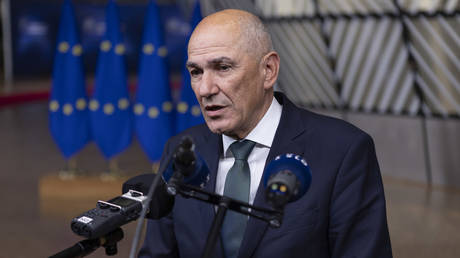
European democracy isn't just eroding from external hackers or far-right street rallies. It's buckling from the inside, and the warning bells are finally ringing from the top offices of member states. When Slovenian Prime Minister Robert Golob called out both Brussels overreach and Israeli spyware links as direct threats to democratic governance, he didn't just drop a diplomatic bombshell. He said out loud what dozens of European lawmakers whisper behind closed doors in Strasbourg.
You might think a small Alpine nation of two million people wouldn't dictate the European Union's existential debates. You'd be wrong. Slovenia sits right on the fault line between Western European institutionalism and Central European skepticism, making Golob's critique impossible for Brussels bureaucrats to brush aside.
Why Slovenia's Prime Minister Took Aim at Brussels and Tel Aviv
Most EU leaders play a safe, predictable game. They praise European unity in public while quietly griping about regulatory strangleholds in private. Golob broke that script entirely by linking two seemingly separate crises—centralized bureaucratic overreach in Brussels and the unchecked proliferation of Israeli-developed surveillance tech—into a single diagnosis of democratic decay.
Think about what happens when citizens lose control over their laws and their privacy at the exact same time. On one hand, unelected commissions push sweeping mandates down to national parliaments with minimal local accountability. On the other, commercial spyware tools like Pegasus and Predator infiltrate the phones of journalists, opposition politicians, and judges across the bloc.
Honestly, these two problems feed off each other. When centralized institutions accumulate power without transparent oversight, they become tempting targets for covert surveillance—or worse, quiet enablers of it. Golob's argument cuts straight to the core of modern European politics: you can't lecture the world about the rule of law while your own member states run rogue surveillance operations and ignore national sovereignty.
The Regulatory Creep Pushing Member States Away
Talk to anyone running a mid-sized business or local municipality in Central Europe, and you'll hear the same exhaustion. The European Commission has spent the last decade expanding its reach into areas once strictly reserved for national governments—energy grids, digital speech laws, agricultural quotas, and fiscal targets.
Here's where Brussels gets tripped up:
- One-size-fits-all mandates crush smaller economies that lack the administrative machinery of Germany or France.
- Democratic distance leaves voters feeling like their national ballots barely change actual policy outcomes.
- Emergency powers introduced during financial and health crises rarely get rolled back once the dust settles.
When Ljubljana pushes back against this overreach, it isn't advocating for breaking up the union. Golob's government is decidedly pro-European. That's precisely why his criticism stings so much—it comes from an insider trying to save the project from its own administrative bloat.
How Israeli Spyware Links Exposed Europe's Soft Underbelly
If Brussels overreach is the slow squeeze on democracy, mercenary spyware is the silent assassination. Over the past few years, investigations by the European Parliament's PEGA Committee uncovered a disturbing reality across the continent. Government agencies in Poland, Hungary, Greece, and Spain used military-grade surveillance tools—most notably NSO Group's Pegasus and Intellexa's Predator—to monitor domestic political rivals, prosecutors, and reporters.
Let's be clear about what these tools actually do. They don't just tap a phone call. Zero-click exploits infect a smartphone without the target ever tapping a link, turning the device into a live microphone, camera, and location tracker in the victim's pocket.
What makes the Israeli tech connection so politically volatile in Europe? It isn't just about software code. NSO Group and similar firms operate under strict export licenses granted by Israel's Ministry of Defense. That means every single sale of Pegasus to a European intelligence agency or interior ministry required high-level diplomatic and defense sign-off from Tel Aviv.
The Intelligence Blind Spot in EU Capitals
For years, European governments treated Israeli cyber-intelligence firms as indispensable security partners. Counterterrorism officials loved the capabilities. Politicians loved the plausible deniability. Nobody wanted to ask hard questions about where the data went or who else had backdoor access.
Then the scandals broke. In Greece, the wiretapping of opposition leader Nikos Androulakis and investigative journalist Thanasis Koukakis triggered a massive political crisis that forced intelligence chiefs to resign. In Poland, prosecutors confirmed that Pegasus was deployed against Senator Krzysztof Brejza while he was running the opposition's parliamentary election campaign.
Brussels responded with committee reports, sternly worded resolutions, and practically zero binding enforcement. National security remains the sole competence of individual member states under EU treaties. Every time Parliament demanded a moratorium on spyware sales, national governments hid behind "national security exemptions" to kill the reforms.
The Connection Between Bureaucratic Overreach and Covert Surveillance
At first glance, EU regulatory overreach and foreign spyware scandals look like opposite problems. One is about too much centralized European control; the other is about rogue national governments acting without any European oversight at all.
Look closer, though. Both stem from the exact same failure: an accountability vacuum.
When power shifts away from transparent, locally accountable parliaments—whether upward into opaque Brussels committees or downward into secretive intelligence directorates—ordinary citizens lose their ability to push back. You can't vote out a European Commissioner you never elected. You can't sue a spyware vendor hiding behind state secrets laws.
Slovenia knows this dynamic intimately. Before Golob took office in 2022, the country went through fierce battles over media freedom, judicial independence, and executive power grabs under previous administrations. Slovenian voters saw firsthand how quickly democratic norms bend when institutions prioritize control over transparency.
Why Traditional EU Safeguards Keep Failing
You'd expect the European Union's massive legal apparatus to stop these abuses cold. After all, the bloc prides itself on the General Data Protection Regulation (GDPR) and the Charter of Fundamental Rights. In practice, those protections evaporate the moment someone utters the words "national security" or "strategic necessity."
Consider the glaring gaps in Europe's current defenses:
- Fragmented intelligence oversight: While tech companies face brutal fines for cookie violations, state-sponsored hacking of journalists goes unpunished for years.
- Export control loopholes: Dual-use surveillance tech slips through European trade frameworks because member states refuse to standardize licensing rules.
- Political horse-trading: Brussels routinely looks away from democratic backsliding in one capital when it needs that government's vote on foreign policy or budget deals.
This selective enforcement breeds deep cynicism. Voters watch Brussels micromanage farmers' fertilizer usage while ignoring prime ministers who wiretap their political opponents. That double standard does more damage to the European project than any anti-EU populist party ever could.
What Actually Needs to Change in European Governance
Diagnosing the rot is easy; fixing it requires stripping power away from people who enjoy having it. If European leaders actually want to restore public trust—and address the core warnings raised by Ljubljana—half-measures won't cut it.
First, Brussels has to relearn the meaning of subsidiarity. That's the foundational EU principle stating that decisions should be made as closely as possible to the citizens they affect. Somewhere along the way, subsidiarity turned into a decorative buzzword in treaty preambles while regulatory power flowed relentlessly toward the center. Returning real legislative breathing room to national parliaments isn't a step backward. It's the only way to keep diverse nations willingly bound together.
Second, the bloc needs an outright, enforceable ban on mercenary spyware that lacks judicial warrant oversight and independent technical auditing. If a surveillance tool cannot be audited by a court without compromising its operation, democratic governments have no business owning it. Full stop.
Practical Steps for Citizens, Journalists, and Policymakers
You don't have to sit around waiting for Brussels to reform itself. Whether you're working in media, policy, or simply trying to protect your own digital footprint in Europe, concrete steps matter right now:
- Harden your daily communications: If you work in journalism, legal advocacy, or politics, treat standard smartphones as compromised by default. Use devices with Lockdown Mode enabled, compartmentalize sensitive conversations onto separate hardware, and never assume encrypted messaging apps protect you once an endpoint device is infected.
- Demand transparency on public procurement: National parliaments and civic watchdogs must audit interior and defense ministry budgets for shell-company contracts tied to cyber-surveillance brokers. Follow the money before the scandals hit the front page.
- Support cross-border investigative coalitions: Organizations like Forbidden Stories and Citizen Lab only exposed Pegasus because reporters shared forensic data across borders. Local newsrooms can't fight state-grade surveillance alone.
- Push representatives on EU treaty enforcement: Hold national lawmakers accountable when they hide behind "national security" excuses in Brussels to block digital rights protections.
Democracy rarely collapses overnight from a single dramatic coup. It erodes quietly—one unchecked directive, one uninvestigated wiretap, and one shrugged-off warning at a time. Golob put the diagnosis on the table in plain sight; now it's up to European voters and lawmakers to decide whether they're finally ready to dismantle the machinery of quiet control.


