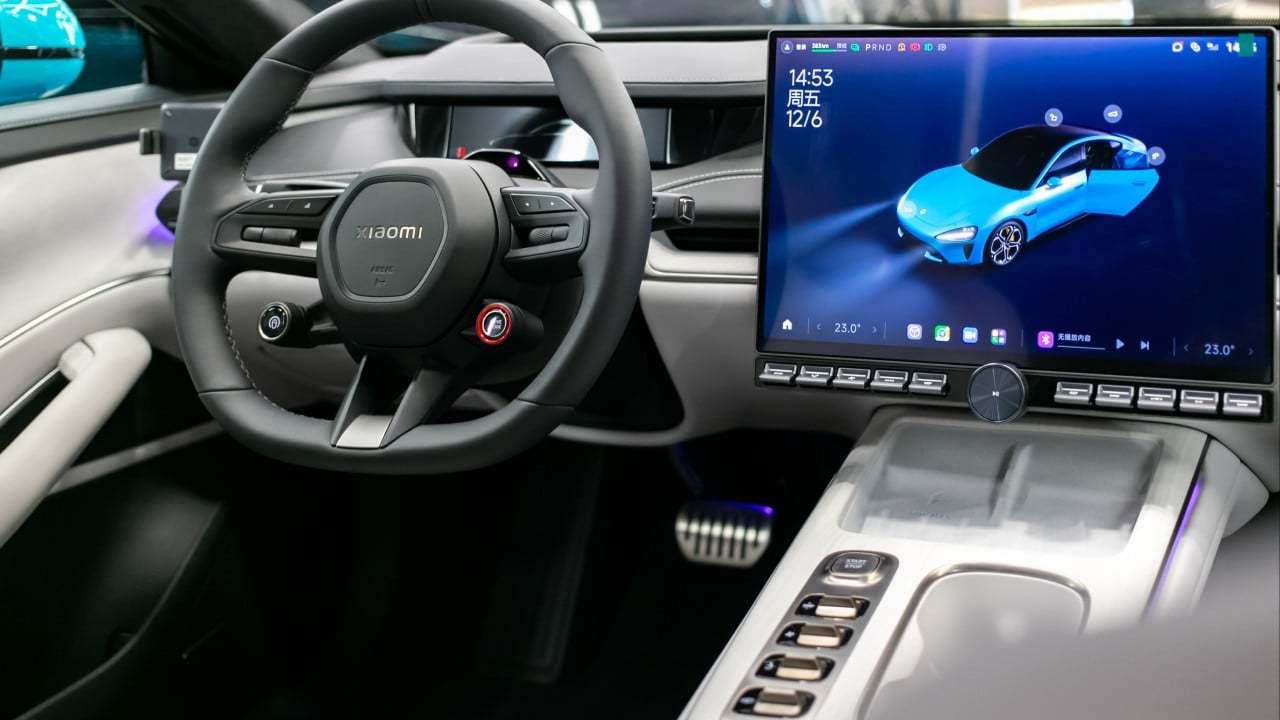
Four ministries in Beijing delivered an unvarnished verdict on China's high-flying electric vehicle sector. Speed has officially beaten safety for too long. When state regulators mandated a sweeping year-long quality campaign targeting production consistency and intelligent driving features, it signaled the end of an era defined by reckless acceleration. For years, Western analysts watched in awe as domestic Chinese brands churned out next-generation models in under twenty-four months, packing every cabin with holographic displays, autonomous pilot suites, and computational power that rivaled desktop workstations.
That breakneck velocity masked profound structural vulnerabilities. Ministries including the Ministry of Industry and Information Technology dispatched unannounced inspection teams to factory floors operated by major manufacturers like Nio, Xpeng, and GAC Aion. Inspectors sealed hardware and software configurations on the spot, dragging battery packs and vehicle frames off to independent testing facilities. The message is stark. Flashy software features and over-the-air wizardry can no longer compensate for fundamental lapses in manufacturing durability and physical safety validation.
The immediate catalyst for this intervention extends far beyond minor software bugs. Weeks before the directive dropped, authorities oversaw a massive wave of vehicle recalls involving more than seven million units. A staggering share of those defects traced back to an alarming oversight: interior emergency mechanical door-release handles that were virtually impossible for panicked passengers to identify during a power failure. When minimalist cabin designs eliminate physical buttons in favor of hidden electronic latches, aesthetic minimalism collides violently with basic human survival. Regulators realized that chasing futuristic cabin archetypes had blinded engineers to elementary mechanical realities.
Under the new regulatory framework, the rules of engagement have transformed overnight. Automakers are explicitly barred from altering vehicle technical parameters via over-the-air updates after securing market-access approval, shutting down the silicon-era habit of shipping unfinished products and patching them later. Furthermore, draft revisions to national road traffic laws now place liability squarely on manufacturers for infractions committed while fully autonomous modes are engaged. Shifting legal accountability from the driver to the boardroom alters the economic calculation behind autonomous driving features. Companies can no longer treat beta-test driver assistance packages as marketing bullet points when a fatal software glitch carries corporate manslaughter implications.
Anatomy of a Manufacturing Sprint
To understand how the world's most aggressive automotive ecosystem reached this inflection point, examine the mechanics of the domestic price war. For the past three consecutive years, domestic producers locked horns in a race to the bottom, slashing margins to capture market share in a cooling domestic economy. Traditional automakers require four to five years to conceptualize, engineer, crash-test, and validate a new vehicle architecture. Several prominent electric startups compressed that timeline into eighteen months.
This compression was achieved by bypassing exhaustive physical durability testing in favor of virtual simulations and rapid prototyping. While digital twins and computer-aided engineering work exceptionally well for optimizing aerodynamic drag coefficients, they struggle to predict how battery chemistry degrades after five hundred rapid-charging cycles in freezing sub-zero winters or sweltering desert heat. Thermal runaway incidents in early-generation battery packs exposed a dangerous disconnect between laboratory projections and asphalt reality.
Supply chain dynamics exacerbated the strain. Tier-one and tier-two component suppliers faced relentless downward pricing pressure from original equipment manufacturers desperate to shave hundreds of yuan off production costs. When margins evaporate, quality control is often the first casualty. Material grades for wiring harnesses, structural adhesives, and sensor brackets quietly drifted away from original specifications.
Independent audits revealed that innovative styling elements, such as flush-mounted pop-out door handles and capacitive steering wheels, were rushed into mass production without adequate wet-weather or crash-impact validation. When a vehicle suffers a severe side-impact collision, electronic door actuators frequently lose power before structural deformation finishes. If the backup mechanical release is hidden behind an unmarked plastic panel or requires specialized dexterity, occupants remain trapped. The recent multi-million vehicle recall exposed these design oversights on a national scale, forcing regulators to step in where corporate self-policing failed.
The Global Repercussions of Consolidation
This domestic housecleaning carries profound implications for international expansion. Chinese electric vehicle exports surged over the past two years, rattling traditional manufacturing bastions in Europe, Japan, and North America. Foreign competitors frequently argued that Chinese brands achieved their cost advantages through state subsidies and lax labor standards. That critique misses the true engine of their success: ruthless vertical integration, localized supply chain density, and an unmatched capacity for iterative software deployment.
However, regulatory tightening within the home market threatens to upend that export strategy. European safety assessors, such as Euro NCAP, already penalize manufacturers that rely entirely on touchscreens for critical driving controls, requiring physical buttons for hazard lights, wipers, and defrosters to achieve a five-star safety rating. By forcing domestic automakers to reintroduce physical controls and freeze unverified software tweaks, Beijing is inadvertently aligning local production standards with stringent international requirements.
This convergence does not spell doom for Chinese export ambitions; rather, it professionalizes them. Smaller, undercapitalized firms that relied on quick model turnovers and aggressive marketing will likely face bankruptcy or forced acquisitions during the upcoming year of oversight. Giants with deep balance sheets will absorb the compliance costs, emerging with products that satisfy both domestic mandates and rigorous international crash-test regimes.
The era of shipping beta-test cars overseas is drawing to a close. Overseas buyers are shifting their inquiries from mere curiosity about low sticker prices to granular technical interrogations regarding battery management systems, cybersecurity protocols, and thermal degradation metrics. Meeting those expectations requires capital, patience, and a cultural shift away from silicon-valley disruption tactics toward the conservative discipline of heavy industry.
Navigating the Post-Tech Plateau
The strategic retreat from unbridled technological experimentation back to manufacturing fundamentals marks a maturing industrial life cycle. Every major technology wave eventually hits a wall where software wizardry ceases to compensate for hardware fatigue. Automobiles are heavy, kinetic blocks of steel, aluminum, and chemical energy hurtling down asphalt at high velocities. They demand a level of physical reliability that app developers and consumer electronics firms rarely encounter.
Executives across major manufacturing hubs are quietly recalibrating their research and development budgets. Funds are shifting away from speculative artificial intelligence cockpit gimmicks toward advanced metallurgy, closed-loop battery recycling, and rigorous structural crash-energy management. The China Association of Automobile Manufacturers underscored this pivot by issuing stark warnings against irrational competition and demanding strict adherence to production consistency.
Yet, the tension between innovation and regulation remains palpable. Engineers trained to push boundaries fear that heavy-handed bureaucracy will stifle the agility that made the domestic market a global powerhouse. Finding the equilibrium between safety validation and speed of execution is the defining challenge for the next decade of mobility development.
The market has spoken, and the state has enforced the boundary. The companies that survive the upcoming consolidation phase will not be those that promise the most futuristic dashboard features, but those whose vehicles still operate flawlessly after a decade of hard miles on unforgiving roads.