8,000.
Sit with that number for a second. If you liked this article, you might want to read: this related article.
Picture a sold-out hockey arena. Every seat is filled with a surgeon, a test pilot, a deep-sea diver, a biomedical engineer, or an astrophysicist. Every single person in that building holds at least a master’s degree in a STEM field. Every single one has spent a decade or more sacrificing weekends, relationships, and sleep to become elite at what they do. They have passed background checks, survived grueling physicals, and stared down high-stakes emergencies without blinking.
Now imagine a set of double doors opening at the far end of the ice. A panel of stone-faced evaluators walks out, points to ten people in the crowd, and tells the other 7,990 to go home. For another look on this development, refer to the latest update from TechCrunch.
That is not a dystopian novel. That is the literal, mathematically verified reality of NASA’s astronaut selection process. During the agency’s 2024 recruitment cycle—the pool that produced the 2025 class—more than 8,000 qualified Americans threw their hats into the ring. Only ten walked away with the title of astronaut candidate.
An acceptance rate of 0.125 percent.
To put that into perspective, getting into Harvard University is roughly twenty-seven times easier than getting a flight suit at Johnson Space Center. Winning an Olympic medal is a statistically safer bet. Yet, every few years, when NASA opens that digital portal on USAJOBS, thousands of the brightest minds in the country hit submit, knowing full well that the odds are stacked like a brick wall against them.
Why do they do it? And what actually happens behind those closed doors in Houston when 8,000 dreams are whittled down to ten?
The Myth of the Lone Cowboy
If you grew up watching movies about the early space race, you probably carry a very specific image of an astronaut in your head. You picture Chuck Yeager breaking the sound barrier, or Neil Armstrong calmly steering a lander away from a boulder field with seconds of fuel remaining. You picture solitary, steely-eyed heroes conquering the void through sheer willpower.
That archetype is dead. NASA killed it on purpose.
Consider a hypothetical applicant—let’s call her Elena. On paper, Elena is unstoppable. She has two PhDs, flies aerobatic planes on weekends, and led a research team in Antarctica. In 1965, NASA would have rolled out a red carpet for her. Today, Elena might not even make it past the first round of interviews.
The modern space program doesn't want cowboys. It wants roommates.
Think about what the job actually entails right now. When NASA selects a new class of astronauts, they aren't training them for a three-day sprint to the Moon like Apollo 11. They are training them for six-month stints aboard the International Space Station, multi-week expeditions to the lunar Gateway, and eventually, three-year round-trip voyages to Mars.
In a tin can hurtling through a vacuum at 17,500 miles per hour, brilliance without emotional regulation isn't an asset; it is a liability. If you are a genius who gets passive-aggressive when someone leaves a tool floating out of place, you are dangerous. If you panic when an ammonia coolant loop springs a leak at three in the morning, or if you hoard credit when a scientific experiment succeeds, you will fracture the crew.
During the selection process in Houston, NASA subjects finalists to psychological evaluations and team-building exercises designed to strip away their rehearsed interview polish. They put candidates in freezing water, deprive them of sleep, and hand them broken equipment with missing instructions. The evaluators aren't watching to see who solves the puzzle fastest. They are watching to see who listens when a teammate speaks, who admits when they are wrong, and who maintains a sense of humor when everything goes sideways.
They call it "expeditionary behavior." In plain English, it means being the kind of person someone wouldn't mind being locked in a walk-in closet with for nine months.
The Anatomy of a Rejection
I have spent years talking to aerospace engineers, flight surgeons, and the bruised, brilliant runners-up who made it to the "Highly Qualified" stage of NASA's pipeline only to receive that polite, devastating rejection email. The common thread among them isn't bitterness. It is awe at the sheer randomness of the final cut.
To understand how NASA narrows 8,000 people down to ten, you have to picture a giant, merciless funnel.
At the top of the funnel is the baseline check. To even be considered today, you must be a U.S. citizen and hold a master’s degree in a STEM field—engineering, biological science, physical science, computer science, or mathematics—from an accredited institution. Alternatively, you can be a medical doctor or have completed a nationally recognized test pilot school program. You also need at least three years of related, progressively responsible professional experience, or 1,000 hours of pilot-in-command time in jet aircraft.
That first filter eliminates thousands of hopefuls before a human pair of eyes ever reads their resume.
The remaining stack—still numbering in the thousands—is handed over to the Astronaut Rating Panel. This is a group of current astronauts and senior NASA leaders who spend weeks reading applications line by line. They aren't just looking for degrees; they are looking for operational grit. Did you just study robotics in a climate-controlled lab, or did you deploy an autonomous submersible under an Arctic ice sheet when the battery was failing? Did you just treat patients in a suburban clinic, or did you run trauma triage in a field hospital during a hurricane?
From those thousands, the panel selects roughly 120 people to come to the Johnson Space Center in Houston for the first round of interviews.
Imagine getting that phone call. You have beaten out 98.5 percent of the competition. You fly to Texas, walk past the Saturn V rocket lying on its side at the entrance, and sit across from people who have actually walked in space. You undergo medical screenings that probe every millimeter of your body—your eyes, your heart, your inner ear, your dental records. A hidden heart murmur, a slightly narrow optic nerve, or a history of kidney stones can end your journey right there on the examination table.
Then, they cut the 120 down to about 50.
Those 50 finalists return to Houston for a second, even more intense round. By this point, everyone in the room is medically fit, wildly accomplished, and terrifyingly smart. How do you choose ten out of fifty when all fifty could do the job?
It comes down to the puzzle pieces of the upcoming missions. NASA doesn't pick ten clones; they build a toolbox. If the agency knows it needs someone to troubleshoot a new lunar rover’s propulsion system, an engineer with hands-on mechanical experience gets the nod over a theoretical physicist. If the upcoming manifests are heavy on human biology experiments, a physician-scientist edges out a fighter pilot.
Sometimes, you lose not because you lacked something, but because the person sitting next to you happened to hold the exact wrench NASA needed for a flight scheduled six years from now.
The Invisible Toll of the Waiting Room
We love to celebrate the winners. When NASA unveils a new class of astronaut candidates—known affectionately as "ASCANs"—the press conferences are pure magic. Ten people in matching blue flight suits stand before a wall of American flags, smiling brightly, talking about childhood dreams and staring up at the night sky.
What the cameras don't capture is the quiet, grueling decade that precedes that podium—and the strange purgatory of the application cycle itself.
The process takes roughly eighteen months from the day the application closes to the day the final ten get the call. For a year and a half, candidates live in a state of suspended animation. You can't tell your boss you might be quitting to go to Mars. You can't easily buy a house or plan a major life transition without a giant asterisk hanging over every decision.
And what happens to the forty finalists who make it to the very last room in Houston and don't get picked?
Some apply again. And again. Clayton Anderson, a legendary NASA astronaut who spent 167 days in space and performed six spacewalks, applied fifteen times before NASA finally said yes. Fifteen times he filled out the paperwork. Fourteen times he was told no.
Think about the psychological resilience required to absorb that kind of rejection over a fifteen-year span while maintaining a demanding career. Most of us struggle to bounce back from being passed over for a regional manager position. Imagine being told fourteen times that you aren't quite right to leave the planet, and still sitting down at your kitchen table to write the fifteenth application.
Why 8,000 Isn't Actually Enough
There is a fascinating paradox hidden inside that 8,000 number. On one hand, it represents an absurd level of competition. On the other hand, it is actually lower than the previous cycle.
In 2020, during the height of the pandemic, over 12,000 people applied for ten spots. In 2017, a staggering 18,300 people threw their names in, resulting in twelve selections.
Why did the numbers drop from 18,300 to 8,000?
Part of the answer is bureaucratic: NASA raised the educational bar, shifting the baseline requirement from a bachelor’s degree to a master’s degree in a STEM field. That single rule change instantly shaved off thousands of applicants who might have tried their luck in earlier years.
But there is another, deeper shift happening in the aerospace world. NASA is no longer the only game in town.
For sixty years, if you wanted to slip the surly bonds of Earth, you had to wear a NASA patch on your shoulder. Today, commercial spaceflight has cracked the monopoly wide open. SpaceX, Blue Origin, Axiom Space, and a dozen other private ventures are hiring their own engineers, test pilots, and mission specialists. Private astronauts are already visiting the International Space Station and conducting commercial spacewalks.
If you are a brilliant aerospace engineer today, you don't necessarily have to wait four years for a 0.125 percent shot at a government job to touch spaceflight. You can go build rockets in Hawthorne, California, or Kent, Washington, and watch your hardware fly next Tuesday.
Yet, 8,000 people still chose the brutal, narrow path of NASA.
They chose it because NASA represents something a private corporation never can. A commercial company flies for profit, for tourism, or for technological dominance. NASA flies for the species. When a NASA astronaut floats out of an airlock, they aren't representing shareholders; they are representing a collective human curiosity that stretches back to the first primate who looked up at the Moon and wondered what it felt like under their feet.
What Happens After the Call
For the ten people who finally hear the words "Would you like to come work for NASA?" on the other end of the phone, the victory lasts about twenty-four hours. Then, the real grueling work begins.
Being selected doesn't make you an astronaut. It makes you an astronaut candidate.
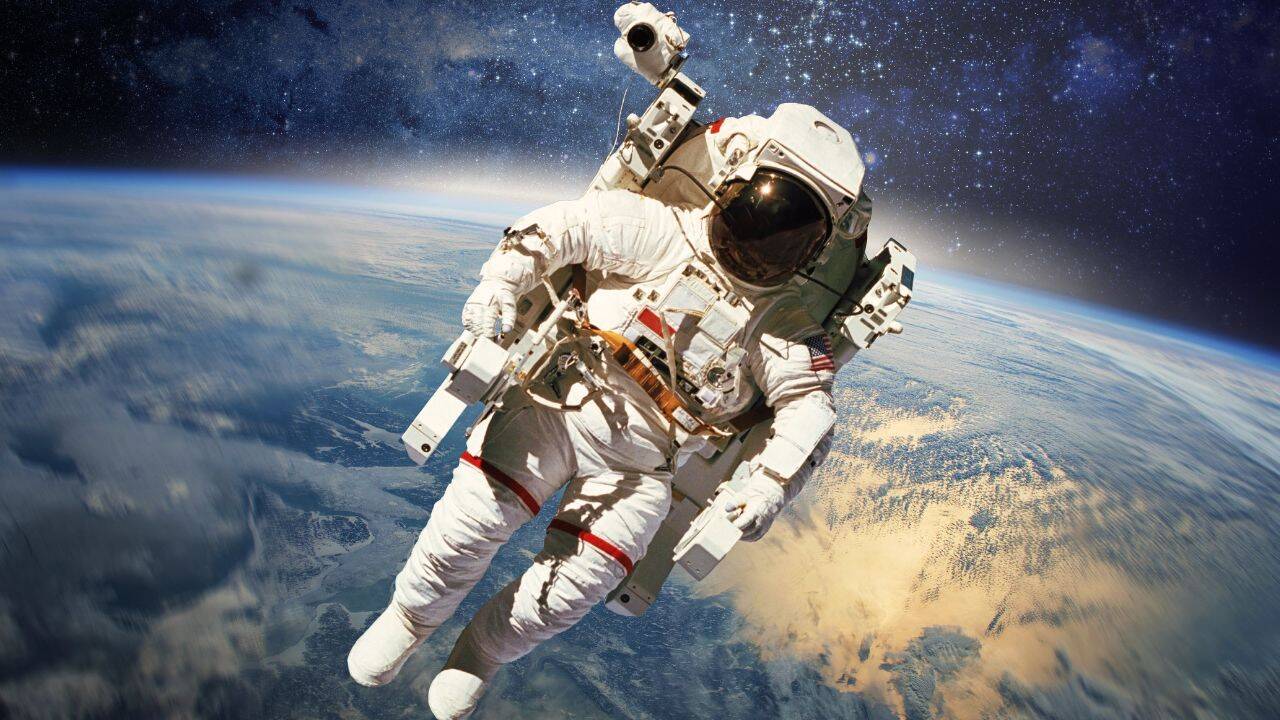
For the next two years, those ten individuals are subjected to one of the most intense educational gauntlets on Earth. They have to learn how to fly supersonic T-38 jets—even if they have never sat in a cockpit before. They have to learn to speak and read Russian, the co-official language of the International Space Station. They spend hours underwater in the Neutral Buoyancy Laboratory, a massive indoor pool containing a full-scale replica of the space station, wearing pressurized suits that fight every movement of their fingers until their fingernails bruise and bleed.
They learn geology so they can identify interesting rocks on the lunar surface. They learn emergency medicine so they can pull a crewmate’s tooth or stitch a wound in zero gravity. They learn robotics so they can operate a fifty-seven-foot mechanical arm without smashing it into a solar array.
And even after those two years of training, even after they finally earn their silver astronaut pins, there is no guarantee of when they will fly. Some wait two years for a mission assignment. Others wait seven or eight.
It is a career defined almost entirely by delayed gratification, extreme risk, and a willingness to disappear into a team so completely that your individual ego evaporates.
The 7,990 people who didn't make the cut aren't failures. In any other arena, they are the undisputed giants of their fields—the doctors saving lives in emergency rooms, the engineers designing the next generation of clean energy, the pilots keeping commercial aviation safe.
They walked away from Houston without a flight suit, carrying a quiet, heavy disappointment. Yet, almost without exception, they describe the process as the single most meaningful experience of their lives. Because simply standing in that arena, knowing you met the standard to be considered, forces you to ask a question most people avoid their entire lives: What am I actually capable of if I give everything I have?
Somewhere right now, a flight surgeon in Ohio, a naval aviator in Virginia, and a robotics researcher in California are updating their resumes, logging extra flight hours, and booking physical exams, quietly preparing for the day NASA opens that digital portal once again.