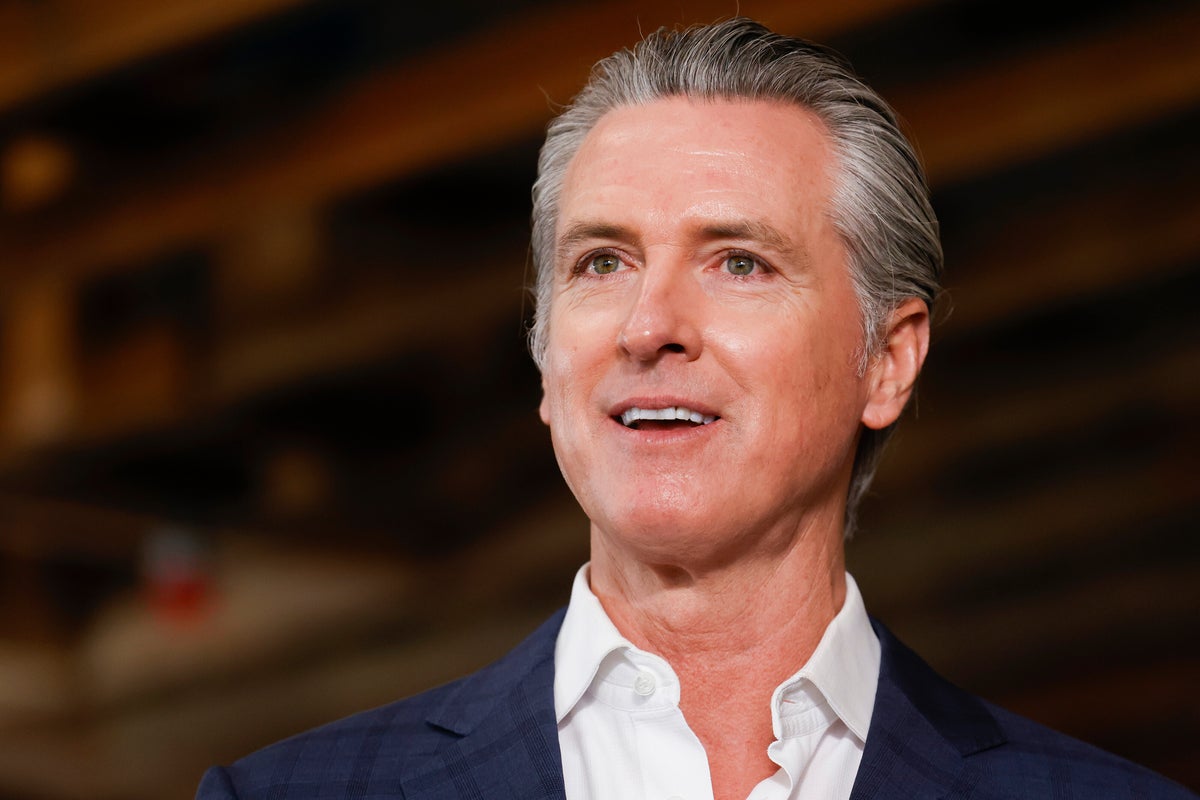
Governor Gavin Newsom is attempting a feat of political alchemy. In his final budget proposal, the leader of the world’s fifth-largest economy claims to have vanquished a massive deficit while simultaneously protecting core social services and launching new spending initiatives. It is a narrative of redemption designed to secure his legacy as a fiscal steward. But behind the polished spreadsheets and optimistic revenue projections lies a fragile construction held together by creative accounting, delayed payments, and a heavy reliance on a volatile tech sector that may not deliver the expected windfall.
The core of the strategy involves closing a gap that just months ago looked like a bottomless pit. By shifting funds from internal accounts, dipping into the rainy day reserves, and making targeted cuts to programs that haven't yet launched, the administration has presented a "zero-deficit" plan. This is the primary goal of the proposal: to project stability and competence at a time when California’s tax base is under unprecedented pressure. Yet, for the average Californian, the reality of this budget is less about a surplus and more about a managed decline in the quality and reach of state services.
The Accounting Tricks Hiding the Truth
To understand how a $50 billion hole disappears, you have to look at the plumbing. Newsom’s team isn't just cutting costs; they are manipulating the timing of when money leaves the state’s coffers. One of the most significant maneuvers involves the deferral of payments to schools and local governments. By pushing these obligations into the next fiscal year, the state creates an immediate illusion of balance.
It is a classic move from the Sacramento playbook. When the sun is shining, the state commits to recurring expenses. When the clouds gather, they don't cancel the check—they just tell the recipient to wait. This creates a "wall of debt" that the next governor will eventually have to climb. For school districts already struggling with declining enrollment and rising labor costs, these deferrals are not just numbers on a page. They represent delayed maintenance, larger class sizes, and a constant state of financial anxiety.
Furthermore, the administration is relying heavily on the "Rainy Day Fund." While this is exactly what the fund was built for, exhausting it now leaves the state defenseless if a genuine recession hits in the next 24 months. California’s revenue system is famously "top-heavy," relying on the capital gains taxes of a few thousand individuals in Silicon Valley. If the AI bubble cools or the stock market takes a sustained hit, the "no deficit" promise will evaporate before the ink is dry on the legislative signatures.
The High Cost of New Spending
Despite the talk of fiscal restraint, Newsom has introduced several new spending lines that cater to his national ambitions and political base. These are framed as essential investments in the state's future, particularly in climate tech and healthcare for undocumented residents. However, introducing new recurring costs while the fundamental revenue structure is shaking is a gamble of the highest order.
The Governor argues that these investments will drive future growth. He points to the green energy sector as a replacement for the vanishing manufacturing base. But the transition is slow and expensive. By prioritizing these new initiatives, the administration is forced to squeeze existing programs. We see this in the quiet scaling back of middle-class tax credits and the stagnation of infrastructure funding for inland regions that don't share the coastal wealth.
The friction between the state’s lofty goals and its bank account is becoming impossible to ignore. You cannot be the global leader in climate policy and social equity while simultaneously failing to provide basic reliability in the electrical grid or affordability in the housing market. The budget tries to fund everything just enough to keep the critics quiet, but it lacks the depth to solve the underlying crises.
The Silicon Valley Dependency
California’s budget is essentially a leveraged bet on the Nasdaq. When tech companies trade at record multiples, the state is flush. When they correct, the state bleeds. Newsom’s proposal assumes a steady, if not aggressive, recovery in tax receipts from high-earners.
The risk here is structural. The "work from anywhere" movement has not just changed where people sit; it has changed where they pay taxes. Florida, Texas, and Nevada are no longer just punchlines in Sacramento; they are active competitors for the tax revenue that funds California’s social safety net. Newsom’s budget ignores the accelerating exodus of high-net-worth individuals, treating the current revenue dip as a temporary glitch rather than a permanent shift in the tax landscape.
If the projected tax revenues from the 2025-2026 cycle underperform by even 3% or 4%, the entire "no deficit" house of cards collapses. There is no more reserve to draw from. There are no more internal funds to sweep. The state would be forced into emergency mid-year cuts that would be far more painful than a controlled reduction now.
The Impact on Local Governments
While the state celebrates its balanced books, local cities and counties are feeling the squeeze. Sacramento has a habit of passing mandates without providing the corresponding funding—a practice known as "unfunded mandates." Whether it is new environmental regulations or housing requirements, the burden falls on local taxpayers.
- Infrastructure Decay: Money diverted to balance the state budget often comes at the expense of highway maintenance and water storage projects.
- Public Safety: Local law enforcement grants are often the first to be trimmed when the state needs to find a few hundred million dollars.
- Retail Theft: While the budget proposes funds to combat organized retail crime, it doesn't address the legal hurdles that make prosecution difficult, leaving small business owners to foot the bill for increased security.
The Illusion of the Social Safety Net
Newsom prides himself on a "California for All," but the budget tells a more complicated story. To preserve the appearance of a balanced budget, the administration has relied on "trigger cuts." These are reductions that will happen automatically if revenue doesn't hit specific targets. It is a way of saying "we are funding this" today, while knowing the money might never actually be spent.
This creates a cruel cycle for non-profits and community organizations that rely on state grants. They cannot plan for the long term because their funding is conditional on the performance of the stock market. For a state that claims to be a bastion of progressivism, this is a remarkably market-driven way to manage social services. It prioritizes the appearance of fiscal balance over the actual delivery of help to those who need it most.
A Legacy Built on Borrowed Time
This final budget is a political document intended to serve as a resume for whatever Newsom does next. By avoiding a deficit today, he avoids the "failed state" headlines that conservative critics crave. He gets to walk away from the Governor’s mansion claiming he left the state in better shape than he found it.
But the reality is that he is leaving behind a state with a more volatile revenue stream, higher debt obligations, and a crumbling relationship with the middle class. The "no deficit" claim is a technicality. It is achieved through the use of one-time funds for ongoing expenses—a move that any basic business analyst would flag as a red flag.
The state's pension liabilities continue to grow, unaddressed by this proposal. The cost of living continues to drive out the very workers needed to sustain the economy. By focusing on the immediate headline of a balanced budget, the administration is ignoring the systemic rot in California’s fiscal foundation.
The Reckoning Ahead
The next Governor will not have the luxury of a Rainy Day Fund. They will inherit the deferred payments, the trigger cuts, and the consequences of the "wall of debt." The current administration is essentially using tomorrow's money to pay for today's peace and quiet.
For the taxpayers, this means the threat of future tax hikes is higher than ever. With the state's spending locked into mandatory levels for many programs, the only way to fill a future hole will be to go back to the well of personal and corporate income taxes. This further incentivizes the flight of capital and talent, creating a death spiral that no amount of creative accounting can fix.
California needs a fundamental rethink of how it collects and spends money. It needs to move away from its addiction to capital gains and toward a more stable, broad-based tax system. It needs to prioritize core infrastructure over shiny new initiatives that make for good press releases but do little for the average citizen. Newsom’s final budget does none of this. It is a masterpiece of short-term survival that leaves the long-term health of the state in jeopardy.
Stop looking at the bottom line of the proposal and start looking at the footnotes. That is where the real story of California’s financial future is written. The state isn't out of the woods; it has just traded a visible crisis for a hidden one.