The dream of the autonomous car was built on a lie of convenience. For a decade, venture capital poured billions into the idea that a car could navigate a chaotic city street with the same ease a human does, provided it had enough lasers. We were promised a world where steering wheels were relics. Instead, we got a graveyard of startups and a handful of heavily geofenced taxi experiments in Phoenix and San Francisco. The hardware at the center of this ambition, Light Detection and Ranging (LiDAR), became the most expensive paperweight in automotive history.
LiDAR works by firing thousands of laser pulses per second and measuring how long they take to bounce back. This creates a high-resolution 3D map of the environment, known as a point cloud. It is superior to cameras in low light and better than radar at detecting depth and shape. But it was also too bulky, too fragile, and far too expensive for the average consumer vehicle. When the "Level 5" autonomy bubble burst, the companies manufacturing these sensors faced an existential choice: find a new way to make money or vanish.
We are now witnessing the Great Pivot. The technology that failed to deliver the self-driving revolution is finally finding its footing by lowering its sights. It is moving out of the robotaxi and into the factory, the warehouse, and the high-end SUV bumper. This isn't a victory lap; it is a tactical retreat into reality.
The Cost of Overpromising
In 2018, a high-end LiDAR unit could cost $75,000. That is more than the price of a luxury sedan itself. Engineers argued that mass production would bring costs down to the hundreds, but they ignored the brutal physics of manufacturing. To see 300 meters ahead at highway speeds, you need immense precision. Moving mirrors, spinning lasers, and sensitive receivers do not play well with the vibrations and temperature swings of a typical car's lifespan.
The industry hit a wall. Major players like Velodyne and Ouster merged simply to survive the cash burn. Others, like Argo AI, shuttered entirely despite having backer support from Ford and VW. The mistake was centering the entire business model on a "moonshot" that required solving the "edge case" problem—the infinite variety of weird things that happen on a road, from a rogue chicken to a plastic bag blowing in the wind.
Now, the focus has shifted to Advanced Driver Assistance Systems (ADAS). This is a significant downgrade in ambition but a massive upgrade in business viability. Instead of replacing the driver, LiDAR is being used as a safety net. It powers better emergency braking and lane-keeping. It is the difference between a car that hits a pedestrian in the dark and one that stops ten feet short. Volvo and Mercedes-Benz are leading this charge, integrating slim, solid-state sensors into the rooflines of their production vehicles. They aren't promising a nap behind the wheel; they are promising a car that is harder to crash.
Beyond the Open Road
The most interesting shifts are happening where there are no traffic lights or pedestrians to worry about. Industrial environments are predictable. A warehouse floor doesn't change every day. A shipping port has clear lanes and specific rules. In these "structured" environments, LiDAR is actually working.
Automation in the Shadows
While the public was distracted by the promise of Tesla's "Full Self-Driving" (which, notably, refuses to use LiDAR), the logistics industry was busy putting the tech to work. Automated Guided Vehicles (AGVs) use these sensors to move pallets with millimeter precision. There is no "vague" interpretation of a camera feed here. The sensor knows exactly where the rack is.
- Mapping and Digital Twins: Forestry and construction firms use handheld or drone-mounted LiDAR to create perfect 3D models of terrain.
- Infrastructure Safety: Smart cities are mounting sensors on intersections—not on the cars, but on the poles—to track traffic flow and predict collisions before they happen.
- Security: High-end security systems use the tech to create "invisible fences" that can distinguish between a stray dog and a human intruder in total darkness.
This is the "Second Act" that the industry didn't want to talk about during the hype cycle because it isn't "sexy." Moving a box across a warehouse doesn't get you a cover story in a tech magazine. It does, however, result in a signed contract and a predictable revenue stream.
The Solid State Salvation
The mechanical spinning buckets seen on top of early Google cars are dead. They were too heavy and had too many points of failure. The future of the hardware is Solid-State LiDAR. By using a "flash" method—illuminating the entire scene at once—or optical phased arrays, manufacturers have removed the moving parts.
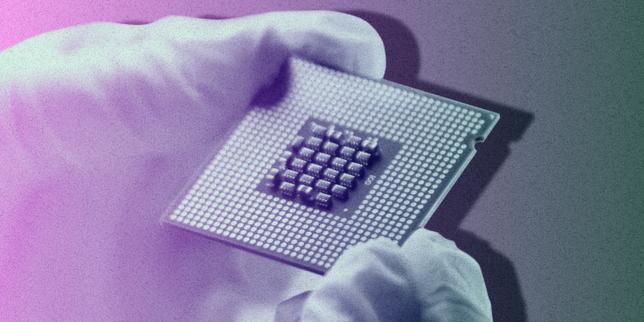
This change is fundamental. A solid-state sensor can be shrunk to the size of a deck of cards. It can be manufactured using processes similar to computer chips, which allows for the price decay the industry has desperately needed. We are seeing the commoditization of a technology that was once restricted to experimental laboratories.
The Silicon Valley Blind Spot
The failure of the initial LiDAR boom was a failure of ego. Silicon Valley culture tends to believe that software can solve any hardware limitation. They thought if the data was good enough, the "AI" would figure out the rest. But the physical world is messy. It is dusty, it rains, and sensors get covered in bird droppings.
The companies that are surviving are the ones that stopped acting like software startups and started acting like Tier 1 automotive suppliers. They focused on "automotive grade" certifications—making sure a sensor can survive a decade of being power-washed and baked in the Nevada sun. They stopped talking about 2030 and started talking about the next model year.
The Shadow of Computer Vision
The biggest threat to this second act isn't a lack of interest; it is the improvement of the humble camera. Using a process called pseudo-LiDAR, engineers are now able to extract 3D depth information from standard 2D camera feeds using neural networks. While not as accurate as a laser, it is "good enough" for many applications and costs a fraction of the price.
This creates a pincer movement. On one side, high-end LiDAR is fighting to prove its necessity for safety-critical applications. On the other, "Vision-Only" systems are eating the low-end market. To survive, LiDAR manufacturers have to prove that the extra margin of safety they provide is worth the added cost. In the world of trucking, where a 40-ton vehicle needs half a mile to stop, the precision of a laser is an easy sell. In a budget hatchback, it’s a harder conversation.
The pivot we see today is a sobering reminder that the market doesn't care about your five-year plan. It cares about what works today. The companies that once dreamt of replacing human drivers are now content to help them park or move a shipping container across a dock. It is a smaller world, but it is one where the checks actually clear.
Investment is no longer flowing toward the "autonomous future." It is flowing toward the automated present. The distinction is subtle, but for the engineers trying to keep their companies solvent, it is everything. The lasers haven't gone away; they’ve just stopped trying to be the hero of the story. They’ve become the silent, reliable tools they were always meant to be.
Stop looking for the revolution in the driver's seat. Look for it in the freight elevator.