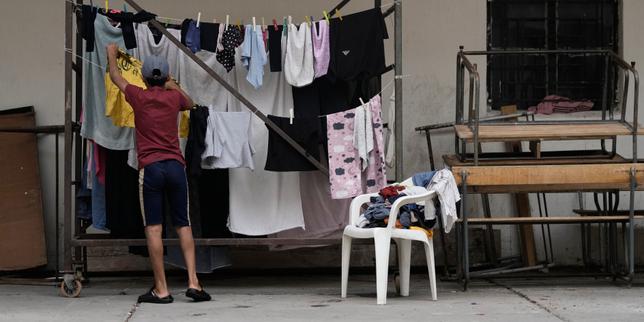
We had an apartment, now we live under a tent. That single sentence strips away the sterile abstractions of geopolitical conflict and lays bare the raw human cost of the war in Lebanon. Behind the daily tally of airstrikes and evacuation orders lies a deeper, quieter catastrophe. It is the sudden plunge into social freefall for hundreds of thousands of people who never imagined they would need emergency aid.
When bombs transform neighborhoods in southern Lebanon, Beirut, and the Beqaa into rubble, they don't just destroy concrete. They obliterate decades of accumulated stability. Professionals, small business owners, farmers, and teachers find themselves overnight on mattresses thrown into makeshift shelters, public schools, or canvas tents stretched across muddy patches of land. The physical displacement is brutal enough. The social degradation is what truly breaks people. Don't miss our previous post on this related article.
The Anatomy of Sudden Downward Mobility
Economists and sociologists track crises through inflation rates and housing shortages. But numbers miss the psychological shock of the descent. Imagine spending your entire adult life climbing the economic ladder. You secure a steady income, buy an apartment, pay for your children's private schooling, and build a predictable routine. Then, a midnight warning siren sounds. You flee with a single backpack.
Within hours, your identity is erased. You are no longer an accountant or an architect with a home; you are a displaced person standing in line for a box of rations. This is the harsh reality of social downgrading. If you want more about the background of this, The New York Times offers an in-depth breakdown.
In a country already crippled by years of a historic financial collapse, the safety nets were already shredded long before the first rockets fell. Families who managed to scrape by through personal savings or remittances suddenly discovered those reserves evaporated. Rent in safe areas skyrocketed overnight due to massive demand, pushing middle-class families out of the housing market entirely. They had to choose between sleeping in cars, packing twenty people into damp basements, or erecting makeshift nylon shelters in public parks and stadiums.
The Invisible Stigma of the Shelter
Public spaces like the Camille Chamoun Sports City stadium in Beirut turned into sprawling encampments. Schools transformed into crowded dormitories where privacy is an impossible luxury. Living this way strips away human dignity piece by piece.
Class lines, once invisible inside private apartments, become painfully exposed in communal spaces. People who previously lived self-sufficient lives now depend entirely on the erratic generosity of local NGOs, religious charities, and overstretched municipal volunteers.
Worse still is the creeping stigma. Displaced populations often face subtle or overt hostility depending on where they land, as regional and sectarian tensions simmer beneath the surface of a fractured nation. When you arrive from a pulverized southern village into a community that views you with suspicion, the exile becomes psychological as well as physical. You are treated not just as a victim of war, but as a burden.
Why This Crisis Differs From Previous Exoduses
Observers often compare current displacement waves to previous conflicts, most notably the 2006 war. Back then, displacement was largely viewed as an acute, temporary shock. Families fled north, waited out the hostilities for a few weeks or months, and returned to rebuild with substantial regional backing.
This time is fundamentally different. The structural economic ruin that began in 2019 means there is no financial cushion left to absorb the shock. Reconstruction funds are scarce. Entire villages in the south have been leveled entirely, leaving nothing to return to. For many, the temporary tent is morphing into a permanent address.
Children miss entire academic years, growing up amid concrete dust and canvas flaps. Parents watch their life savings vanish into daily survival expenses. The horizon has narrowed from long-term career planning down to whether tonight's rainstorm will flood the family's makeshift shelter.
Breaking the Cycle of Indifference
The international community routinely responds with emergency food parcels and medical kits. These interventions are vital for immediate survival, but they treat only the symptoms of a much deeper fracture. True recovery requires acknowledging that dignity is as essential as calories or clean water.
When people lose their social standing, their professions, and their autonomy, rebuilding a nation becomes exponentially harder. The fight isn't just about clearing rubble from the streets. It's about restoring a sense of agency to a population reduced to waiting for the next humanitarian handout. Until structural solutions address the loss of livelihood and housing, the tents lining Lebanese cities will remain permanent monuments to a society pushed past its breaking point.