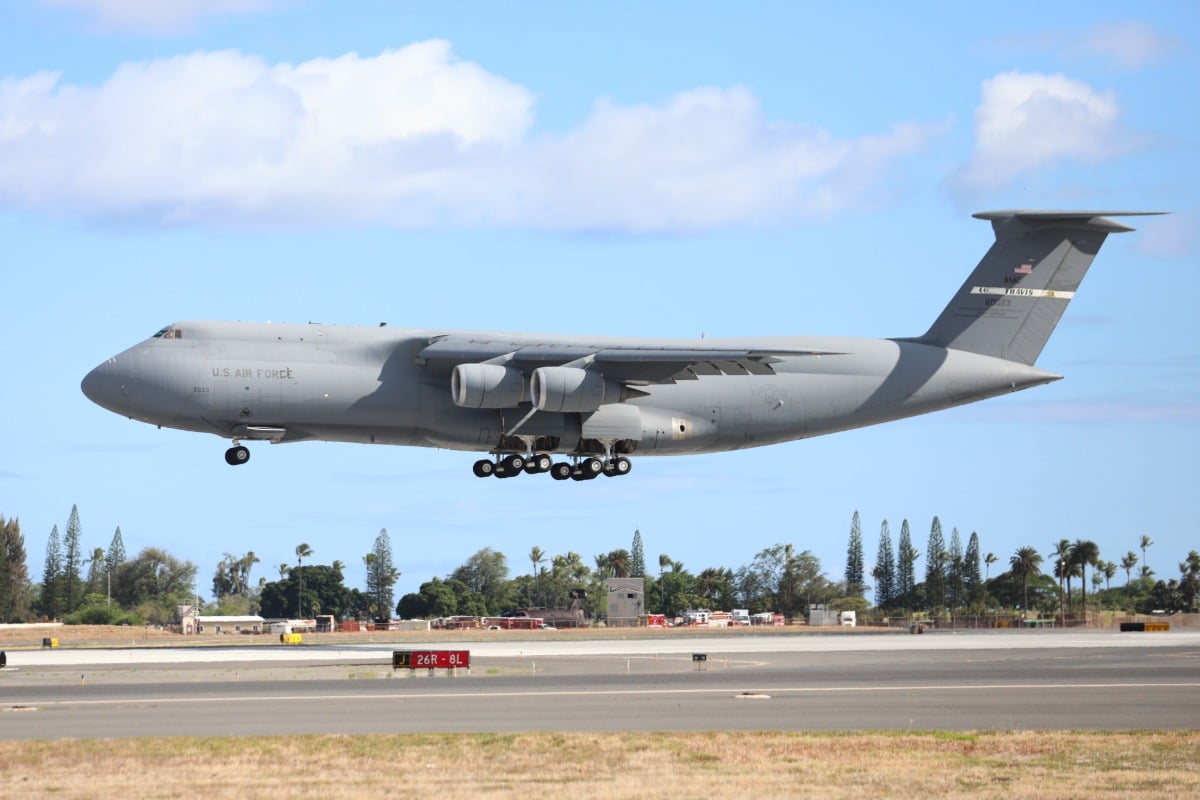
The U.S. Air Force just committed $143 million to overhaul the software inside its largest cargo aircraft, the C-5M Super Galaxy. On paper, the contract aims to modernize mission computing and flight management systems for a fleet that dates back to the Cold War. In reality, this massive financial injection exposes a deeper, structural crisis within military aviation. The Pentagon cannot keep its aging giants in the air without turning them into flying servers, but its track record with defense software suggests this upgrade could easily stall out.
Lockheed Martin will handle the contract, tasked with replacing decades-old source code and hardware architectures. The objective is to make the C-5M more reliable and faster to update when new threats emerge. Yet, throwing nine figures at a legacy airframe highlights an awkward truth. The military is trapped in a cycle of expensive digital band-aids because building a brand-new transport fleet from scratch is economically impossible right now.
The Crushing Cost of Keeping Giants Airborne
The C-5 Galaxy is a monster of an airplane. It can carry two M1 Abrams tanks or an entire flight line of helicopters across oceans without refueling. But its size is matched only by its maintenance appetite. The current C-5M fleet consists of just over 50 aircraft, all of which underwent an extensive re-engining program that wrapped up in 2018 to extend their service lives past 2040.
That hardware overhaul was supposed to buy time. It did, but it also ran headfirst into the reality of modern warfare, which relies far more on data transmission than raw horsepower.
Right now, a C-5M operates on a patchwork of legacy computing systems. When a component fails, or when the Air Force needs to install new encrypted communication tools, engineers cannot just push an over-the-air update. They face a bureaucratic and technical nightmare of recertifying millions of lines of archaic code. The $143 million deal is a desperate attempt to break this bottleneck by moving toward an open-architecture software model.
This change means the Air Force wants to own the software environment so it can plug and play new applications from different vendors without being locked into Lockheed Martin’s proprietary systems forever. It is a noble goal. It is also incredibly difficult to execute within the Pentagon's rigid procurement system.
The Open Architecture Trap
Defense contractors love proprietary code because it guarantees a monopoly on maintenance for decades. When the government demands an open system, contractors often comply on paper while charging exorbitant fees for the documentation required to actually use it.
If this $143 million project follows the historical trend of military software procurement, the Air Force will spend the first three years just defining data standards. Meanwhile, the actual planes will continue to fly with systems that struggle to communicate with newer assets like the F-35 or advanced drone networks. The logistical footprint of a C-5 is already massive, and adding software instability to its existing mechanical quirks could plummet its mission-capable rates at a time when global logistics are stressed to the breaking point.
Why Software Fails Where Hardware Succeeds
The military knows how to bend metal. It understands hydraulics, turbine blades, and titanium spars. It does not understand agile software development.
When a traditional defense program builds a physical part, there is a clear blueprint. Software does not work that way. Code is dynamic, requiring constant patching, debugging, and vulnerability testing. When the Air Force treats software like a physical commodity—buying it via a massive lump-sum contract with static milestones—the end product is usually obsolete by the time it is deployed.
Consider the baseline challenges of this specific upgrade. The C-5M operates in highly contested electronic environments. Its software must not only manage fuel flows and autopilot functions but also resist sophisticated GPS jamming and cyberattacks from near-peer adversaries. Upgrading these systems requires a level of software talent that rarely chooses to work for traditional defense primes when tech firms offer far higher compensation. The talent gap alone introduces massive execution risk to the $143 million program.
The Threat of the Digital Choke Point
Logistics win wars. If the United States enters a conflict in the Pacific, the tyranny of distance becomes the primary enemy. Every piece of artillery, every medical supply crate, and every gallon of fuel will depend on strategic airlift.
If a software bug grounds a handful of C-5Ms during a crisis, the entire supply chain fractures. This is the hidden risk of digitization. A mechanical failure usually affects one aircraft at a time. A corrupted software update can ground an entire fleet with a single keystroke. By centralizing and modernizing the C-5's mission systems, the Air Force is inadvertently creating a single point of failure that adversaries will actively target through cyber espionage.
The Long-Term Prognosis
This $143 million contract is not a sign of modernization strength. It is an act of preservation. The Air Force is forcing an old airframe to play a young man's game, gambling that millions of lines of new code can offset the wear and tear of a transport veteran.
If Lockheed Martin delivers an adaptable system on time, the C-5M remains a viable asset for the next two decades. If the project slips into the usual cycle of delays, cost overruns, and integration bugs, the U.S. military will find its vital logistical lifeline choked by the very technology meant to save it. The outcome relies entirely on whether the Pentagon can manage a digital transformation as effectively as it used to manage a factory floor.