Alberta Premier Danielle Smith's push for a provincial independence referendum has pushed Western Canada to the brink of an unprecedented constitutional standstill, as First Nations leaders vow to deploy widespread civil disobedience and economic blockades if the province forces a vote this October. The escalating confrontation represents far more than routine political theater. It is a fundamental legal collision between a provincial government attempting to rewrite its relationship with Canada and the historic, nation-to-nation treaties signed between Indigenous peoples and the British Crown before Alberta even existed as a province.
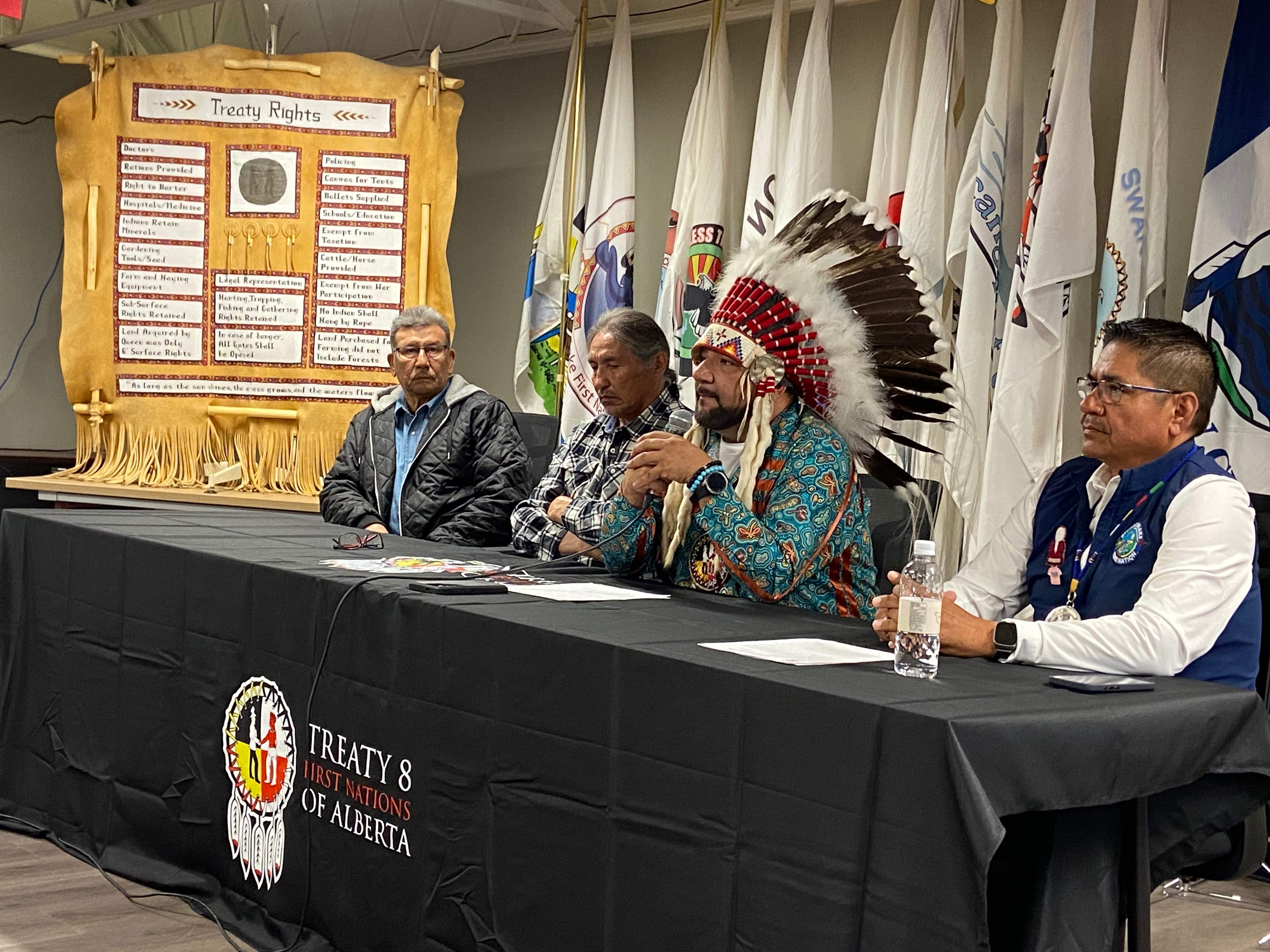
The battle lines are explicitly drawn. Treaty 8 Grand Chief Trevor Mercredi, representing territory that spans northern Alberta and vast swaths of the West, has issued a blunt warning to the United Conservative Party government. If the province proceeds with its planned October 19 ballot question on whether to break away from Canada, First Nations are prepared to halt critical infrastructure. This means stopping industry, obstructing highways, and deploying physical blockades to defend their constitutional rights.
The core of the dispute rests on a profound legal reality that provincial independence advocates routinely ignore. The treaties were signed with the Crown, not the province of Alberta. A provincial government cannot unilaterally vote away, alter, or transfer those sacred federal agreements to a newly minted sovereign state.
The Illusion of Provincial Sovereignty
The political rhetoric emanating from Edmonton treats the upcoming referendum as a simple exercise in democratic will, fueled by a petition that garnered roughly 700,000 signatures. The Premier’s office continues to assert that a public ballot question does not trigger a legal duty to consult Indigenous populations. This stance reveals either a calculated gamble or a severe misunderstanding of Canadian constitutional law.
Under Section 35 of the Constitution Act, 1982, Aboriginal and Treaty rights are permanently protected. The courts have repeatedly established that the Crown—and by extension, the provinces—has a legal duty to consult First Nations before making administrative decisions that could adversely impact those rights. Alberta's Citizen Initiative Act originally contained a constitutional screening mechanism to prevent illegal ballot initiatives. In a desperate bid to keep the separatist petition alive, the UCP government quietly stripped that screening mechanism from the legislation.
This legislative maneuvering backfired spectacularly in the courts. In two consecutive rulings—Chief Electoral Officer of Alberta v. Sylvestre in December 2025 and Athabasca Chipewyan First Nation v. Alberta in May 2026—the Alberta Court of King's Bench systematically dismantled the province's logic. The judiciary ruled that a secession referendum cannot legally proceed without extensive, upfront consultation with First Nations. The court made it clear that Alberta cannot simply legislate its way out of constitutional duties.
The legal mechanics of secession are messy, rigid, and practically impossible without Indigenous consent. If Alberta were to separate, existing provincial boundaries would instantly transform into international borders. This geographical disruption would slice directly through ancestral Treaty territories, effectively destroying the guaranteed rights of Indigenous peoples to hunt, fish, harvest, and move freely across their historic lands.
Industry as the Ultimate Economic Leverage
When Grand Chief Mercredi openly speaks about "stopping industry," he is pointing a loaded gun at the absolute heart of the Alberta economy. The province's multi-billion-dollar oil, natural gas, and forestry sectors rely entirely on operations located on Treaty lands. First Nations leadership is well aware that they possess the geographic and economic leverage to paralyze the province if their legal warnings continue to be dismissed as white noise.
A coordinated campaign of civil disobedience in northern Alberta could stall billions of dollars in resource extraction within days. Major transport corridors, rail lines, and pipeline access points run directly through or adjacent to reserve lands and traditional territories. The threat of blockades is not a hypothetical bluff. It is a proven, highly disruptive tactic that has historically brought Canadian resource sectors to a grinding halt.
"How does Alberta expect to move forward as a sovereign nation when all of the resources and lands belong to the treaty people?" asks Grand Chief Mercredi.
The UCP’s current strategy ignores a critical economic vulnerability. International investors abhor legal instability. The mere threat of prolonged constitutional litigation, paired with active corporate blockades and civil unrest, is enough to trigger capital flight from the oil sands. Resource corporations require regulatory certainty to justify long-term investments; a provincial government labeled "lawless" by the region's original landowners provides the exact opposite.
The Separation Fallacy
The broader legal consensus across Canada confirms that Alberta simply lacks the unilateral authority to quit Confederation. The Supreme Court of Canada’s historic 1998 Secession Reference regarding Quebec established a clear framework: a province cannot declare independence unilaterally. Secession requires a clear majority on a clear question, followed by extensive constitutional negotiations involving all provinces and the federal government.
In Alberta's case, those negotiations would instantly stall. First Nations leaders have made it clear that their treaty relationship is exclusively with the federal Canadian Crown. They have zero interest in negotiating new terms with an independent Alberta republic that has spent years demonstrating open hostility toward Indigenous sovereignty and judicial rulings.
Consider a hypothetical scenario where Alberta attempts a rogue, unilateral declaration of independence without federal approval. The province would instantly find itself unrecognized globally, lacking international trade agreements, and facing an internal security and economic crisis. First Nations would legally retain their Canadian citizenship and treaty protections, effectively turning vast portions of Alberta's resource-rich north into hostile federal or sovereign enclaves within the unrecognized state.
The UCP government's insistence on pushing forward with the October vote, despite explicit court orders to halt and consult, exposes the referendum as an expensive political illusion. It is a high-stakes strategy designed to appease a restless, alienated base, played out with zero regard for the severe economic and social damage it invites. By treating historic treaties as minor administrative hurdles rather than supreme constitutional laws, the provincial leadership is actively steering Alberta toward a catastrophic, self-inflicted crisis.
The courts have drawn a definitive line, and First Nations are prepared to enforce it on the ground. The province cannot vote its way out of reality.