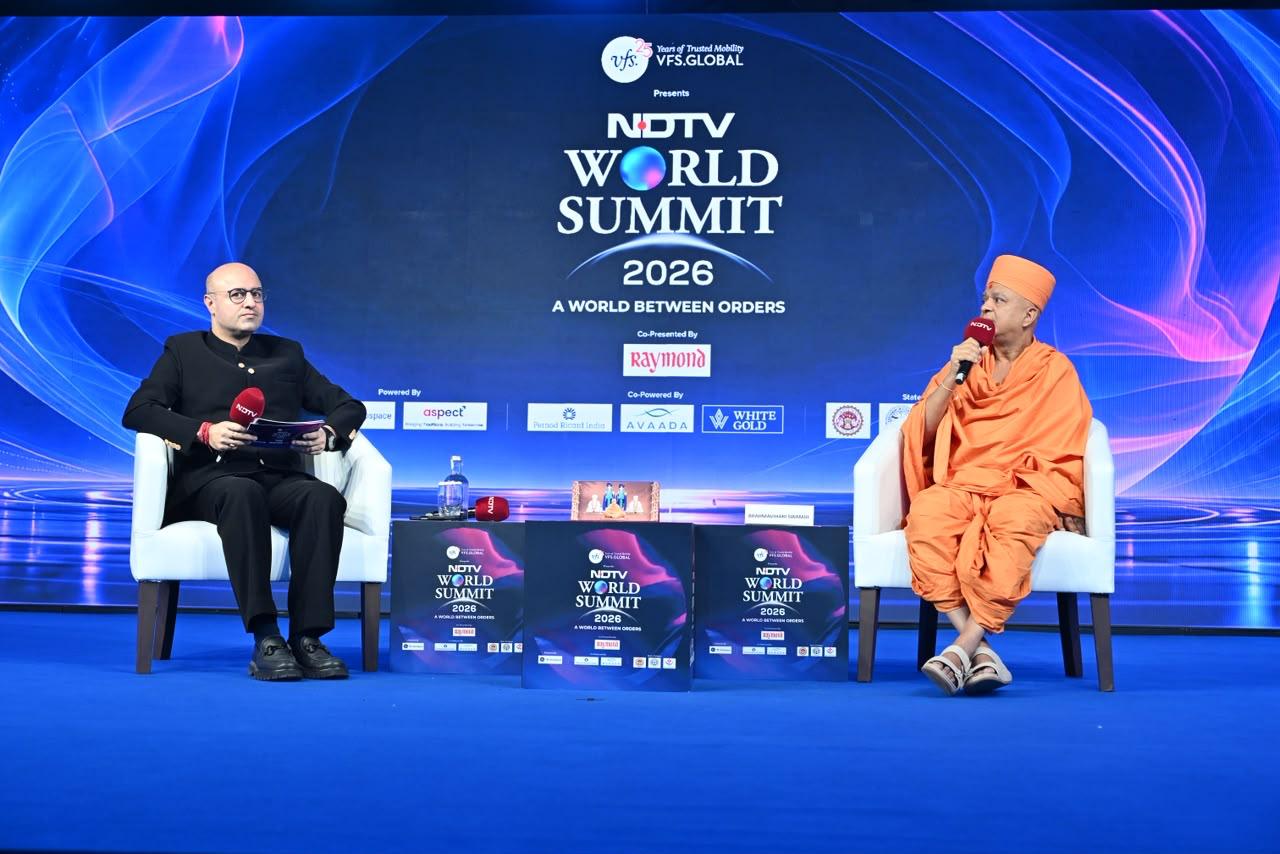
The anxiety surrounding artificial intelligence has long been framed as a fear of subjugation by code. We obsess over the moment synthetic intelligence might surpass human cognition, rendering biological thinkers obsolete. Yet this narrative misses the actual shift occurring in boardrooms, research labs, and everyday routines. During the recent NDTV World Summit, BAPS monk and global speaker Brahmavihari Swamiji offered an observation that cuts through the typical techno-optimism and dystopian panic: the real danger is not that machines will start thinking like humans, but that humans will start thinking like machines.
This inversion exposes a profound vulnerability in contemporary culture. For decades, the tech industry has marketed automation as a tool for liberation, promising to free individuals from tedious labor so they can focus on higher pursuits. Instead, the relentless integration of algorithmic systems into daily decision-making has conditioned people to value speed, efficiency, and predictability above all else. When software dictates everything from what we read to how we write, biological intelligence begins to mirror the constraints of its own creations.
The Illusion of Progress and the Loss of Interiority
To understand why human thought is drifting toward algorithmic conformity, one must examine how dependency forms. Consider a hypothetical professional writer who relies entirely on predictive text models to draft correspondence, structure essays, and brainstorm narrative arcs. Over months of consistent usage, the writer stops wrestling with the friction of blank space. That friction, however uncomfortable, is precisely where original thought occurs. By outsourcing the struggle of ideation to an external engine, the writer gradually abandons the internal processes that generate distinct voice and nuance.
This is the hidden cost of frictionless efficiency. True creativity requires doubt, ambiguity, and the willingness to pursue dead ends. Machine learning models do not experience doubt; they calculate probabilities based on preexisting datasets. When humans adapt their communication and problem-solving styles to match the statistical outputs of these systems, they abandon their own capacity for imaginative leaps. They become predictable, optimized actors within a closed loop.
The spiritual and philosophical traditions represented by figures like Brahmavihari Swamiji emphasize faith, dreams, and unquantifiable human depth as core anchors. These concepts are frequently dismissed by technologists as emotional baggage or irrational biases. Yet that irrationality is the exact source of artistic breakthroughs, moral courage, and paradigm-shifting discoveries. A machine can synthesize existing wisdom, but it cannot invent a new value system or suffer through the existential crisis required to question an existing one.
The Corporate Urge to Quantify the Unquantifiable
Industry executives and venture capitalists have a financial incentive to deny this distinction. If intelligence can be fully digitized, then human labor becomes entirely interchangeable, easily scaled, and indefinitely monitored. The corporate obsession with metrics treats human attention as just another variable to be manipulated and optimized.
Consider the modern workplace, where performance tracking software measures keystrokes, response times, and daily output down to the second. Workers are systematically trained to eliminate variability. They are rewarded for adopting standardized communication templates and penalised for erratic, creative deviations. Over time, employees internalize these metrics. They begin to evaluate their own worth through the lens of quantitative throughput. They organize their schedules, their communications, and even their personal goals around the logic of a database.
This dynamic creates a feedback loop of homogenization. Algorithms trained on past human behavior reward conformity. When individuals alter their behavior to satisfy the algorithm, they feed new, homogenized data back into the system. The cultural output flattens. Originality becomes an economic liability because it introduces variance that predictive models cannot easily process.
Reclaiming the Friction of Being Human
Resisting this drift requires a deliberate pivot away from absolute optimization. It demands a willingness to accept inefficiency, mistakes, and prolonged contemplation as necessary components of human agency.
Regulators and ethicists frequently focus on external guardrails, debating how to watermark synthetic media, restrict autonomous weapon systems, or prevent data monopolies. While these legal frameworks are necessary, they address only the symptoms of a deeper cultural surrender. External rules cannot protect human agency if individuals willingly abdicate their responsibility to think critically and feel deeply.
The challenge of the coming decades is not learning how to coexist with smarter machines, but learning how to stop behaving like them. Preserving human distinctiveness means protecting the messy, inefficient spaces where true intuition lives. If we surrender the capacity to dream without a pre-calculated return on investment, we will not need to worry about machines replacing us. We will have already replaced ourselves.
Can AI Become A Substitute For God? Brahmavihari Swamiji On Faith And Technology
This video provides additional context on Brahmavihari Swamiji's arguments regarding the limits of artificial intelligence and the enduring importance of human faith and morality.