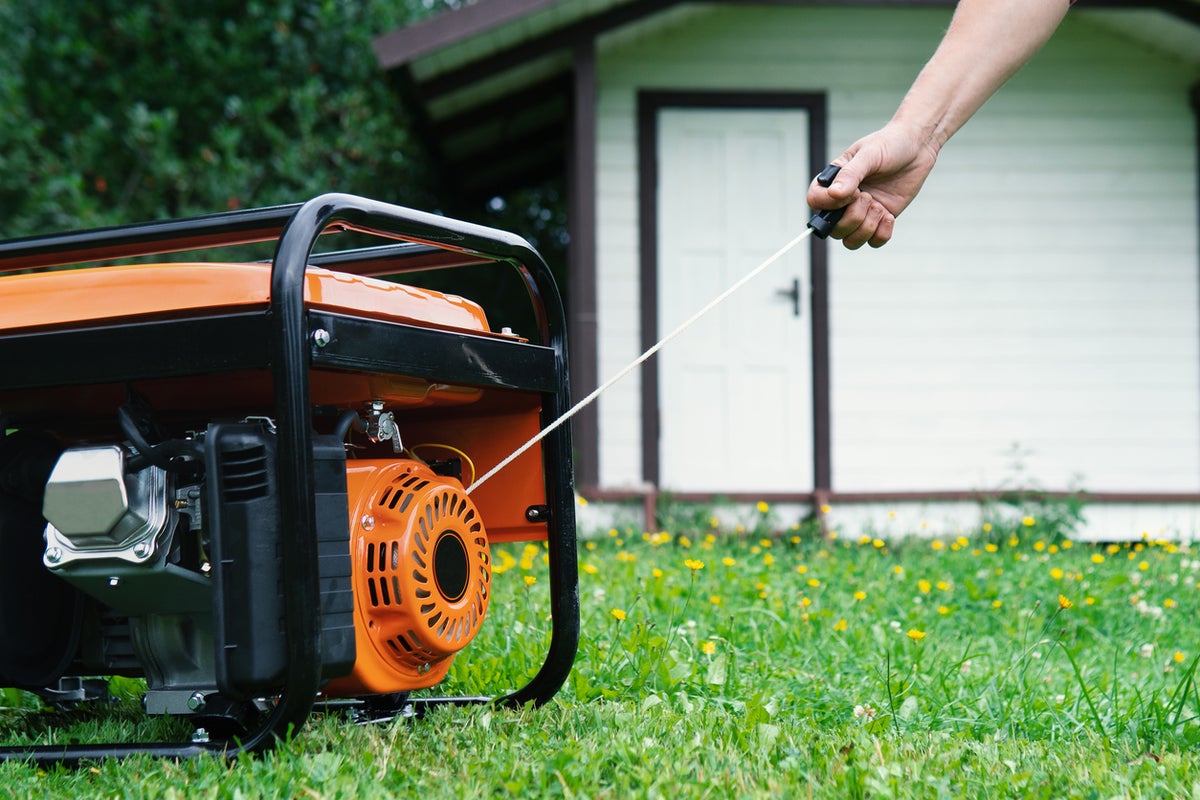
When the grid dies during a severe heatwave or winter storm, choosing the right backup power solution becomes a matter of survival, not convenience. The consumer market offers three primary options: portable dual-fuel generators for immediate, cost-effective energy; whole-home standby systems for automated, hands-free operation; and lithium-iron-phosphate battery stations for quiet, indoor, emissions-free use. However, making an informed choice requires looking past marketing glossy brochures. The utility sector is actively shifting the cost of grid failure onto you, the homeowner, forcing a private, expensive solution to a systemic public infrastructure crisis.
To survive the coming decade of escalating grid instability, you must stop treating backup power as a plug-and-play home appliance. It is a highly demanding personal utility that requires rigorous maintenance, precise physical math, and an honest assessment of your fuel supply chain.
The Great Grid Offloading
Public utility companies are failing. Between aging high-voltage transmission lines, weather extremes driven by shifting climates, and an underfunded distribution system, the US electrical grid is more fragile than it has been in half a century. Yet, instead of bearing the financial brunt of these failures, utilities are successfully passing the responsibility down the line.
They do this by raising rates to pay for wildfire liabilities while encouraging consumers to buy private backup systems. It is a brilliant corporate strategy. By leaving you in the dark, they force you to spend anywhere from $1,000 to $30,000 of your own money to secure the electricity they promised to deliver.
But buying your way out of this crisis is not as simple as clicking "buy now" on a portable power station or signing a predatory lease for a home solar-plus-battery setup. The backup power industry is filled with exaggerated performance claims, hidden maintenance costs, and critical engineering limitations that sales representatives routinely gloss over. If you do not understand the mechanical reality of these systems before the lights go out, your expensive fallback plan will fail when you need it most.
The Hard Math of Portable Generators
For the vast majority of people, a portable inverter generator remains the most practical defense against a blackout. They are affordable, highly efficient, and easily repaired. Yet, most homeowners buy the wrong size because they fail to calculate a critical engineering metric: Locked Rotor Amps (LRA).
Every appliance with a compressor—your refrigerator, window air conditioner, or sump pump—requires a massive surge of electrical current just to start up. This is the LRA.
A Hypothetical Example of the LRA Trap:
Consider a standard 3-ton central air conditioning unit. While running, it might only draw about $3,500$ watts of power. A consumer looks at their $5,000$-watt portable generator and assumes they have plenty of headroom.However, the startup surge (LRA) for that compressor can easily exceed $15,000$ watts for a fraction of a second. The moment the thermostat clicks on, the generator will instantly overload, trip its breaker, or stall out completely.
To run heavy loads on a portable unit, you must either install a soft-start kit on your air conditioner—which electronically smooths out that initial startup spike—or dramatically oversize your generator.
The Fuel Storage Problem
If you choose a portable generator, your primary battle is not with the machine itself. It is with the fuel.
Standard pump gasoline containing ethanol has a shelf life of roughly three to four weeks. After that, it absorbs moisture from the air, degrades, and leaves a varnish-like residue that clogs the tiny passages in a carburetor. If you store gasoline in plastic cans in your garage for six months without a fuel stabilizer, your generator will not start during a winter storm.
Fuel Options Compared
+-------------+-----------------------+------------------------+-------------------------+
| Fuel Type   | Shelf Life            | Energy Density         | Storage Safety          |
+-------------+-----------------------+------------------------+-------------------------+
| Gasoline    | 1 - 3 months          | High (~120k BTU/gal)   | Low (Highly volatile)   |
| Propane     | Indefinite            | Moderate (~91k BTU/gal)| High (Pressurized tank) |
| Diesel      | 12 - 24 months        | Very High (~138k BTU)  | Moderate (Low volatility|
+-------------+-----------------------+------------------------+-------------------------+
This makes propane (LPG) the superior fuel for emergency preparedness. Propane does not degrade. A liquid propane tank can sit in your shed for twenty years and burn perfectly tomorrow. The trade-off is energy density: propane delivers roughly $10%$ to $15%$ less power per gallon equivalent than gasoline, meaning your generator's maximum output will drop slightly. But that is a minor price to pay for a fuel source that is guaranteed to work when the grid collapses.
The Standby Generator Trap
For those with deep pockets, a permanently installed, whole-home standby generator seems like the ultimate solution. These units sit on a concrete pad outside, monitor the utility line, and automatically start up within ten seconds of a power loss using an automatic transfer switch.
But this convenience comes with massive, ongoing liabilities.
First, the capital expense is staggering. While the generator unit itself might cost $5,000$, the actual cost of installation—including professional electrical wiring, municipal permits, pouring a concrete pad, and upgrading your gas meter—frequently pushes the final bill past $15,000$.
Second, they are mechanical engines that require intensive upkeep. A standby generator is essentially a car engine that sits in a metal box in your yard, exposed to the elements, waiting to run at $3,600$ RPM under heavy load for days on end.
- Oil changes: Most standby units require an oil and filter change every $100$ to $200$ hours of operation. During a prolonged five-day blackout, you will have to shut down your generator, let it cool, and change the oil mid-disaster.
- Valve adjustments: Many air-cooled engines require manual valve clearance adjustments after their initial break-in period and every few hundred hours thereafter. Neglect this, and the engine will lose compression and fail to start.
- The natural gas illusion: Most standby units run on utility-supplied natural gas. But during extreme weather events—such as the massive winter freeze that hit Texas in 2021—natural gas pipeline pressures can drop precipitously due to frozen wellheads and extreme demand. If the gas pressure drops, your standby generator becomes an expensive lawn ornament.
The Battery Storage Illusion
The newest players in the emergency power market are large-scale lithium batteries, often marketed under the misleading name "solar generators."
They are clean, silent, and safe to run inside your living room. They do not require oil changes, nor do they emit carbon monoxide. But the current marketing of these devices relies heavily on consumer ignorance regarding energy capacity and temperature constraints.
Battery Chemistry Comparison
+-------------------------+-------------------------+-------------------------+
| Metric                  | LiFePO4 (LFP)           | NMC (Lithium-Ion)       |
+-------------------------+-------------------------+-------------------------+
| Lifespan (Cycles)       | 3,000 - 6,000           | 500 - 1,000             |
| Thermal Runaway Temp    | ~270°C (Very Safe)      | ~210°C (Higher Risk)    |
| Cold Charging Limit     | 32°F (0°C)              | 32°F (0°C)              |
+-------------------------+-------------------------+-------------------------+
Most portable power stations use Lithium Iron Phosphate (LiFePO4) chemistry. LFP is incredibly durable, lasting thousands of charge cycles before losing significant capacity. But LFP chemistry has a fatal flaw: it cannot accept a charge when the battery cells are below freezing ($32^\circ\text{F}$ or $0^\circ\text{C}$).
If your home loses heat during a sub-zero winter storm and your battery storage system is kept in an uninsulated garage or utility closet, the internal battery management system will block all incoming power. Your solar panels will be baking in the winter sun, but your battery will refuse to charge.
Furthermore, the scale of battery storage required to run a modern home is vastly underestimated. A standard $2,000$-watt-hour (2 kWh) portable battery can run a small $60$-watt refrigerator for about twenty-five hours, assuming no other loads are connected. If you try to run a space heater ($1,500$ watts), that expensive battery will be completely drained in eighty minutes.
To achieve true energy independence with batteries, you need a massive, permanently installed wall-mount system (like a Tesla Powerwall or FranklinWH system) paired with a substantial solar array. At that point, you are looking at a capital investment that can easily exceed $25,000$, and if a major storm blankets your solar panels in heavy snow or thick soot from wildfires, you will have no way to recharge once those batteries run dry.
Building a Resilient Plan that Actually Works
True resilience does not come from buying the most expensive system on the market. It comes from building a redundant, multi-tiered energy strategy that balances cost, fuel availability, and physical limits.
                      +-----------------------------+
                      |   1. Critical Load Phase    |
                      |   - LED Lights, Routers     |
                      |   - Small LFP Battery (2kWh) |
                      +--------------+--------------+
                                     |
                                     v
                      +-----------------------------+
                      |    2. Heavy Load Phase      |
                      |    - Fridge, Pumps, AC      |
                      |    - Propane Generator      |
                      +--------------+--------------+
                                     |
                                     v
                      +-----------------------------+
                      |    3. System Integration    |
                      |    - Manual Transfer Switch |
                      |    - Soft-Start on HVAC     |
                      +-----------------------------+
First, install a manual transfer switch or an interlock kit on your home’s main electrical panel. This allows you to safely connect a portable generator to your home's existing wiring via a single heavy-duty cord, eliminating the dangerous and chaotic web of extension cords running through cracked windows. It also ensures you can selectively power individual breakers—like your water heater or fridge—without backfeeding the utility lines and risking the lives of line workers.
Second, decouple your heating and cooling from the electrical grid entirely where possible. If you live in a cold climate, a non-electric, direct-vent propane wall heater or a certified wood-burning stove is infinitely more reliable than trying to power an electric heat pump with a generator. If you live in a hot climate, focus on cooling a single "safe room" with a highly efficient window unit or mini-split rather than trying to power your entire central air conditioning system.
Stop viewing backup power as an automated luxury that will run quietly in the background without your intervention. It is an active, demanding utility. Calculate your true startup wattages, store stable fuel, protect your batteries from freezing, and maintain your equipment before the sky goes dark.