The standard advice for hurricane season is often reduced to a generic checklist: buy water, tape your windows, and listen to the radio. This is dangerous theater. If you rely on the same tired, government-issued pamphlets that have circulated for thirty years, you are essentially gambling with your property and your survival. True safety during a hurricane requires understanding the physics of failure, the limitations of your local infrastructure, and the grim reality that in a catastrophic event, you are on your own for at least ninety-six hours.
Meteorologists have become remarkably accurate at predicting storm paths. Yet, individual preparedness remains abysmal. We treat these events like a temporary inconvenience rather than a structural threat to our lives. The primary reason for this failure is cognitive dissonance. People assume that because they have lived through a tropical storm in the past, they understand the nature of a major hurricane. They do not. A Category 4 storm is not a windy day; it is a kinetic engine of destruction capable of turning debris into high-velocity projectiles.
The Myth of Interior Protection
Most residential structures in hurricane-prone zones are not designed to withstand the sustained pressure of a major storm. They are built for code compliance, not survival. When a hurricane hits, the weakest point is rarely the wall itself; it is the roof-to-wall connection. Most houses are held together by nails that have been subjected to decades of thermal expansion and contraction.
If you are serious about protection, stop focusing on taping windows. That is a waste of time and actually creates larger, more dangerous shards of glass if the window fails. The only effective barrier is impact-rated shielding. This means hurricane shutters or high-grade plywood cut to specific dimensions and anchored into the structural frame of your home—not just the window trim.
If you cannot afford professional-grade systems, your priority should be sealing the building envelope. A single broken window or an unsecured garage door allows wind to enter the home, pressurizing the interior. Once that pressure has nowhere to go, it pushes upward on the roof. This is how roofs disappear during moderate storms. If the garage door is the most vulnerable part of your home, and it usually is, you must reinforce it with a bracing kit or replace it with a wind-rated door. This single modification is more valuable than twenty cases of bottled water.
Inventory of Reality
Disaster kits are often bloated with items that provide psychological comfort rather than physical utility. You do not need a deck of cards or board games. You need an energy management strategy.
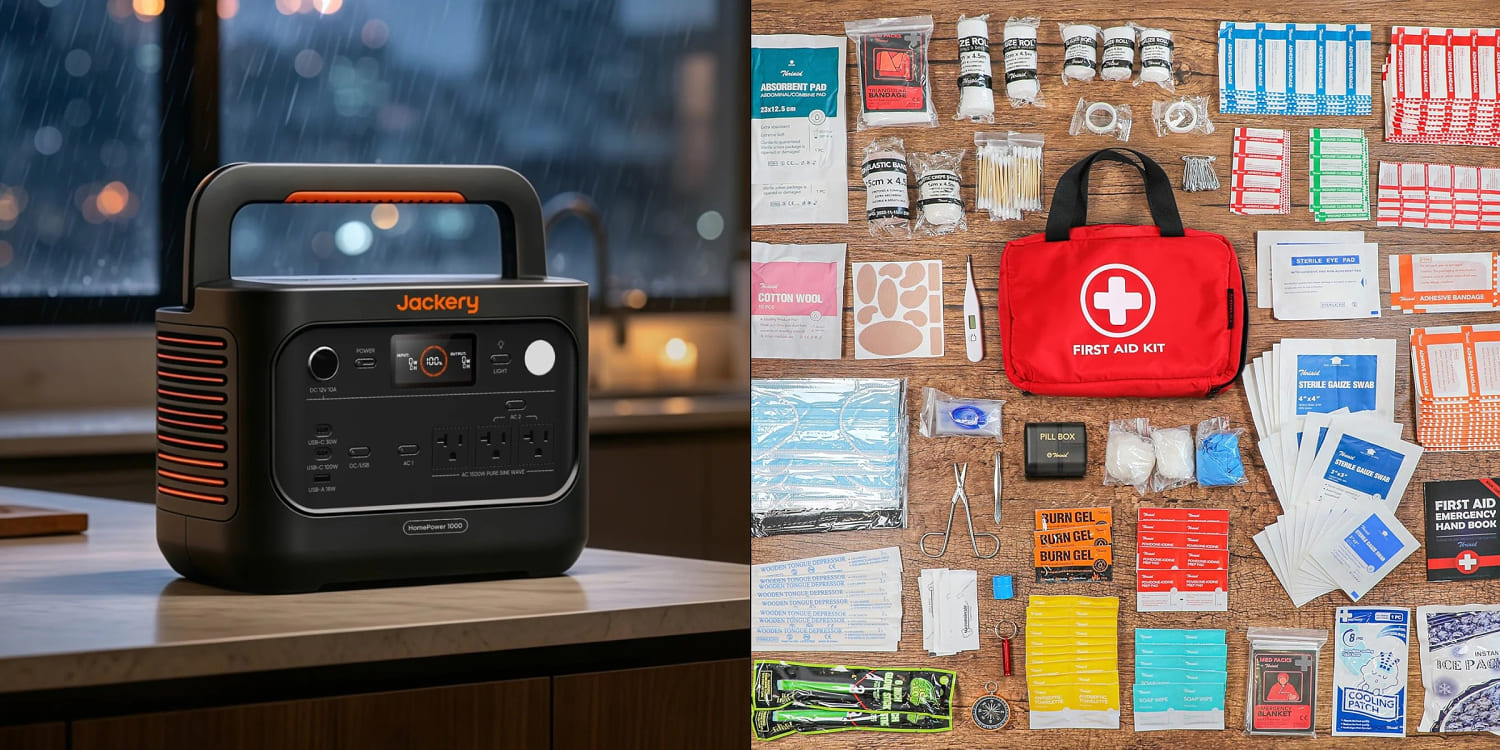
Start with power. A hurricane can knock out the grid for weeks. If you rely on a gasoline generator, you are tethered to the availability of fuel, which will be the first commodity to vanish after the storm. If you must use a generator, store at least twenty gallons of fuel in properly stabilized containers before the season starts. Rotate this fuel every six months. If that seems like too much work, you are not ready for a long-term outage.
Alternatively, look toward lithium iron phosphate battery storage systems paired with portable solar panels. They are silent, they do not produce carbon monoxide, and they do not require a supply chain to function. You can run a refrigerator and a few lights for days on a modern portable power station.
Then there is the water problem. One gallon per person per day is the absolute minimum, and it is almost always insufficient. That figure assumes you are sitting still in a climate-controlled room. It does not account for the physical exertion of cleaning up debris, the heat of a house without air conditioning, or basic hygiene. Double that amount. Then store it in a cool, dark place. Plastic jugs degrade over time, so ensure your water supply is rotated annually.
Evacuation Versus Survival
There is a precise moment when evacuation transforms from a choice into a failure of planning. Most people wait for the official evacuation order. This is a mistake. By the time the authorities issue an order, the highways are already parking lots. The fuel stations are dry. The chaos is absolute.
You must establish a pre-evacuation trigger. This is a set of criteria—such as a storm reaching a specific wind speed or a forecasted track within a certain mileage of your location—that dictates you leave. Once that trigger is met, you go. No discussion. No waiting to see if it turns. You move toward a predetermined destination that is far enough inland to avoid storm surge but close enough to make the transit viable.
If you stay, you are choosing to accept the risks of localized flooding and structural failure. If you live in a low-lying area or a mobile home, there is no debate. You leave. Storm surge is the leading cause of death in hurricanes, and it is a silent, creeping force that kills more people than the wind ever will. People underestimate the weight of water. One cubic yard of water weighs nearly 1,700 pounds. A two-foot rise in surge can knock a person off their feet and carry a vehicle away. If your house is located in a zone susceptible to surge, your survival plan is simply to be somewhere else.
The Hidden Logistics of Recovery
The immediate aftermath of a storm is a period of total societal dysfunction. Communications will fail. Cellular networks will be congested or destroyed. You need an analog plan. Identify a family meeting point that does not require electricity or internet access. Keep a physical map of your area, marked with potential routes that avoid low-lying bridges and flood-prone intersections.
Furthermore, document your property before the season. Take high-resolution video of every room in your house, including the contents of your closets and drawers. Open your appliances and photograph the model numbers. Store this digital record on an encrypted cloud service or a physical drive that you take with you if you evacuate. Insurance adjusters will be overwhelmed, and your ability to prove what you had—and its condition—will be the difference between a fair settlement and a total financial loss.
The Psychological Burden
Preparing for a disaster is a task that never truly ends. It creates a weight on the mind, an awareness that the ground you stand on could be transformed by the atmosphere in an afternoon. This is not paranoia; it is situational awareness.
The people who fare the worst are the ones who try to force normalcy onto an abnormal situation. They try to keep the fridge running when the power is out, they try to drive through flooded roads to find a coffee shop, or they refuse to leave their property because they do not want to abandon their possessions. These are the victims of the storm.
True preparedness is the ability to walk away from your life at a moment’s notice, knowing that your assets are protected by documentation and your family is protected by a plan. It is a cold, calculated approach to an unpredictable force. If you are waiting for the evening news to tell you when to act, you have already ceded control. Start the work today. Secure your structural vulnerabilities, audit your emergency supplies, and set your departure triggers before the first tropical wave even begins its trek across the Atlantic.