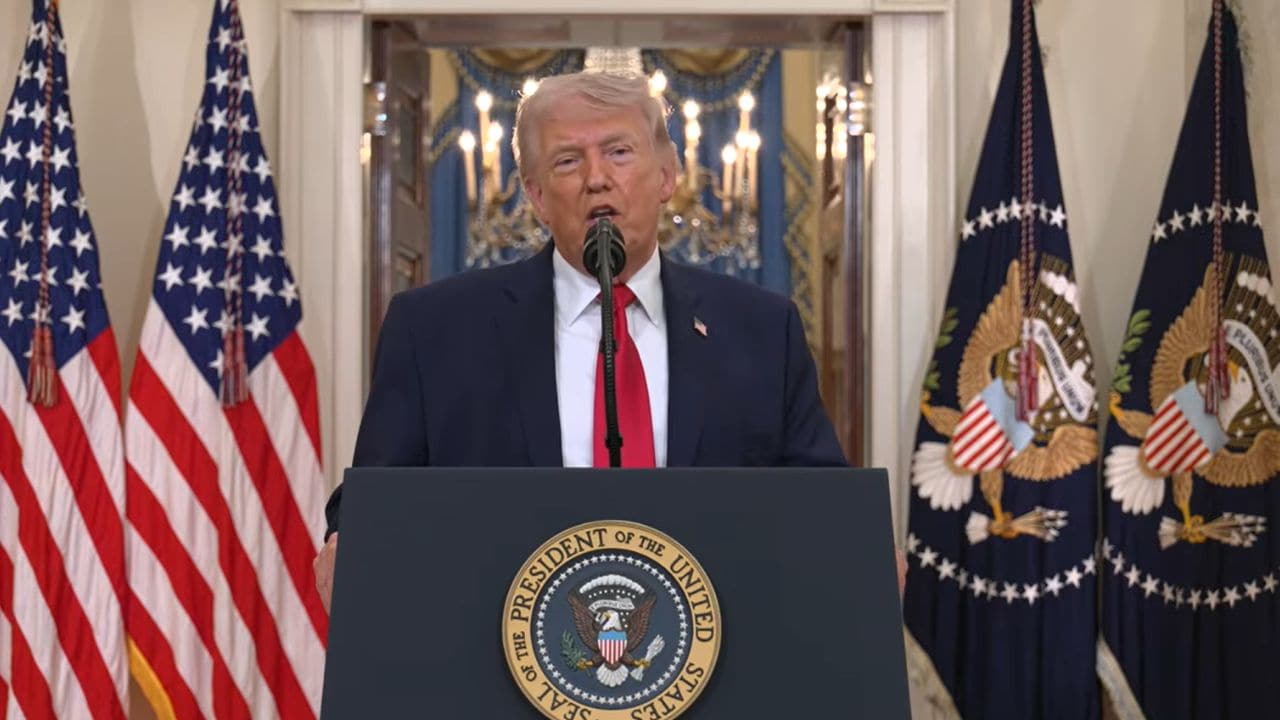
The shift from traditional foreign assistance to a "trade over aid" model is not just a policy tweak; it is a fundamental gamble with the geopolitical stability of the West. While proponents argue that opening markets creates more sustainable growth than writing checks, the Rockefeller Foundation and a growing chorus of national security experts warn that this transition risks hollowing out American influence in the developing world. The core tension lies in the fact that trade is a transactional mechanism that follows profit, whereas aid is a strategic tool that follows values. Abandoning the latter doesn't just stop the flow of money; it cedes the ground to competitors like China, which are more than happy to fill the vacuum with their own brands of "assistance" that come with heavy strings attached.
The High Cost of the Transactional Pivot
For decades, foreign aid has served as the soft power bedrock of international relations. It buys more than just vaccines or schoolbooks; it buys a seat at the table. When a nation provides the capital for a country’s power grid or healthcare infrastructure, it gains the leverage to advocate for democratic norms, transparency, and human rights.
The move toward a trade-centric approach assumes that the private sector will naturally step in to provide the same stabilizing force. This is a fallacy. Private capital is risk-averse. Investors do not prioritize the long-term democratic health of a fragile state; they prioritize quarterly returns and legal certainty. If the United States pulls back its direct assistance programs in favor of waiting for the "market" to take over, it often leaves the world’s most vulnerable regions in a state of arrested development.
Why the Rockefeller Foundation is Sounding the Alarm
The Rockefeller Foundation’s recent warnings highlight a specific vulnerability: the erosion of global health and food security. When aid is stripped away, the immediate victims are the programs that prevent the next pandemic or mitigate the effects of climate-driven famine. These are not problems that a new free trade agreement can solve in the short term.
The Security Vacuum
When the West retreats from aid, it creates a vacuum. We are seeing this play out across Sub-Saharan Africa and Southeast Asia. In these regions, the absence of American-led development projects has allowed the Belt and Road Initiative to become the only game in town.
China’s model is often described as "trade," but it is actually a form of debt-trap diplomacy that looks very different from the liberalized market access the U.S. promotes. By the time a developing nation realizes the cost of these predatory loans, they have already signed over their ports, their mineral rights, and their voting patterns in the United Nations. The "trade over aid" mantra, if applied too broadly, effectively hands these strategic assets to rivals on a silver platter.
The Myth of Self-Sustaining Markets
The argument for trade-based development relies on the idea that "teaching a man to fish" is better than giving him a fish. It sounds logical in a vacuum. However, in the real world, you cannot fish if the pond is poisoned, the boat is broken, and there is no road to the market.
Aid provides the "pre-market" conditions that make trade possible. You need a healthy, educated workforce and a basic level of physical infrastructure before a multinational corporation will even consider building a factory. By cutting aid in favor of trade, policymakers are essentially trying to put the roof on a house before they have poured the concrete foundation.
The Values Gap
There is also a profound moral and reputational risk. The United States has long defined itself as a "force for good." This isn't just rhetoric; it is a brand that provides a distinct competitive advantage over authoritarian regimes. When we replace aid with purely commercial trade, we signal that our interest in a country is purely extractive.
Values disappear from the ledger. If the relationship is strictly business, why should a developing nation listen to American concerns about labor laws or environmental protections? They won’t. They will simply look for the partner that offers the lowest price and the fewest questions.
A Dangerous Misalignment of Interests
We have to look at who actually benefits from the "trade over aid" push. Often, it is large corporations looking for deregulation and new markets, rather than the citizens of the developing nation or the taxpayers of the donor nation.
- Aid is directed toward public goods: water, education, and disease prevention.
- Trade is directed toward private gains: profit margins and supply chain efficiency.
When these two are confused, the results are catastrophic for national security. A country with a booming export sector but a collapsing public health system is still an unstable country. It is a country that can become a breeding ground for extremism, mass migration, and organized crime—all issues that eventually cost the U.S. far more in military spending than a robust aid budget ever would.
The False Choice
The debate is often framed as a binary choice, but that is a political stunt. The most successful eras of Western influence involved a "both/and" strategy.
We must acknowledge that aid is often inefficient. It can be bureaucratic. It can, in some cases, create dependency. But the solution to a leaky faucet is not to turn off the water to the entire house while it's on fire. The push to gut aid budgets under the guise of "economic empowerment" is often just a thin veil for isolationism.
Redefining the Strategy
If the goal is truly to move nations toward independence, the transition must be gradual and conditional. It requires a sophisticated blending of public and private capital.
The current trajectory, however, is a blunt instrument. We are seeing a retreat from global health initiatives and a shrinking of the diplomatic corps. This isn't just a budget cut; it's a surrender of the 21st-century battlefield.
Influence is not something you can switch back on once it’s been lost. Once a regional power center shifts its loyalty to a different patron, it takes decades of effort and billions of dollars to win it back. The Rockefeller Foundation’s warning is not an appeal to globalist charity; it is a cold-eyed assessment of how power works in a multipolar world.
The U.S. cannot trade its way to security if it has already given up the tools that maintain the peace. Trade is the reward for a stable society, not the magic wand that creates one from chaos.
Stop treating foreign assistance as an optional luxury and start seeing it as a mandatory insurance policy for the global economy. Failure to do so ensures that the "trade" we eventually engage in will be on terms dictated by our enemies, not our friends.