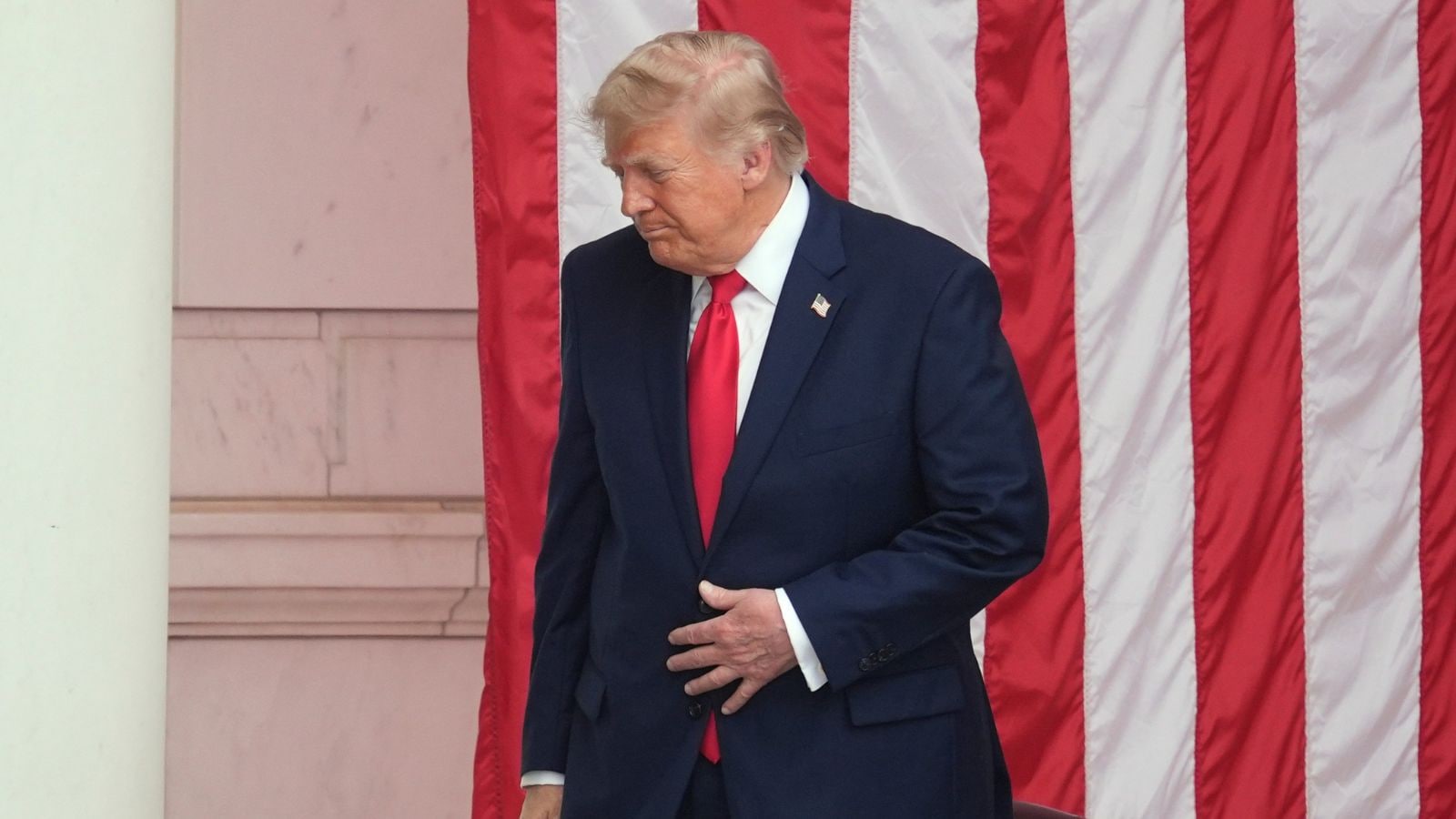
Donald Trump spent two hours in the Situation Room on Friday trying to solve a crisis that has pushed Brent Crude past $120 per barrel. He emerged not with a signed treaty, but with a red pen. Despite a tentative agreement brokered by Pakistani and Qatari mediators, the President sent the text back to negotiators with a list of demanded revisions that have left the world’s energy markets in a state of suspended animation.
The core of the deadlock is simple. Trump is betting that Tehran is "negotiating on fumes" following three months of a devastating regional war that saw the closure of the Strait of Hormuz and a systemic collapse of Gulf trade. While Vice President JD Vance and the State Department have signaled that a 60-day ceasefire is the immediate priority, Trump is holding out for something far more permanent: the total strategic submission of the Islamic Republic.
The Leverage of a Blockade
The President’s hesitation is not just about tough talk. It is a calculated gamble based on the current maritime reality. Since March 2026, the U.S. and Israel have maintained a punishing naval blockade on Iranian ports. The result has been a "grocery supply emergency" in the region and a total cessation of Iranian oil exports.
Military planners believe the Islamic Republic’s internal stability is fracturing. Iranian Parliament Speaker Mohammad Bagher Qalibaf recently took to social media to claim that "no step will be taken before the other side acts," but the reality on the ground tells a different story. Iranian negotiators are desperate for the U.S. to lift the blockade and relax sanctions to allow for the sale of their massive stockpiles of oil.
Trump’s new demands focus on three non-negotiable pillars:
- The Nuclear Limit: Immediate removal of all uranium enriched to 60% purity.
- Maritime Security: A 30-day window for Iran to clear all mines from the Strait of Hormuz without U.S. interference.
- Regional Retraction: An end to all Houthi and Hezbollah operations as a precondition for any sanctions relief.
The Nuclear Trap
One of the most significant points of contention remains Iran’s 440.9 kilograms of highly enriched uranium. Under the tentative deal, this material would be shipped out of the country or down-blended. However, Trump reportedly told advisers he "wouldn’t be comfortable" with any plan that allows Iran to retain a breakout capacity of less than a year.
This is where the administration’s strategy diverges from traditional diplomacy. While previous deals sought to manage Iran’s nuclear program, the 2026 approach seeks to bury it. JD Vance framed the objective clearly, stating that the U.S. is in a position to "substantially set back" the program for decades, not just years. The President’s "red lines" are designed to ensure that the ceasefire doesn't just provide a breather for Tehran to finish a bomb, but instead forces a permanent dismantling of their nuclear infrastructure.
Economic Fallout and the Global Pressure Cooker
The "chirping," as Trump calls it, from both his political rivals and European allies is reaching a fever pitch. Europe is currently facing a second major energy crisis in a decade. The suspension of Qatari LNG and the spike in oil prices have pushed the European Central Bank to warn of imminent stagflation.
In the U.S., the pressure is also mounting. While the administration claims the war has been a "tactical success," the economic toll of high fuel prices is a political liability. Treasury Secretary Scott Bessent has hinted that Washington would consider removing sanctions on some Iranian oil to stabilize the market, but only if Trump gets his way on the security front.
Why the Deal Might Still Fail
The risk of a total breakdown remains high. Iranian leadership, particularly the Supreme Leader, views the U.S. demands as a "bad faith" attempt at regime change by other means. They have already retaliated with drone strikes on U.S. assets in Kuwait and radar sites in the Gulf.
Furthermore, the "winner of any agreement is the one who is better prepared for war the day after it is signed," according to Iranian officials. This mindset suggests that even if a deal is reached, it will be a fragile peace. Trump’s unpredictability has served him well in forcing Iran to the table, but it also makes a final signature elusive. He is demanding that Iran accept a narrowed regional role that would effectively end their "Axis of Resistance."
The President's message on Truth Social—"just sit back and relax, it will all work out well in the end"—is cold comfort to global shipping firms and energy markets currently hemorrhaging billions. The "red lines" drawn in the Situation Room on Friday are not just edits on a page; they are the terms of a forced surrender. If Tehran refuses to blink, the 60-day ceasefire will remain a ghost, and the 2026 war will enter its most dangerous phase yet.
Tehran has 48 hours to respond to the revised text.