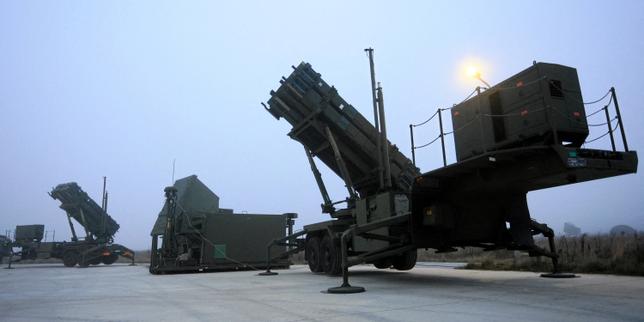
At the NATO summit in Ankara, President Donald Trump announced that the United States would grant Ukraine a production license to manufacture its own Patriot missile interceptors. While presented as a massive breakthrough for Kyiv’s air defense, the reality is far more cynical. This is a political maneuver designed to shift the burden of defense production away from Washington’s depleted stockpiles. Behind the warm rhetoric lies a stark truth: Ukraine cannot build these highly complex weapons anytime soon, and the defense contractors responsible for the technology were completely left out of the loop.
The announcement shifts the focus from direct American military aid to localized production. By telling Ukrainian President Volodymyr Zelenskyy to simply make the missiles himself, Trump attempts to insulate Washington from future complaints about supply shortages. However, an examination of defense supply chains, intellectual property realities, and the physical security of industrial sites reveals that this licensing agreement is an illusion. It offers a political offramp for the White House rather than a viable shield against Russian ballistic strikes.
The Ghost License and the Corporate Blindspot
The most glaring vulnerability of the Ankara announcement is that the corporations that actually own and manufacture the Patriot system had no idea it was coming. Trump openly admitted to reporters that he had not informed Lockheed Martin or RTX Corporation before making the public pledge. In the world of high-stakes defense procurement, you do not simply hand over the blueprint for the crown jewels of American air defense without months, if not years, of contract negotiations.
Lockheed Martin serves as the prime contractor for the PAC-3 interceptor, while RTX Corporation manufactures the radar and ground systems. These companies operate under strict regulatory frameworks governed by the International Traffic in Arms Regulations. A president can signal intent, but he cannot unilaterally compel public corporations to transfer highly proprietary manufacturing processes to a foreign warzone without formalized agreements, liability protections, and guaranteed financial compensation.
The logistical reality of aerospace manufacturing makes a rapid transfer impossible. A Patriot interceptor is not a simple artillery shell. It relies on a global web of specialized subcontractors supplying everything from advanced solid-fuel rocket motors to highly sensitive radar-seeking guidance heads. If a single supplier in the tier-two or tier-three network lacks the capacity to export parts to Ukraine, the entire assembly line grinds to a halt. By announcing the license before consulting the manufacturers, the administration put the cart before the horse, creating a massive gap between diplomatic theater and industrial reality.
The Cold Math of Depleted Western Stockpiles
To understand why Washington is eager to hand over a production license, one must look at the state of American ammunition reserves. The United States does not have a surplus of Patriot missiles. Months of escalating regional conflict in the Middle East, particularly involving deep American and Israeli engagements with Iran, have severely drained the Pentagon’s inventories.
Current estimates indicate that the United States produces roughly 50 to 60 Patriot interceptors per month. That volume must satisfy the needs of the United States military, existing European allies, partners in the Pacific, and active operations in the Middle East. Meanwhile, Russia regularly fires close to 100 ballistic and cruise missiles at Ukrainian infrastructure in a single month, often accompanied by hundreds of long-range drones. The math simply does not add up.
Global Patriot PAC-3 Monthly Dynamics (Estimates)
+------------------------------------+--------------------------+
| Metric                             | Volume per Month         |
+------------------------------------+--------------------------+
| Total US Production Capacity       | 50 - 60 interceptors     |
| Average Russian Missile Usage      | 100+ ballistic/cruise    |
| Projected US Stockpile Recovery    | Delayed to 2028 or later |
+------------------------------------+--------------------------+
Buying time is the real objective. Defense analysts note that at current production rates, the United States will not fully replenish its own domestic stockpiles until at least 2028. By shifting the conversation to a Ukrainian-based manufacturing license, the White House sidesteps the uncomfortable reality that it cannot spare any more interceptors from its own warehouses. Trump’s rhetoric in Ankara made this explicit when he remarked that the United States needs the weapons for its own defense and cannot continue giving them away. The license is less an act of empowerment and more a declaration of resource exhaustion.
The Physical Impossibility of a Wartime Factory
Even if the legal and corporate hurdles vanish overnight, the physical challenge of building a high-tech missile factory inside Ukraine under an active bombardment is an operational nightmare. Advanced defense production requires sterile environments, precision calibration machinery, and highly secure facilities. These cannot be hidden easily, and they cannot be built in secret.
Russian intelligence monitors industrial activity across Ukraine with satellites, specialized reconnaissance drones, and on-the-ground informant networks. The moment construction workers lay the foundation for a missile assembly plant, that location becomes the highest-priority target for the Kremlin’s long-range conventional arsenal. To protect a rising industrial facility from Kinzhal and Iskander ballistic missiles, Ukraine would have to deploy its few remaining operational Patriot batteries to guard the construction site itself.
This creates a self-defeating tactical paradox. Kyiv would have to pull active, battle-tested air defense systems away from major population centers, power grids, and front-line troops just to defend an empty factory that will not produce a single functional missile for years. It is an unsustainable trade-off that compromises immediate survival for a distant, theoretical manufacturing capability.
The Intelligence Nightmare and Technology Leakage
Beyond the physical danger to the infrastructure, the prospect of manufacturing the PAC-3 variant inside Ukraine introduces severe counterintelligence risks that alarm veterans of the security community. The Patriot system represents the pinnacle of Western theater ballistic missile defense. Its guidance systems, radio-frequency seekers, and warhead configurations are among the most classified secrets in the American military ecosystem.
Operating an advanced manufacturing facility in a country heavily targeted by foreign espionage opens multiple vectors for intelligence leakage. A factory requires hundreds of local technicians, engineers, and administrative staff, creating an expanded surface area for Russian intelligence penetration. Cyber warfare units in Moscow would inevitably target the facility’s digital networks, seeking the engineering schematics and software source codes that govern the missile’s flight trajectory and electronic counter-countermeasures.
There is also the ever-present threat of physical capture. If a factory site is compromised or overrun during a localized offensive, or if unexploded components from a targeted facility fall into Russian hands, the underlying technology would be reverse-engineered. This would allow adversaries to develop specific countermeasures to bypass Patriot radar networks globally, neutralizing a defensive system that protects American bases worldwide. The Pentagon’s technology security agencies will almost certainly resist any meaningful transfer of the system's core intellectual property for this very reason.
A Transactional Offramp
The Ankara declaration exposes the core tenets of the current administration’s foreign policy, which treats international security arrangements as business transactions rather than ideological alliances. By framing the license as a way to stop Ukraine from complaining about supply shortages, the policy reduces a complex geopolitical conflict to a matter of balance sheets and shifting liabilities.
This approach appeals to a domestic political base weary of protracted foreign aid packages. It allows the administration to claim it is supporting Ukraine through innovation and industrial partnership, while simultaneously shutting off the pipeline of direct, taxpayer-funded military transfers. It transforms a strategic dependency into an outsourced commercial venture.
The burden now falls squarely on Kyiv to navigate a labyrinth of American corporate law, defense supply chain bottlenecks, and constant aerial threats. Ukraine has proved remarkably adept at innovating on the battlefield, particularly with domestic drone production and rapid software integration. But building a complex, heavy industrial ecosystem for long-range, radar-guided interceptors while fighting an existential war is an entirely different scale of challenge. The production license may look like a diplomatic victory on paper, but it leaves Ukraine more isolated in its air defense struggle than before the Ankara summit began.