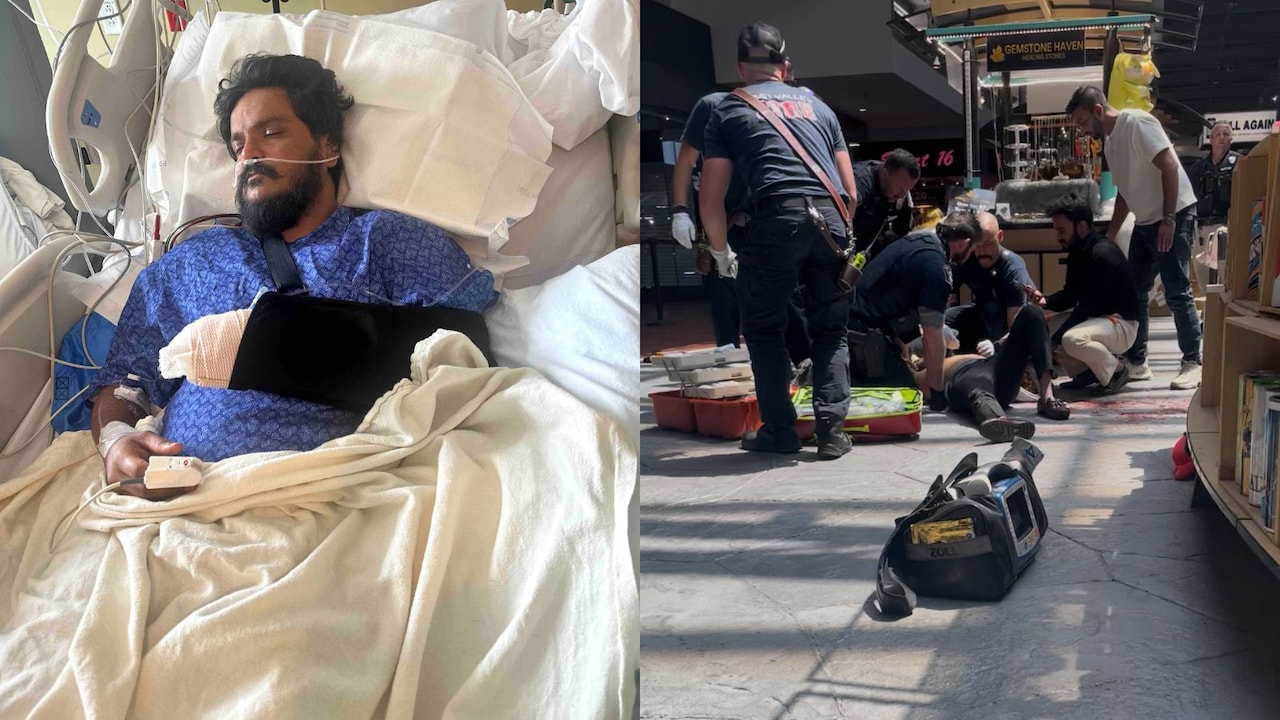
On Monday, July 13, 2026, Syed Sohailuddin, a Hyderabad native and father of two young children, was working his shift at a jewelry kiosk inside the Valley Fair Mall in West Valley City, Utah. A man approached him, asked for his name, inquired about his religion, and asked for a bottle of water. As Sohailuddin turned to help him, he was stabbed fifteen times.
This brutal attack was not a random act of violence. The suspect, 48-year-old Peter Michael Larsen, admitted to police that he targeted Sohailuddin specifically because of his Muslim faith, stating he "intends to kill Muslims." The incident exposes a harsh reality about the rising tide of religiously motivated violence in the United States and the precarious safety net waiting for those who immigrate to chase the American dream.
The Illusion of Safety in the Heartland
Utah is often marketed as a scenic, family-friendly sanctuary of quiet suburban life. But for Syed Sohailuddin, a native of Hyderabad, India, a routine afternoon at the Valley Fair Mall shattered that illusion.
According to police booking affidavits, Larsen approached the Magma Diamonds kiosk where Sohailuddin worked, using a request for water as a pretext. The moment Sohailuddin’s back was turned, Larsen unleashed a frenzied assault, leaving the young father with severe injuries to his hands, heart, and lungs.
He survived only because of the split-second courage of ordinary citizens. Bystanders physically tackled Larsen, striking him to disarm him and holding him down until the West Valley police arrived.
The immediate aftermath reveals a chilling ideology. Larsen, who was already on parole for a prior violent felony, openly boasted to investigators of his white supremacist beliefs. Detectives noted that Larsen claimed he believed himself to be a "catalyst" for wider violence and spoke of pre-planned mass casualty events.
The Immigrant Underclass and the Healthcare Trap
While Indian political leaders and community organizations, including the Majlis Bachao Tehreek, have rushed to demand justice, the financial reality for the Sohailuddin family is grim.
Sohailuddin is the sole breadwinner for his wife and two infants. Like many retail and kiosk workers across America, he did not have health insurance.
His family now faces an agonizing double crisis. On one hand, they are dealing with the psychological trauma of a hate crime. On the other, they are facing a catastrophic wave of medical bills for emergency surgeries and rehabilitation.
Without basic systemic support, immigrant workers are left to rely on the generosity of strangers. A GoFundMe campaign quickly raised tens of thousands of dollars, but crowdfunding is not a functional healthcare strategy. It is a desperate band-aid on a deeply broken system.
A Rising Global Echo Chamber
Organizations like the Council on American-Islamic Relations have pointed to a steady increase in Islamophobic and xenophobic attacks over the last several years. The violence is often fueled by a volatile mix of hardline anti-immigration rhetoric, domestic extremism, and global geopolitical tensions.
The Indian Consulate in San Francisco has stated it is monitoring the case and communicating with local authorities. But diplomatic statements do little to address the systemic radicalization taking place online and in local communities.
Larsen was a convicted felon walking the streets on parole. His ability to access weapons and harbor plans for mass violence undetected points to a failure in rehabilitation and monitoring systems.
This tragedy serves as a stark reminder that the physical safety of migrant workers remains highly vulnerable to the whims of radicalized individuals. Justice for Syed Sohailuddin requires more than prosecuting his attacker. It demands a serious evaluation of how communities protect their most vulnerable workers from targeted violence and systemic financial ruin.