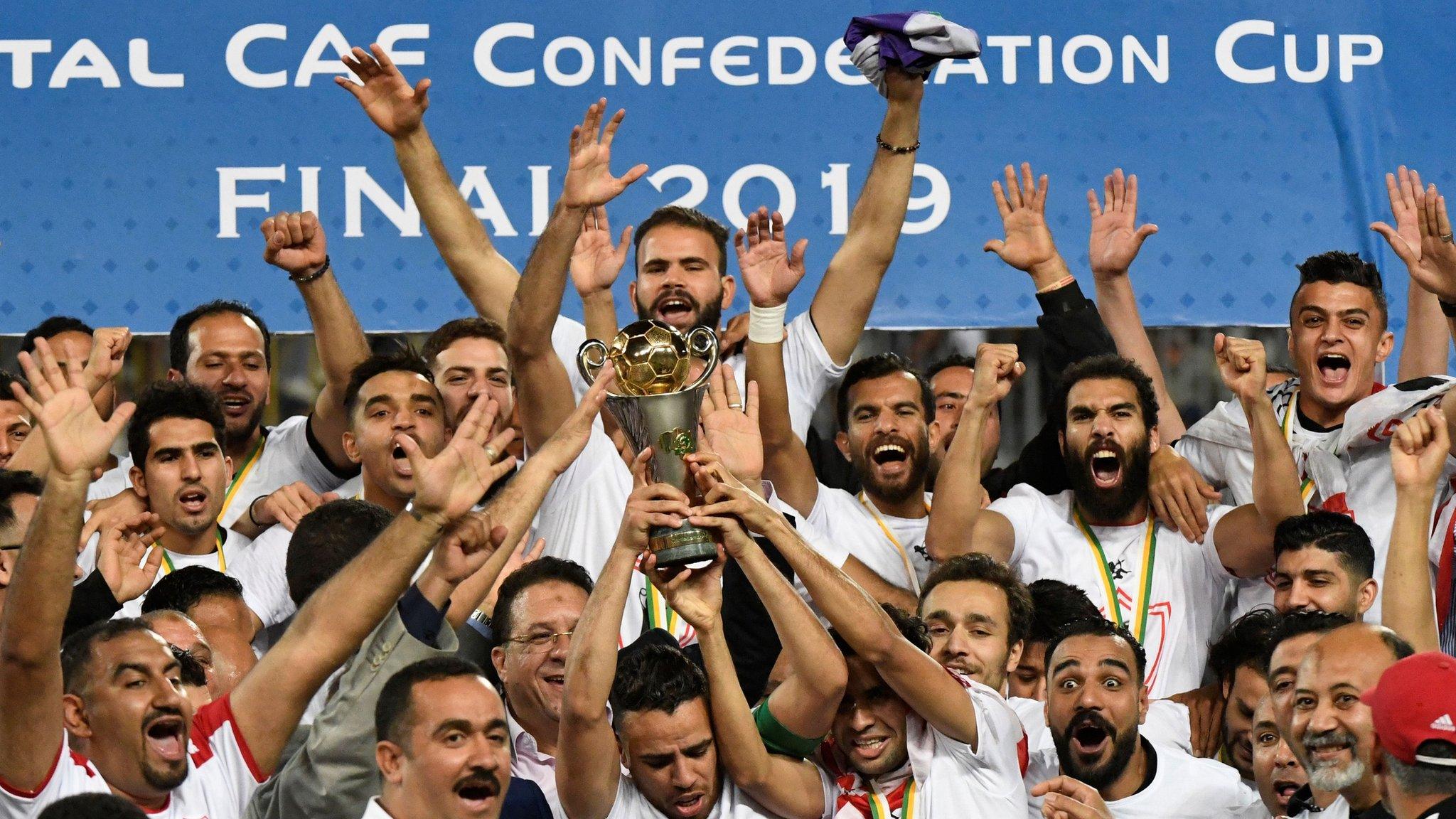
Winning a continental trophy used to be about the gold in the cabinet, but for Zamalek SC, the 2026 CAF Confederation Cup final is strictly about the gold in the bank. The Cairo giants are currently locked in a desperate sprint toward a $4 million windfall that represents far more than just a successful season. For the White Knights, this isn't sport; it’s a high-stakes debt restructuring exercise played out on a football pitch.
The financial reality at the Mit Okba headquarters has reached a boiling point. Despite the optimistic front presented by Hussein Labib’s board, the club is effectively operating under a siege economy. Every cent of the record-breaking prize money on offer from CAF has already been mentally spent on legal settlements, past-due wages, and the ever-present threat of FIFA sanctions.
The FIFA Guillotine
Zamalek’s most pressing adversary isn't their opponent in the final, USM Alger. It is the "Registration Ban" list in Zurich. The club has become a permanent fixture in FIFA’s disciplinary chambers, recently hit with a fresh three-window transfer ban. This latest blow stems from the messy divorce with former coach Jaime Pacheco, who is owed a staggering €819,000.
This isn't an isolated incident but a chronic condition. The club is still grappling with the ghost of Khalid Boutaib, the Moroccan striker whose brief, injury-plagued stint in 2019 continues to haunt the balance sheets. While the board managed to chip away at the initial €2.4 million debt, nearly €1 million remains unpaid. In the world of professional football, these aren't just numbers; they are barriers that prevent the club from signing the very players needed to stay competitive.
The math is unforgiving. If Zamalek secures the $4 million winner's cheque, nearly half of it will vanish instantly just to clear the Pacheco and Boutaib files. This is the "Zamalkawy" paradox: the more they win, the more they simply pay for the mistakes of the past.
Survival in a Devalued Economy
The club’s internal crisis is mirrored by the external collapse of the Egyptian Pound. With the national economy reeling from record inflation and currency devaluations, the value of domestic sponsorship deals has shrunk in real terms.
Zamalek recently made headlines by securing its seventh official sponsor—a historic first for the club. In any other era, this would be a sign of unprecedented growth. Today, it is a survival tactic. When your debts are in Dollars and Euros, but your primary revenue is in a local currency that has lost significant purchasing power, you don't just need sponsors; you need a miracle.
The CAF prize money is paid in US Dollars. For an Egyptian club, this is the ultimate "hard currency" injection. It provides a hedge against local inflation and allows the board to settle international debts without the crushing exchange rate losses that come with converting local revenue. This $4 million is effectively worth double its face value when measured against the club’s domestic spending power.
The Cost of Participation
There is a common misconception that deep runs in African competitions are pure profit. The reality is a logistical nightmare. Traveling across the continent—chartering flights to Algiers, booking secure hotels, and managing the overhead of a massive delegation—eats into the margins rapidly.
CAF’s decision to increase preliminary round payments to $100,000 was a nod to this reality, but for a club of Zamalek’s stature, it’s a drop in the ocean. The board recently approved "travel advances" for the final just to keep the operation moving. They are essentially gambling on the final payout to cover the costs of the journey itself.
The Hidden Human Cost
Behind the scenes, the "indoor games" and youth sectors are the silent victims of the football team's financial hunger. While the first-team players are the priority, the club’s legendary handball and basketball divisions often face payment delays. The board’s recent meeting notably avoided discussing player dues or the registration file, focusing instead on the administrative prep for the final.
This selective focus is a necessity of the crisis. If the football team doesn't bring home the $4 million, the entire sporting infrastructure of the club risks a localized collapse.
Beyond the Ninety Minutes
The 2026 final represents a fork in the road for the Hussein Labib administration. A victory provides a clean slate—or at least a significantly cleaner one. It allows them to lift the transfer bans, appease the current squad, and perhaps, for the first time in years, look at a transfer window as an opportunity rather than a legal minefield.
Failure, however, is unthinkable. Without that $4 million, the club remains trapped in a cycle of litigation and stagnation. They would be forced to sell their remaining assets—star players like Ahmed "Zizo" Sayed—just to keep the lights on and the FIFA lawyers at bay.
The whistle in Algiers won't just signal the end of a match. It will determine whether one of Africa's most storied institutions can finally stop paying for its history and start building its future. The trophy is silver, but for Zamalek, the stakes are pure green.