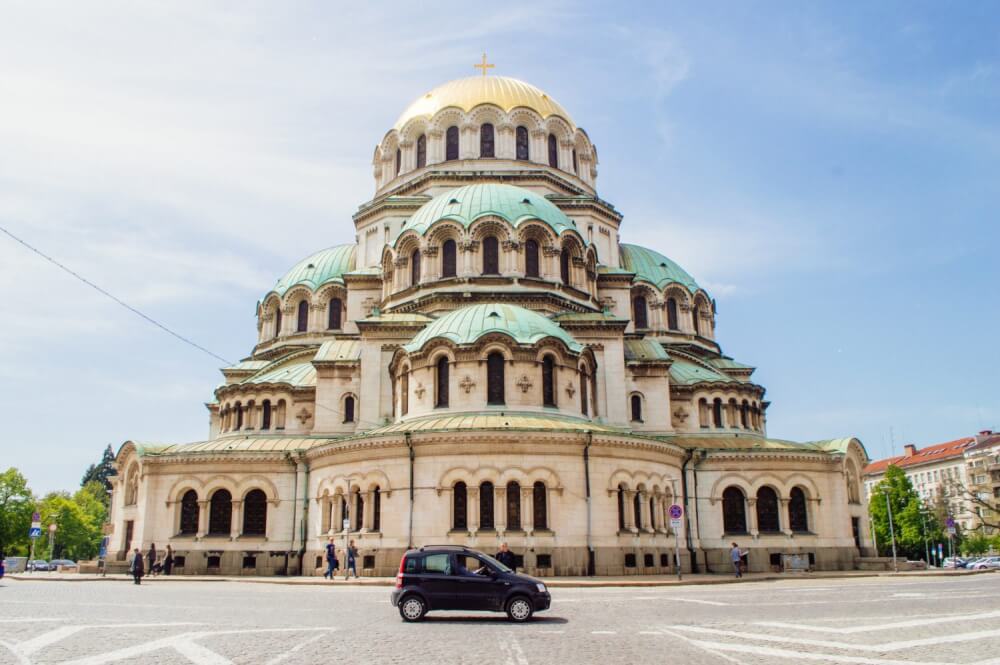
Bulgaria just made history, and honestly, the reaction across Sofia feels less like a victory parade and more like a collective deep breath. For decades, the highest office in the country remained an exclusively male club, even as women took on prime ministerial roles or ran major ministries across the Balkans. Now that Bulgaria has its first elected female president, international headlines are celebrating a glass-ceiling moment while locals are mostly asking a much tougher question. What can she actually do with the job?
If you only glance at Western news alerts, it's easy to miss the nuance here. You see a milestone for gender representation in Eastern Europe and assume the political ground just shifted overnight. It didn't. Understanding why this election matters requires looking past the historic headline and digging into how Bulgaria's presidency actually works, why voters made this choice right now, and what kind of political mess awaits inside the presidential building at Dondukov 2.
Why Bulgaria Electing a Woman Took Until 2026
People outside Southeast Europe often assume the region lags behind on women in politics across the board. That's actually wrong. Look at the numbers from the European Institute for Gender Equality and the Inter-Parliamentary Union over the past decade, and you'll find Bulgaria frequently outperformed several Western European nations in tech leadership and corporate management.
Yet the presidency stayed out of reach. Why?
Part of the answer comes down to how Bulgarians view the office itself. Created after the fall of communism under the 1991 Constitution, the Bulgarian presidency was designed as a stabilizing, almost paternal figurehead meant to balance a fractured parliament. Voters historically leaned toward military men, former mayors of Sofia, or seasoned party heavyweights who projected old-school authority. Rumen Radev, who served two terms starting in 2017 after a career as an Air Force general, epitomized that archetype.
Voters grew exhausted. Between 2021 and 2025, Bulgaria cycled through an unprecedented series of snap parliamentary elections, caretaker governments, and bitter corruption scandals that left public trust in traditional party bosses near rock bottom. When the 2026 presidential race rolled around, the old "strongman" pitch had lost its shine. People weren't looking for someone to bark orders from a podium anymore. They wanted someone who looked capable of keeping the constitutional machinery running without turning every Tuesday into a political crisis.
The Difference Between Acting Power and Elected Mandate
Before moving forward, there's a technical detail worth clearing up because plenty of commentators get it mixed up. Bulgaria has technically had a woman hold presidential duties before—Iliana Iotova served two full terms as Vice President alongside Rumen Radev starting in 2017, stepping into executive functions whenever the president traveled or temporary transfers occurred.
There's a massive difference between holding the vice presidency and winning a direct popular mandate at the top of the ticket. In Bulgaria, the president and vice president run together on a single ballot, and the top spot carries the constitutional weight, the commander-in-chief title, and the sole authority to appoint caretaker prime ministers under the revised constitutional rules. Winning that seat outright in a two-round popular vote changes the political equation completely.
What Bulgaria's First Elected Female President Actually Controls
Here's where foreign coverage usually stumbles. Bulgaria is a parliamentary republic, not a presidential system like the United States or France. The prime minister and the Council of Ministers run day-to-day domestic policy, draft the national budget, and negotiate most European Union legislation in Brussels.
So does the president just cut ribbons and host state dinners? Not even close. Especially not in Bulgaria.
When parliament functions normally, the president's formal powers look modest on paper:
- The suspensive veto. The president can send legislation back to the National Assembly for reconsideration. Parliament can override that veto with an absolute majority of all 240 deputies, which sounds easy until you remember how fragmented Bulgarian coalitions usually are. A presidential veto forces public debate and stalls rushed, shady amendments.
- Foreign policy and defense representation. The president represents Bulgaria abroad alongside the prime minister, signs international treaties, and serves as Supreme Commander-in-Chief of the Armed Forces. In a country bordering the Black Sea while war rages in Ukraine, those diplomatic and military responsibilities carry real weight.
- Judicial and institutional appointments. The president appoints key figures across the diplomatic corps, intelligence services, and a portion of the Constitutional Court, giving the office quiet long-term influence over rule-of-law battles.
- The caretaker government mechanism. Whenever parliament collapses and fails to form a government, the president steps in to appoint a caretaker prime minister and schedule new elections. Following the controversial 2023 constitutional amendments—later partially reviewed by Bulgaria's Constitutional Court—the president must pick that caretaker PM from a specific shortlist of senior state officials, such as the Speaker of Parliament, the Central Bank Governor, or the Ombudsman.
That fourth point is where the real drama lives. Over the last few years, caretaker cabinets haven't been brief, two-month administrative placeholders. They've governed Bulgaria for months at a time, signing energy deals, managing EU recovery funds, and overseeing elections.
The Geopolitical Tightrope Waiting on Day One
Anybody stepping into the Bulgarian presidency right now inherits one of the trickiest diplomatic balancing acts in the European Union. Bulgaria sits squarely inside both NATO and the EU, yet its domestic politics remain deeply divided over Russia, energy security, defense spending, and Eurozone integration.
For years, the presidency and the pro-Western cabinets in Sofia clashed publicly over military aid to Ukraine and diplomatic alignment with Brussels. Those fights weren't just internal gossip—they delayed defense modernization contracts and sent mixed signals to allies in Washington and Brussels.
The newly elected president faces immediate tests on three fronts:
- Eurozone and Schengen follow-through. Bulgaria spent years fighting for full Schengen membership and preparing to adopt the euro, battling inflation benchmarks and political skepticism at home. The presidency serves as a crucial megaphone for either calming public anxiety about rising prices or fueling populist pushback against Brussels.
- Black Sea security and NATO commitments. With naval mines, drone activity, and energy infrastructure threats across the Black Sea, Bulgaria's role on NATO's eastern flank is no longer theoretical. As Commander-in-Chief, the president sits directly inside strategic defense planning and military procurement decisions.
- Anti-corruption credibility. Organizations like Transparency International have consistently ranked Bulgaria near the bottom of EU member states on perceived public-sector corruption. Voters didn't just elect a woman for the history books; they elected her hoping she won't shield entrenched political networks when judicial reform bills hit her desk.
What Most Commentators Get Wrong About Women in Balkan Politics
There's a lazy narrative that pops up every time a woman wins high office in Eastern Europe. Pundits immediately frame it as a sudden feminist awakening, as if society woke up one morning and decided to abandon traditional values.
Reality is messier.
Across the Balkans—from Croatia's Kolinda Grabar-Kitarović to North Macedonia's Gordana Siljanovska-Davkova and Moldova's Maia Sandu—women have increasingly won top executive roles during periods of acute institutional crisis. Political scientists studying post-communist democracies have noted a clear pattern here. When male-dominated party machines become synonymous with stagnation, clientelism, and endless infighting, voters frequently turn to female candidates who project institutional discipline, legal expertise, or distance from backroom oligarchic deals.
That creates both an advantage and a trap.
The advantage is immediate legitimacy. Voters give a breakthrough candidate the benefit of the doubt that she won't govern like the old boys' club. The trap is impossible expectations. When a single leader is treated as an antidote to decades of systemic corruption, every compromise looks like betrayal. If she vetoes a popular spending bill to protect fiscal stability, critics accuse her of obstruction. If she signs a flawed compromise to avoid another snap election, supporters accuse her of caving in to the status quo.
How to Actually Track Whether This Presidency Succeeds
If you want to know whether Bulgaria's first elected female president is making a real difference—or simply warming a historic chair—ignore the ceremonial photo ops and watch four concrete indicators over her first year in office.
First, watch her veto record on judicial and electoral legislation. Bulgaria's biggest battles happen in the fine print of the Judiciary Act and the Election Code, where ruling coalitions quietly try to tilt rules in their favor. A president willing to burn political capital by vetoing flawed amendments signals real independence.
Second, pay attention to Constitutional Court nominations and diplomatic appointments. Ambassadorial posts in Washington, Brussels, and key regional capitals tell you immediately whether foreign policy is being professionalized or handed out as political favors.
Third, track how she handles parliamentary deadlocks. If Bulgaria's National Assembly fractures again—and given the arithmetic of recent parliaments, that's always on the table—her management of the constitutional consultation rounds and caretaker selection process will determine whether the country stays governable.
Fourth, listen to her rhetoric during EU summits and NATO meetings. Consistency matters. When Sofia speaks with one coherent voice abroad rather than staging public turf wars between the president and prime minister, foreign investment and European funding move faster.
History books will remember the election night headline because firsts always earn a permanent footnote. But inside Bulgaria, nobody has the luxury of treating this as symbolic progress. Follow the official decrees published in Bulgaria's State Gazette, watch how parliament responds to her first major legislative veto, and judge her presidency by whether Sofia finally trades endless political chaos for basic institutional predictability.


