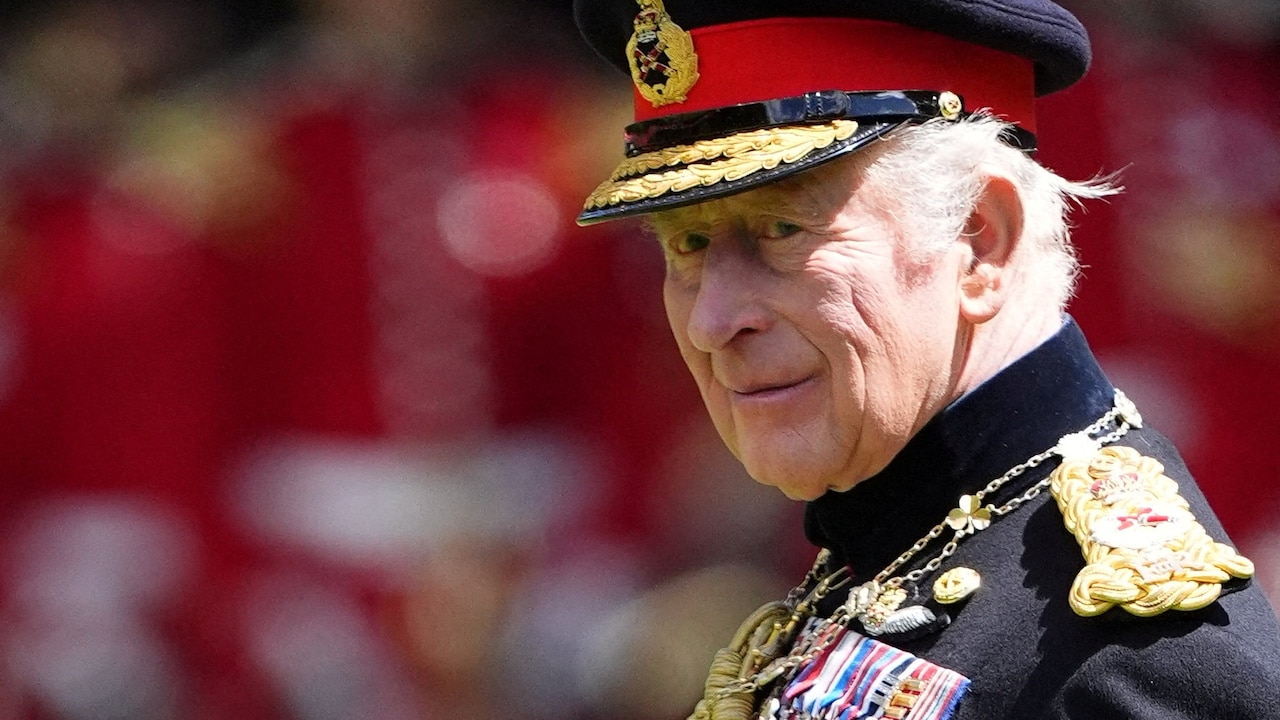
King Charles III turned 78 on November 14, 2026, and the resulting birthday briefing from his inner circle revealed a peculiar, enduring regret. Despite having access to private yachts, royal trains, and sprawling Highland estates, the monarch still laughs about his childhood disappointment over being barred from a budget British holiday camp. As children in the 1950s and early 1960s, Charles and his sister, Princess Anne, repeatedly begged Queen Elizabeth II and Prince Philip to take them to Butlin's. Every single request met the same polite brick wall from the late Queen: "I don't quite think we will be able to manage that."
On the surface, the anecdote is pure palace PR gold. Timed to coincide with his 78th birthday coverage in The Times, the story softens the image of an aging, traditionally formal head of state by aligning him with the nostalgic working-class and middle-class holiday memories of millions of his subjects. Yet beneath the charming punchline lies a revealing case study in how the modern British monarchy manages class boundaries, security logistics, and strategic public relations. To understand why a future king was denied a week in a seaside chalet—and why his friends are talking about it decades later—requires looking past the tabloid headlines into the rigid architecture of mid-century royal life.
The Anatomy of a Birthday Briefing
Royal anecdotes do not simply leak into broadsheet newspapers by accident on a monarch's birthday. They are placed. When a close friend of King Charles tells The Times that the Butlin's rejection is "one of the King's funniest stories," that friend is executing a deliberate communication strategy.
For decades, Charles fought a losing battle against a public perception that he was aloof, out of touch, and overly precious about his comforts. In the 1950s, while ordinary British families saved all year for a week of three-legged races, knobbly knees contests, and Redcoat cabarets, the young heir to the throne was being shuttled between Buckingham Palace, Windsor Castle, Sandringham, and Balmoral. His childhood was defined by institutional isolation, private tutors, and later, the brutal austerity of Gordonstoun boarding school.
By surfacing the Butlin's regret at age 78, the palace accomplishes two objectives at once. First, it humanizes the King without admitting any genuine political or familial vulnerability. Notice the framing. In a year marked by ongoing scrutiny over royal finances, health concerns, and fractured family dynamics, "regret" is a dangerous word to attach to a reigning monarch. A genuine regret might imply remorse over his first marriage, his parenting, or his handling of institutional scandals. Reclaiming the word "regret" and attaching it to a childhood holiday camp neutralizes the term in search engines and public discourse, replacing heavy biographical baggage with a harmless, self-deprecating gag.
Second, the story manufactures cross-class relatability. Butlin's, founded by Sir Billy Butlin in Skegness in 1936, was the ultimate egalitarian equalizer of post-war Britain. Telling the public that the young Prince of Wales desperately wanted in on the fun suggests that, deep down, his instincts were always aligned with ordinary Britons—and that only the strictures of his office held him back.
What Butlin's Represented in Post-War Britain
To appreciate why Charles and Anne were so fixated on the camps, you have to understand the cultural gravity Butlin's exerted in the 1950s and early 1960s. Before cheap package flights to Spain transformed British tourism in the late 1960s and 1970s, a week at a coastal holiday camp was the pinnacle of domestic leisure.
Billy Butlin's model was built on radical all-inclusive convenience. For a single weekly fee, families escaped the lingering gloom of post-war rationing and drab urban streets into self-contained pleasure cities. Camps at Skegness, Filey, Clacton, Pwllheli, and later Minehead and Bognor Regis featured amenities that seemed futuristic to children growing up in austerity Britain:
- The Redcoats: Iconic entertainers who functioned as hosts, performers, and surrogate camp counselors, creating an atmosphere of structured, relentless cheer.
- Mass Dining and Entertainment: Vast dining halls capable of feeding thousands simultaneously, paired with ballrooms, indoor and outdoor heated swimming pools, miniature railways, and funfairs.
- Freedom from Household Drudgery: Mothers were relieved of cooking and cleaning, while children roamed relatively free in a gated, supervised environment.
For Prince Charles and Princess Anne, peering out from behind palace gates or watching newsreels at Windsor, Butlin's looked like the exact opposite of royal routine. At Balmoral, holidays meant damp tweed, relentless protocol, stalking deer in the Highland rain, and formal dinners where children were expected to be seen and rarely heard. At Butlin's, holidays meant noise, crowds, boiled sweets, and unstructured chaos. The irony is sharp. Millions of British children dreamed of living in a palace, while the two children actually living in the palace dreamed of sleeping in a prefabricated Butlin's chalet.
Why Queen Elizabeth II Said No
Queen Elizabeth II's refusal—"I don't quite think we will be able to manage that"—was delivered with her trademark understated dryness, yet the reasoning behind it was entirely pragmatic. Taking the heir to the throne and his sister on a private holiday to a commercial holiday camp in 1958 or 1960 was an operational impossibility.
Security alone made the idea a non-starter. A Butlin's camp at peak summer capacity housed upwards of 10,000 to 12,000 guests in tightly packed rows of chalets. Unlike Balmoral, where 50,000 acres of private Scottish countryside created a natural buffer against intruders and photographers, a holiday camp was an open social ecosystem. Scotland Yard's Royalty Protection Department would have had to vet thousands of holidaymakers and staff members, seal off public beaches, and station plainclothes officers in the dining halls. The moment word got out that Prince Charles was queuing for fish and chips, the camp would have been besieged by Fleet Street photographers, effectively destroying the vacation for every paying family on site.
Beyond security, there was the unwritten constitutional rule of royal visibility. In the mid-20th century, the monarchy maintained its mystique through carefully rationed appearances. The Queen believed that the Crown's authority depended on a degree of separation from everyday commercial life. Royals did not endorse commercial brands by paying to stay at them, nor did they mingle unscripted with crowds in swimwear. To put the future king into a Butlin's chalet would have collapsed the carefully maintained distance between the sovereign and the subject.
The 1963 Irony at Pwllheli
What makes Charles's childhood disappointment particularly rich is what happened in August 1963. Having repeatedly told her children that a family trip to Butlin's could not be managed, Queen Elizabeth II and Prince Philip went to one without them.
On August 9, 1963, during a royal tour of North Wales, the Queen and the Duke of Edinburgh paid an official visit to Butlin's Pwllheli on the Llŷn Peninsula. The visit was meticulously choreographed. Billy Butlin himself greeted the royal couple at the gates. Rather than staying in a chalet or eating in the main dining room, Elizabeth and Philip were driven through lines of cheering, waving campers in the back of an open-top Land Rover. They inspected the camp's reception rooms, toured the facilities, met staff members in front of a "Fish 'n' Chips" sign, and visited the on-site chapel at the Queen's specific request.
Charles was 14 years old that summer, and Anne was nearly 13. Neither accompanied their parents on that leg of the Welsh tour. While their mother smiled for British Pathé newsreel cameras amid thousands of ecstatic holidaymakers, the two children who had actually campaigned to visit the camp remained entirely excluded from the trip.
The Pwllheli visit illustrates the exact distinction that defined the late Queen's reign. As a private family outing, Butlin's was off-limits because it compromised privacy, security, and royal dignity. As an official state engagement, however, visiting a holiday camp was a masterstroke of public outreach. By showing up in an open-top Land Rover, the Queen validated the leisure culture of working-class Britain without ever stepping out of her ceremonial role. She observed the camp; she did not inhabit it.
Corporate Opportunism and the Modern PR Loop
As soon as the story of Charles's 78th birthday regret hit the press in mid-November 2026, Butlin's corporate communications team did what any savvy hospitality brand would do. They hijacked the news cycle.
Within hours of the Times piece circulating, a spokesperson for Butlin's issued an official response, noting that the King's late mother had visited in 1963 and extending a formal invitation to King Charles and his family to visit one of their three remaining UK resorts—Minehead in Somerset, Bognor Regis in West Sussex, or Skegness in Lincolnshire. The company amplified the pitch on social media, posting: "It's never too late! We'd be delighted to invite The King and his family to visit one of our resorts. Happy Birthday, Your Majesty!"
This exchange reveals how mutually beneficial modern royal-corporate PR has become, even when no actual transaction takes place. Butlin's received millions of pounds worth of free earned media across national newspapers, regional outlets, and broadcast news simply by responding to a 65-year-old childhood anecdote. For a brand competing in a crowded domestic staycation market, having the King of England publicly lament that he missed out on your product is an endorsement money cannot buy.
Meanwhile, Buckingham Palace pays nothing and commits to nothing. There is virtually zero chance that a 78-year-old monarch recovering from recent health battles and managing a packed state diary is going to check into a seaside resort in Somerset for a weekend break. Yet by leaving the invitation hanging in the air, the palace lets the warm, populist glow linger around the King's birthday coverage.
The Deeper Truth About Royal Regrets
Strip away the corporate banter and the nostalgic charm, and the Butlin's story points to a sobering reality about hereditary monarchy. You cannot separate the privileges of the Crown from its constraints.
When commentators frame Charles's missed holiday as a quirky, relatable childhood memory, they gloss over the underlying truth: the institution that gave him palaces also robbed him of normal developmental experiences. Growing up as the heir apparent meant that every spontaneous childhood desire—whether visiting a noisy seaside camp with his sister or attending a regular local school—had to be weighed against security protocols, constitutional precedent, and public optics.
There is also a subtle generational shift embedded in the anecdote. Queen Elizabeth II maintained an impenetrable boundary between her private family life and the commercial world of ordinary Britons. By the time Charles raised his own sons, William and Harry, that boundary had begun to erode. Princess Diana famously took the young princes to Thorpe Park, McDonald's, and on commercial ski trips, deliberately breaking the palace isolation that had defined Charles's youth. Today, Prince William and Catherine routinely take their children to everyday venues, normalizing a level of public interaction that would have been unthinkable in 1958.
King Charles never got his childhood week at Butlin's, and at 78, he does not actually need one. The story survives in his repertoire not because he still pines for a Redcoat cabaret, but because it captures the central paradox of his entire life: holding the highest office in the land while forever looking through the glass at how everyone else lives.


