ByteDance’s decision to increase its 2026 capital expenditure by at least 25% signals a transition from speculative AI experimentation to the brute-force phase of infrastructure scaling. While market observers often attribute such surges to a general "AI boom," the underlying reality is governed by a tightening correlation between compute density and market share retention in the short-form video and generative media sectors. This capital pivot is not merely a reaction to competitor activity but a calculated response to three converging pressures: the diminishing returns of legacy hardware, the aggressive price floor established by HBM (High Bandwidth Memory) manufacturers, and the high-inference requirements of next-generation recommendation engines.
The Triad of Capital Intensity
To understand why ByteDance is diverting billions toward infrastructure, we must decompose their expenditure into three distinct functional buckets. These categories dictate the velocity of their deployment and the specific risks associated with their balance sheet. Also making news in this space: The Portable Air Conditioner Scam Why Your Luxury Cooling Unit Is Making You Hotter.
1. The Inference Tax on Personalization
ByteDance’s core competitive advantage—the "For You" feed—is undergoing a fundamental architectural shift. Traditional recommendation systems relied on relatively lightweight discriminative models. The transition to generative-assisted discovery requires orders of magnitude more compute. Every time a user interacts with a multimodal AI feature or receives a dynamically synthesized content recommendation, ByteDance incurs an "inference tax." As user engagement shifts toward AI-generated or AI-modified content, the baseline cost of serving a single session rises. The 25% capex increase serves as a hedge against the margin erosion that occurs when inference costs outpace ad revenue growth.
2. Strategic Inventory and the HBM Bottleneck
The memory wall has become the primary constraint on AI performance. Training Large Language Models (LLMs) and deploying them at scale requires massive quantities of High Bandwidth Memory. Current market conditions indicate a projected supply deficit in HBM3e and upcoming HBM4 modules through 2026. By committing to increased capex now, ByteDance is effectively engaging in a "land grab" for specialized silicon. This is a defensive maneuver designed to prevent operational paralysis should Nvidia or its memory suppliers (SK Hynix, Samsung, Micron) prioritize other hyperscalers. Further information into this topic are detailed by TechCrunch.
3. Geographical Redundancy and Sovereign Compute
The geopolitical variable remains the most volatile component of the ByteDance strategy. The company must simultaneously fund a dual-track infrastructure. In mainland China, they are forced to optimize for domestic silicon and lower-tier chips due to export restrictions, which necessitates larger clusters to achieve the same FLOPS (Floating Point Operations Per Second) as Western counterparts. Internationally, they must invest in localized data centers to satisfy data sovereignty laws in Europe and the United States. This duplication of infrastructure creates a structural inefficiency that requires a higher capex-to-revenue ratio than a more centralized competitor might need.
The Cost Function of LLM Maturity
The logic of AI scaling is often misunderstood as a linear progression. In reality, it follows a power-law distribution where the cost of training a model that is marginally better than the previous version increases exponentially.
- Compute-to-Intelligence Ratio: As ByteDance pushes toward more sophisticated models (e.g., Doubao), the energy and hardware requirements do not grow 1:1 with model parameters. They grow at a rate defined by the complexity of the data tokens processed.
- The Depreciation Trap: Specialized AI hardware has a shorter useful life than general-purpose CPUs. The rapid iteration of GPU architectures (from H100 to Blackwell and beyond) means that the hardware ByteDance buys today may be secondary within 24 to 36 months. This necessitates a continuous, high-volume replacement cycle, effectively turning capex into a recurring operational necessity.
Supply Chain Elasticity and Memory Premiums
The "at least 25%" figure is heavily influenced by the soaring costs of the semiconductor supply chain. We are moving away from a period of chip abundance into a period of "memory-centric" bottlenecks.
The bill of materials (BOM) for a modern AI server has shifted. Historically, the processor was the dominant cost. In the 2026 horizon, the cost of the memory subsystem—specifically the integration of HBM and the advanced packaging required to link it to the logic—is capturing a larger share of the total spend. ByteDance’s increased budget reflects a recognition that they are no longer just buying "servers," but are instead bidding for limited fabrication capacity at foundries like TSMC.
Structural Logic of the 2026 Pivot
ByteDance is navigating a transition where the "easy" gains from algorithmic optimization have been realized. To find the next 5% of user retention or ad conversion, they must move into the realm of deep multimodal understanding.
- Video-to-Video Synthesis: Real-time video processing is the most compute-intensive task in the digital economy. ByteDance’s dominance in short-form video means their "compute surface area" is larger than that of a text-heavy competitor like Google or Meta.
- The Latency Floor: In the attention economy, a 100-millisecond delay in generating an AI response or a recommended video can lead to a measurable drop in user session length. The increased capex is a physical investment in lowering latency at the edge of the network.
The Risk of Over-Provisioning versus Under-Scaling
There is a non-trivial risk that ByteDance is over-building for a demand curve that may plateau. However, the cost of under-scaling is terminal. If a competitor (such as Meta with Llama or OpenAI with Sora) achieves a breakthrough in video generation that ByteDance cannot match due to hardware constraints, the user exodus would be rapid.
The 25% increase is best viewed as a "regret-minimization" strategy. In a winner-takes-most market, the penalty for being "compute-poor" is far higher than the penalty for having underutilized GPUs on the balance sheet.
Strategic Forecast for ByteDance Infrastructure
The 2026 capex expansion will likely be concentrated in three specific areas:
- Direct Silicon Partnerships: Expect ByteDance to move deeper into custom ASIC (Application-Specific Integrated Circuit) development to reduce their dependency on Nvidia’s margins. Even a 10% improvement in power efficiency at their scale would save hundreds of millions in annual electricity costs.
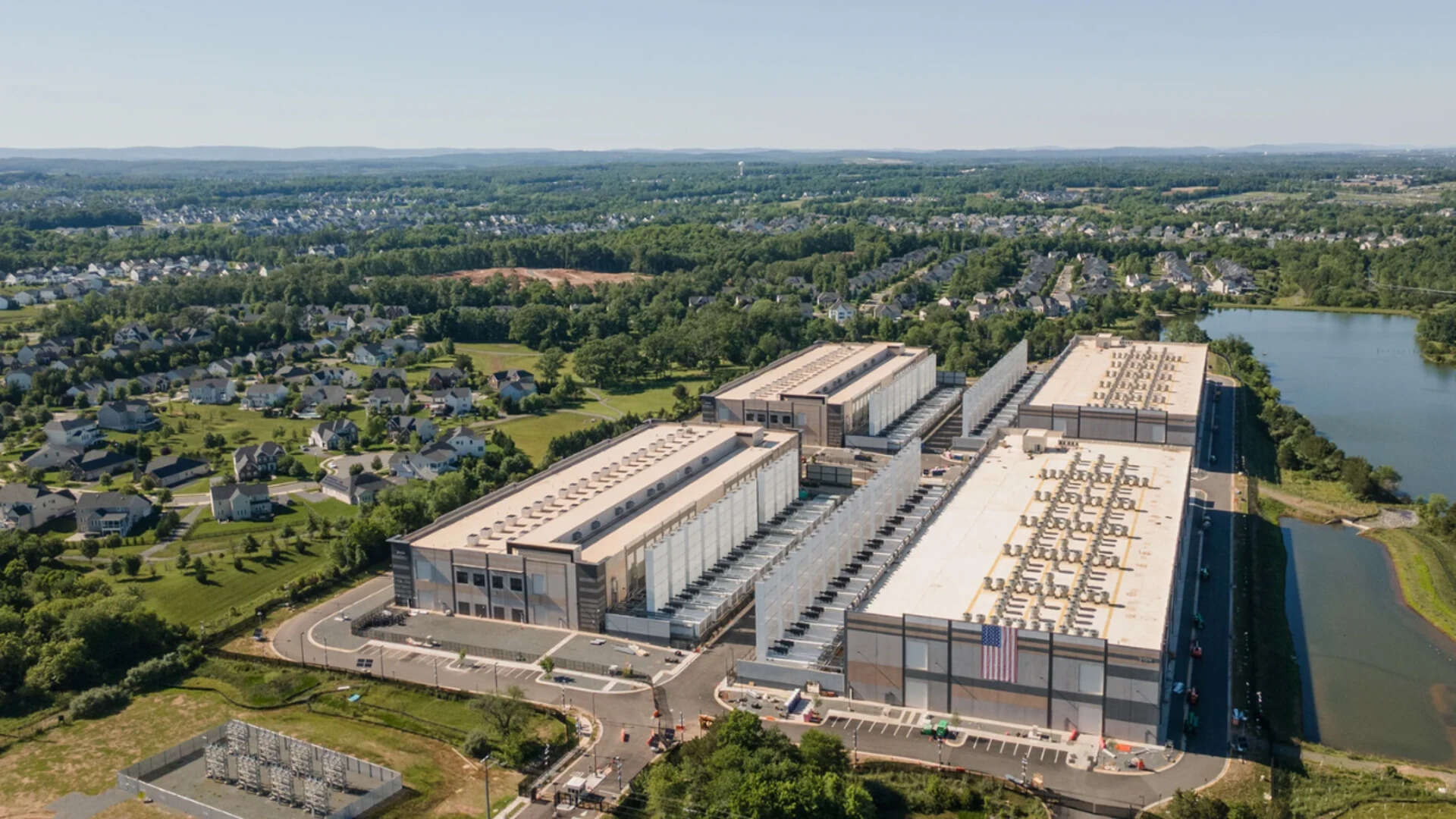
- Advanced Thermal Management: As power density per rack increases, traditional air cooling will fail. A significant portion of this new capital will be directed toward liquid cooling infrastructure and specialized data center designs that can handle the 100kW+ per rack requirements of 2026-era hardware.
- Global Inference Edge: To support generative features for 2 billion users, ByteDance must move inference away from central hubs and closer to the user. This requires a massive rollout of "inference-heavy" edge nodes globally.
The company's long-term viability now depends on its ability to convert this hardware into "synthetic productivity"—the ability to generate more engagement and ad inventory per watt of power consumed than any other entity on the planet. The 2026 budget is the opening bid in an era where the data center is the product.