When an independent cafe operator commits more than $100,000 in initial capital and suffers an arson attack before achieving payback, the real shock is not the fire itself but the sudden collapse of capital recovery math. A typical news story treats this sequence—invest six figures, endure arson, launch a crowdfunding campaign—as a linear tragedy of bad luck. An analytical operator sees a collision between upfront sunk costs, asymmetric tail risk, lease obligations, and crowd-sourced liquidity that rarely matches replacement cost. This analysis examines the financial and operational mechanics behind six-figure cafe launches hit by arson, maps the structural blind spots in standard coverage, and sets out a decision framework for reconstructing viable unit economics rather than pouring donations into a broken cost structure.
The blueprint of this analysis moves through four layers. First, we break down the cost function of opening a cafe in Australia and show why a six-figure outlay behaves like a high-leverage bet on uninterrupted operating months. Second, we examine the causal chain triggered by arson—from physical asset destruction and smoke contamination to fixed rent, payroll pressure, and insurance friction. Third, we evaluate crowdfunding as a capital recovery mechanism and explain why community goodwill rarely bridges commercial reconstruction gaps. Fourth, we establish concrete criteria for deciding whether to rebuild, pivot, or walk away, while noting the real-world limits of every option.
The Cost Function of a Six-Figure Cafe Launch
Opening a hospitality venue requires turning liquid cash into illiquid, site-specific assets before the first espresso is pulled. In Australia, commercial fitouts routinely combine landlord make-good or base-building conditions, trade waste and grease trap compliance, ventilation and exhaust engineering, commercial refrigeration, coffee machinery, point-of-sale hardware, initial inventory, working capital reserves, and deposits or bank guarantees. Crossing the $100,000 threshold is common even for modest footprints once specialized trades and commercial equipment are factored in.
Because exact figures for a specific venue are not public record in the headline alone, we must look at the structural cost function rather than guessing line items. In capital budgeting, early-stage hospitality outlays split into three distinct buckets:
- Sunk site-specific improvements: Cabinetry, tiling, plumbing modifications, electrical circuits, signage, and acoustic or lighting work tied to a specific leased address. Once installed, resale value drops sharply; if the venue closes early, most of this value evaporates.
- Depreciable operating equipment: Espresso machines, grinders, ovens, dishwashers, and cold storage. In theory, these retain secondary-market value, yet fire, heat, and soot frequently degrade electronics, seals, and food-contact surfaces beyond economical repair.
- Working capital and carry costs: Security bonds, insurance premiums, initial stock, staff onboarding, and pre-opening rent. These absorb cash before customer traffic stabilizes.
Standard reporting often treats "spending over $100,000" as a measure of commitment or sacrifice. Economically, it defines the payback hurdle. If a cafe nets $3,500 per month after rent, cost of goods sold, labor, utilities, and tax—an optimistic figure for many young venues—recovering $100,000 requires roughly twenty-eight to thirty months of steady operation, ignoring the time value of money and owner labor. An arson event early in that cycle wipes out unrecovered principal while leaving fixed obligations intact.
A second mechanism that headline summaries overlook is operating leverage under shock. Hospitality carries high fixed and semi-fixed commitments relative to its cash buffer. Even when doors close after a fire, commercial rent, outgoings, equipment finance agreements, and loan repayments do not automatically pause unless specific lease clauses or lender concessions apply. Losing revenue while fixed obligations continue turns a physical incident into an immediate liquidity squeeze.
Causal Chains After Arson: Beyond Visible Flame Damage
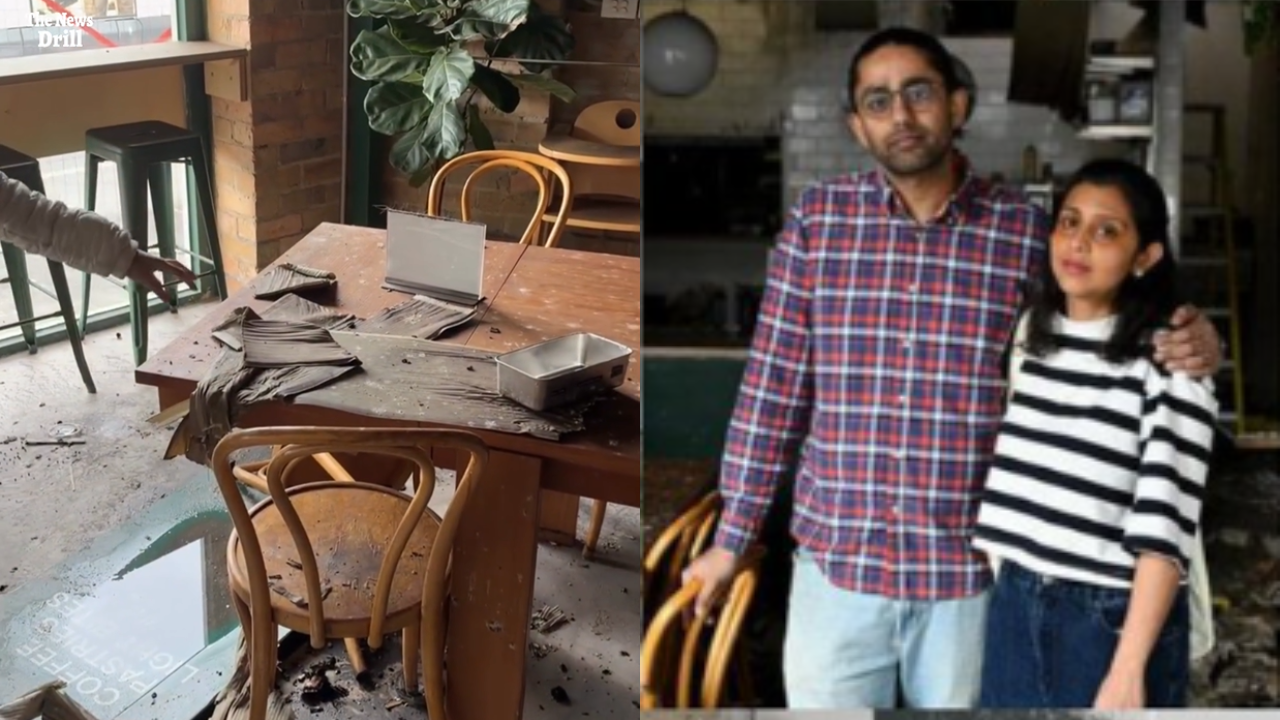
Conventional coverage frames arson around dramatic visuals: charred counters, broken glass, and community shock. That framing misses the cascading operational damage that determines whether a business actually reopens. In commercial spaces, fire rarely limits its harm to what burns directly.
The first secondary effect is smoke, soot, and water contamination. Even contained fires push acidic particulates into ductwork, refrigeration coils, timber, and porous surfaces, while firefighting water damages flooring, subfloors, and electrical gear. Health and food-safety compliance requires thorough remediation before trade can resume, stretching downtime far beyond cosmetic repairs.
The second secondary effect is schedule compression against lease tenure. Every month a cafe remains closed consumes a slice of the lease term without generating gross margin. If a venue holds a three- or five-year lease and loses four to six months to investigation, insurance assessment, and contractor scheduling, the remaining runway to amortize fitout costs shortens. Higher monthly contribution is then required just to break even on the original investment.
The third secondary effect is insurance and claim friction. Commercial policies vary widely in scope, exclusions, excesses, and proof-of-loss requirements. When arson is suspected or confirmed, police and fire investigators may restrict site access while determining origin and cause, and insurers may conduct thorough reviews before approving payouts. Furthermore, policies often indemnify based on replacement or indemnity terms subject to sub-limits, depreciation, or underinsurance averaging clauses. If a fitout or equipment schedule was valued below actual replacement cost, the payout covers only a fraction of the rebuild.
Consider a representative scenario rather than a specific case. Suppose an operator spends $115,000 to launch a neighborhood cafe, including $20,000 in borrowed funds and three weeks of working capital buffer. Four months after opening, an overnight arson attack damages the front counter, melts wiring, and coats the kitchen in heavy soot. Police investigation holds up contractors for two weeks; insurer assessment takes another month; trades are booked out for six weeks. During those ten to twelve weeks, sales drop to zero, staff hours are cut or ceased, and rent and loan commitments press on whatever cash remains. Even if insurance eventually pays a portion of the claim, timing mismatches between cash outflows and claim settlement create acute strain.
Why Crowdfunding Rarely Solves Structural Capital Loss
Turning to crowdfunding after a localized arson attack is an intuitive response when immediate cash is tight and neighbors want to help. Emotionally, a campaign signals solidarity and gives local supporters a concrete way to back small business owners. Analytically, however, donation-based crowdfunding has sharp structural limits when used to replace destroyed commercial capital.
First, scale mismatch is common. Raising $15,000 to $40,000 through community donations is a meaningful show of support, yet commercial fitouts, compliant electrical and mechanical work, and hospitality equipment routinely cost tens or hundreds of thousands of dollars. Crowdfunding proceeds often function best as bridge liquidity—covering immediate bills, small equipment replacements, or reopening expenses—rather than funding a full ground-up reconstruction.
Second, crowdfunding does not fix broken unit economics. If a cafe was already operating on thin margins, carrying heavy debt service, or paying above-market rent for its foot traffic, a one-time cash injection temporarily relieves pressure without improving contribution per customer. Once the campaign funds are spent, the underlying business model must still generate enough gross profit to cover rent, wages, and cost of goods.
Third, platform fees, tax treatment, and campaign fatigue reduce net usable cash. Platforms deduct fees and payment processing charges, and funds raised for business losses or expenses can carry tax or accounting implications depending on jurisdiction and structure. Moreover, repeated appeals or slow progress during permitting and construction can test donor patience.
That does not mean crowdfunding is useless. Its real strategic value lies in demand validation and cash-flow bridge support, provided expectations stay grounded. A campaign can keep core team members connected, fund urgent security or temporary repairs, and demonstrate neighborhood loyalty to a landlord negotiating a rent abatement or a lender reviewing loan terms.
Rebuilding vs. Walking Away: A Tactical Decision Framework
When a venue suffers severe arson damage, operators often default to rebuilding out of pride, sunk-cost attachment, or fear of admitting defeat. Sunk-cost fallacy is one of the costliest traps in small business management: money already spent before the fire cannot be recovered by spending more money on a flawed premise.
A disciplined recovery sequence follows five tactical steps:
- Secure the site and lock down documentation. Once authorities release the premises, log every damaged item with dated photos, serial numbers, invoices, and contractor quotes. Accurate records accelerate insurance assessment and reduce disputes over pre-loss condition.
- Audit insurance coverage and lease clauses. Review property, business interruption, public liability, and equipment breakdown policies alongside the commercial lease. Identify excess amounts, exclusions, damage/destruction clauses, and any rights to rent abatement or lease termination if premises are unfit for trade.
- Separate bridge cash from rebuild capital. Use any immediate cash or crowdfunding proceeds strictly for essential stabilization—such as boarding up, security, urgent legal or accounting advice, and minimum survival expenses—rather than committing it prematurely to long-lead fitout orders.
- Re-underwrite the unit economics from scratch. Model the reopened cafe as a brand-new investment using current quotes for construction, equipment, coffee and food inputs, award wages, and utilities. Test whether realistic daily covers and average transaction values can pay back both any new capital required and remaining debt.
- Negotiate concessions before signing new commitments. Approach the landlord and lenders with clear timelines and realistic cash-flow projections. A temporary rent holiday, stepped rent, or restructured repayment schedule can make reopening viable; refusal by a landlord to share the downtime burden is a major warning sign.
Limitations and Edge Cases
No framework eliminates uncertainty after a deliberate fire. Insurance investigations can take longer than projected, supply chains for commercial appliances and licensed trades can slip, and neighborhood foot traffic can shift during prolonged closures. Furthermore, if a venue operated as a sole trader or partnership rather than a limited liability entity, personal asset exposure may complicate restructuring choices. In cases where rebuild costs exceed projected cash-flow returns—or where the site carries persistent security risks that insurers price punitively—walking away or relocating to a better-protected site can preserve far more capital than stubbornly rebuilding in place.
Strategic Play for Operators and Investors
The decisive move after a six-figure cafe arson is to treat reopening as a new capital allocation decision, not a continuation of the old plan. Before ordering a single piece of replacement equipment or accepting another dollar of debt, map the exact gap between verified insurance proceeds plus any raised funds and the true cost to reach cash-flow breakeven post-reopening—and walk away from the site if closing that gap requires unrealistic sales volume or uncompensated risk.