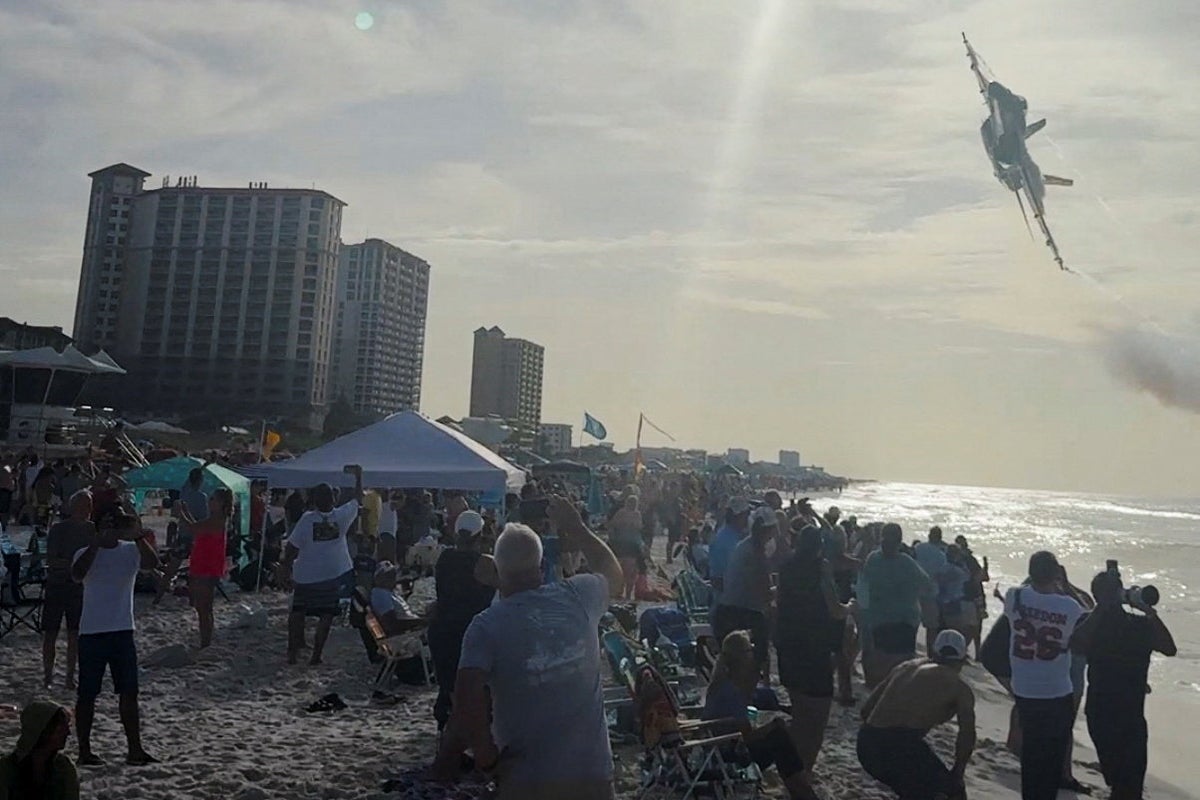
It looks like a stunt. When six F/A-18 Super Hornets scream across the Pensacola Beach shoreline at 400 miles per hour, scattering umbrellas and sending startled tourists diving into the white sand, the immediate reaction is visceral panic followed by viral social media fame. The footage looks reckless, almost illicit, like a rogue pilot breaking FAA regulations for a thrill.
It isn't. Every single inch of that low-altitude pass is engineered, vetted, and practiced down to the millisecond.
What the public witnesses as a terrifyingly close shave is actually a masterclass in military recruitment, public relations, and razor-thin aerodynamic margins. While headlines scream about beachgoers shrieking in terror, the real story lies in the calculated mechanics of the flight envelope and the strategic mandate driving the U.S. Navy’s premier flight demonstration squadron.
The Illusion of Risk
The Blue Angels fly low because proximity creates the illusion of impossible speed. At 10,000 feet, an F/A-18 traveling near the speed of sound looks like a slow-moving speck. At 50 feet, it is a localized earthquake.
Naval aviation operates under strict restrictions, but the Blue Angels possess unique waivers. The Federal Aviation Administration grants these exemptions under specific airspace management protocols, allowing the squadron to operate well below the standard 500-foot minimum distance from structures and people during sanctioned performances and practice runs.
The Pensacola beach buzz is a tradition. Pensacola is the home base for the squadron, and the annual July air show serves as a homecoming. The pilots know the geography intimately. They use the stark contrast between the emerald water and the white sand as visual markers, executing what is known as a low-level knife-edge pass or a high-speed sneak pass.
Safety is not left to instinct. The squadron relies on a dedicated ground safety officer who monitors telemetry, wind speed, and barometric pressure in real time. If a single variable drifts outside the acceptable parameters, the maneuver is aborted instantly.
Controlling the Airflow
Flying close to the ground introduces a dangerous aerodynamic phenomenon known as ground effect. When an aircraft flies very close to a flat surface, the air beneath its wings is compressed, creating a cushion of high pressure that alters the lift-to-drag ratio.
For commercial pilots landing an airliner, ground effect causes the plane to "float" along the runway. For a fighter jet executing high-g maneuvers at transonic speeds, it requires instantaneous, minute control inputs to prevent the aircraft from ballooning upward or sinking into the surf. The pilots fly entirely by manual control. There are no automated systems steering the jets during these passes; it is pure muscle memory and hyper-focused vision.
The High Cost of the Shockwave
The sonic boom is illegal over land. The Blue Angels do not break the sound barrier during these beach flyovers, but they flirt aggressively with the edge of it.
When a jet approaches Mach 0.95, it creates a vapor cone—a cloud of condensed water droplets caused by the sudden drop in air pressure around the fuselage. This is often mistaken for a sonic boom, but the true impact is the pressure wave generated by the displacement of air. That wave is what flattens beach tents, sends cooler lids flying, and creates the thunderous roar that rattles human ribcages.
The physical toll on the equipment is immense. Operating at low altitudes means flying through dense, salt-laden air. This environment accelerates engine wear and introduces the constant hazard of bird strikes. Gulls and pelicans do not have radar, and a ten-pound bird meeting a canopy at 400 knots results in catastrophic structural failure. The maintenance crews work around the clock during the beach show season, inspecting engine blades for microscopic cracks and washing the airframes daily to neutralize the corrosive salt crust.
The Recruitment Machine
The primary mission of the Blue Angels is not entertainment. It is marketing.
The U.S. military faces chronic recruitment shortages, struggling to meet quotas across multiple branches due to shifting demographics and strict physical requirements. The Pensacola beach show places the Navy's most glamorous asset directly in front of hundreds of thousands of young, impressionable viewers.
The screaming crowds and the viral videos are precisely the intended outcome. By transforming a multi-million-dollar weapon system into a high-octane public spectacle, the Navy creates an aspirational brand. The shock and awe on the beach translate directly into foot traffic at local recruitment offices and spikes in digital inquiries.
The cost of this marketing campaign is measured in millions of dollars of jet fuel and maintenance hours, paid for by the American taxpayer. Critics occasionally question the expenditure, viewing the low-level passes as an expensive luxury or an unnecessary environmental disturbance. Yet, the Department of Defense views the squadron as irreplaceable, a living billboard that keeps the pipeline of future naval aviators full.
Navigating the Margin of Error
There is no room for complacency in the cockpit. The pilots fly as close as 18 inches apart in some formations, though the low-altitude solo passes provide more lateral clearance.
The pressure is psychological as much as physical. A pilot pulling 7 Gs experiences seven times their body weight, forcing blood away from the brain. They must utilize a specialized breathing and muscle-tensing technique to remain conscious while making micro-adjustments to the flight stick.
The crowd on the beach sees a seamless display of military might. They do not see the sweat pouring inside the flight helmets, the intense debriefings where every mistake is brutally analyzed, or the absolute reliance on trust between the six individuals in the sky. When the jets disappear over the horizon, leaving behind a trail of smoke and a beach full of stunned spectators, the illusion remains intact. It looks like chaos, but it is the most disciplined organization in the sky.