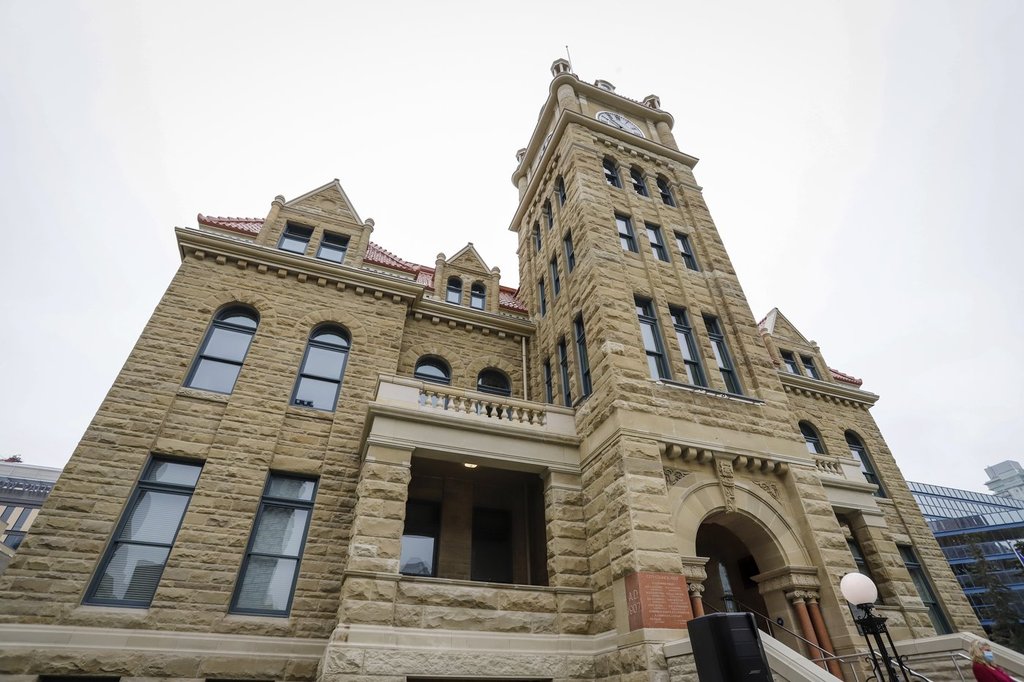
The collective gasp echoing through Alberta right now is entirely misplaced. News that the Royal Canadian Mounted Police (RCMP) are executing search warrants and diving into the bookkeeping at Calgary City Hall has sent the local punditry into a predictable tailspin. The mainstream narrative solidified in minutes: municipal government is inherently broken, public trust is shattered, and we are witnessing a unprecedented disaster for local democracy.
That narrative is completely wrong.
The media loves a breathless corruption scandal because it feeds a cheap, cynical appetite for institutional failure. But if you strip away the sensationalism surrounding these court documents, you find something far more uncomfortable for the critics: the fact that federal law enforcement is actively digging through municipal files is evidence of functional oversight, not systemic collapse. The real disaster isn't that a probe is happening; the disaster would be a system so quiet, so opaque, and so terrified of friction that no one ever looks under the hood.
The Myth of the Clean Bureaucracy
Every year, municipal watchdogs and compliance officers try to sell the public on the idea of zero-risk governance. They design elaborate procurement frameworks and ethics codes meant to guarantee that nothing improper ever occurs.
It is an expensive fantasy.
Municipalities are multi-billion-dollar corporations handling massive infrastructure projects, zoning changes, and land deals. Where that much capital moves, friction, rule-bending, and outright malfeasance are permanent mathematical certainties. Expecting a city administration to operate with absolute purity is like expecting a financial market to exist without insider trading. It ignores human incentives.
The measure of a healthy democracy is not the total absence of bad actors. The measure is the velocity and weight with which the system reacts when anomalies surface.
When the RCMP steps in based on internal tips or forensic audits, it means the tripwires worked. The whistleblower mechanisms, the provincial oversight channels, and the judicial thresholds required to grant a search warrant all functioned exactly as intended. A silent city hall is rarely a clean city hall; more often, it is just an unexamined one.
The Real Cost of Absolute Risk Aversion
While the public fixates on the specter of backroom deals, they routinely ignore a much bigger drain on taxpayer resources: the paralyzing fear of scandal.
I have watched public administrators spend millions of dollars in billable hours to mitigate a few thousand dollars worth of political risk. In the wake of an investigation like the one in Calgary, the gut reaction from councilors is always to demand more red tape, more sign-offs, and more compliance committees.
They treat the investigation as a mandate to slow down.
This reaction creates a administrative chokehold. Imagine a scenario where a city needs to procure emergency housing or upgrade a failing water treatment plant. Under standard operating procedures, the project takes two years. Under "post-scandal" hyper-compliance protocols, it takes five years, three external consultancies, and double the budget—all so politicians can point to a paper trail and prove they are squeaky clean.
The financial loss from institutional paralysis routinely dwarfs the financial loss from actual, localized corruption. By treating every bureaucratic misstep or potential conflict of interest as an existential crisis rather than an operational risk to be managed, we trade agility for an illusion of safety.
Dismantling the Panic
Is city hall corruption getting worse?
No. The frequency of headlines is a function of increased digital transparency and aggressive investigative journalism, not a sudden decline in human morality. Decades ago, municipal contracts were handed out over closed lunches with zero digital footprint. Today, every email, text message, and procurement log leaves a permanent trail. We are not seeing more corruption; we are seeing more visibility.
Why do municipal governments seem particularly vulnerable?
Because municipal government is where abstract policy meets concrete dollars. Provincial and federal governments deal in high-level legislation. Cities deal in specific land permits, specific construction contracts, and specific property developments. The proximity between the regulator and the regulated is incredibly tight. That proximity requires aggressive external auditing, which is precisely what the RCMP probe represents.
Should taxpayers demand a complete overhaul of procurement rules?
Absolutely not. The current rules are likely sufficient; the focus must remain on enforcement and velocity of discovery. Adding layers of bureaucracy only protects the incompetent while doing nothing to stop a determined bad actor who knows how to game the system anyway.
The Trade-Off Nobody Wants to Admit
There is an uncomfortable truth that critics refuse to acknowledge: building a system completely immune to corruption requires eliminating all human discretion.
If you strip city managers, engineers, and project leads of the power to make judgment calls, you eliminate the possibility of favoritism. But you also eliminate the possibility of innovation. You get a stagnant, rigid bureaucracy that cannot adapt to real-world conditions because everyone is too terrified of violating a sub-clause to get things done.
A functional city requires a calculated amount of trust, backed by a massive hammer for those who abuse it.
The RCMP probe in Calgary is that hammer. It is loud, it is messy, and it makes for terrible public relations. But it is also proof that the municipality is not an untouchable fiefdom. Instead of wringing our hands over the fact that an investigation is happening, we should be deeply relieved that the machinery of accountability still knows how to bite.
Stop looking for a government run by saints. It does not exist. Demand instead a government where the police can still walk through the front door of city hall when things go sideways.