The headlines are weeping over empty lecture halls. Canadian media outlets love to run the same panic-inducing narrative: stricter immigration caps and tightening visa conditions are forcing international students to abandon Canadian universities, spelling doom for institutional balance sheets.
The lazy consensus says Canada is shooting itself in the foot, destroying a multi-billion-dollar cash cow, and choking off talent pipelines.
They are wrong. Dead wrong.
What Ottawa is actually doing is performing a necessary, long-overdue chemical peel on a higher education sector that spent a decade addicted to easy volume. For years, universities and strip-mall colleges treated study permits as backdoor immigration tickets rather than academic credentials. The current drop in application volume is not a tragedy. It is a market correction. And if you look past the institutional panic, the forced contraction is going to fix a broken system.
The Mirage of the Tuition ATM
Let us dispense with the polite fiction that every international student coming to Canada was hunting for a world-class seminar in medieval literature.
For a large segment of the market, the Canadian study permit was a financial product. Pay tuition, work forty hours a week at a logistics warehouse, secure a post-graduation work permit, and punch your ticket to permanent residency. Institutions played along. They scaled up enrollment of foreign students—who pay triple or quadruple domestic tuition rates—to offset provincial funding freezes.
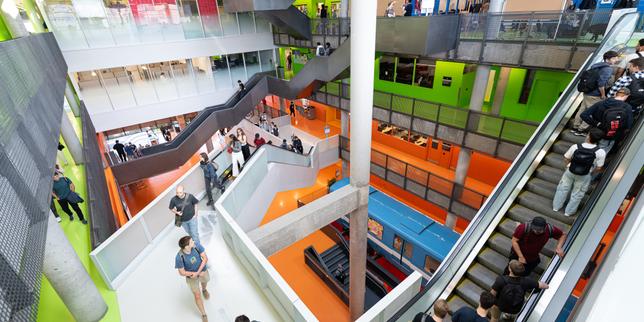
Administrators built glass-and-steel science complexes and bloated middle-management bureaucracies on the backs of students from New Delhi and Beijing. When the federal government slammed the brakes on visa volumes, those same administrators screamed about impending insolvency.
Cry me a river.
I have watched mid-tier colleges scale up programs with zero regard for housing infrastructure, local transit, or job market absorption. They treated student bodies like spreadsheet entries. When you build an entire operating model on an unmanaged, runaway influx of bodies, any regulatory tightening looks like an attack. It is not. It is gravity catching up with an inflated asset.
Quality Versus Headcount
The lazy analysis assumes that fewer students mean a weaker system. That logic only holds if your sole metric of success is gross revenue.
Let us look at the mechanics of what happens when admission standards tighten and volume drops. Universities are forced to pivot from quantity to value. When you cannot rely on sheer numerical mass to balance your budget, you have to compete on actual educational output, research commercialization, and institutional distinctiveness.
Imagine a scenario where Canadian universities stop functioning as glorified immigration brokerages and return to being centers of intellectual formation.
The students who clear the new, higher bars for entry—financial proof, language competency, genuine academic alignment—will not be desperate speculators trying to squeeze through a loophole. They will be genuine scholars and high-value specialists. The tier-two diploma mills that offered dubious credentials solely for work-permit eligibility will wither. Good. They should. They degraded the brand of Canadian credentials globally.
The survivors of this contraction will be institutions that offer actual return on investment through curriculum rigor, not backdoor residency tracks.
The Real Housing and Labor Shockwaves
Critics point out that international students are vital for filling labor shortages in retail and hospitality. Stop right there. That argument exposes the rot at the center of the old model.
If your retail supply chain or fast-food franchise depends on an endless supply of international students working off-hours to survive, you do not have a labor strategy. You have an underpaid labor subsidy scheme that suppresses domestic wages and masks low productivity growth.
Canada’s productivity crisis is directly tied to a decade of cheap, disposable labor. When businesses can easily hire international students to flip burgers or stock shelves, they have zero incentive to invest in automation, software, or operational efficiency. Forcing a contraction in student numbers acts as a structural shock to the labor market, compelling companies to actually invest in technology and pay competitive wages to attract workers.
On the housing front, the arithmetic is brutal. You cannot add hundreds of thousands of non-permanent residents into metropolitan rental markets without destroying housing affordability. Municipalities lacked the infrastructure to absorb the volume. Blaming students is cowardly; blaming the policy makers who decoupled immigration from housing construction is accurate. By tightening the taps, the federal government is giving municipal infrastructure a fraction of a second to catch its breath.
Navigating the Downside
I will not pretend this transition is painless. Let us be entirely transparent about the friction.
Universities that over-leveraged themselves on international tuition are going to bleed red ink. Faculty layoffs are happening. Programs that relied on foreign enrollment to stay afloat are being slashed. Some regional economies that boomed on student spending are experiencing a sharp, painful hangover.
This is the price of structural detox. When you let an industry run hot on distorted market signals for fifteen years, the withdrawal hurts.
The mistake is confusing the pain of withdrawal with the failure of the medicine. Administrators whining about budget shortfalls are admitting they never built a sustainable business model in the first place. They built a dependency.
The Unspoken Opportunity
The real winners of this policy shift are not just domestic taxpayers or desperate apartment hunters. It is the international students themselves.
For too long, Canada exported a sub-prime educational product to vulnerable kids who arrived only to find a housing crisis, predatory employment conditions, and a saturated job market that viewed them as cheap labor rather than future professionals. By raising the bar, Canada is signaling that if you come here to study, you will receive a credential that actually commands respect, backed by infrastructure that can support you.
The era of the frictionless, mass-market study visa is dead. Good riddance. The universities that survive this reckoning will be leaner, meaner, and infinitely more respected on the global stage.
Stop mourning the loss of the volume. Start building for the standard.