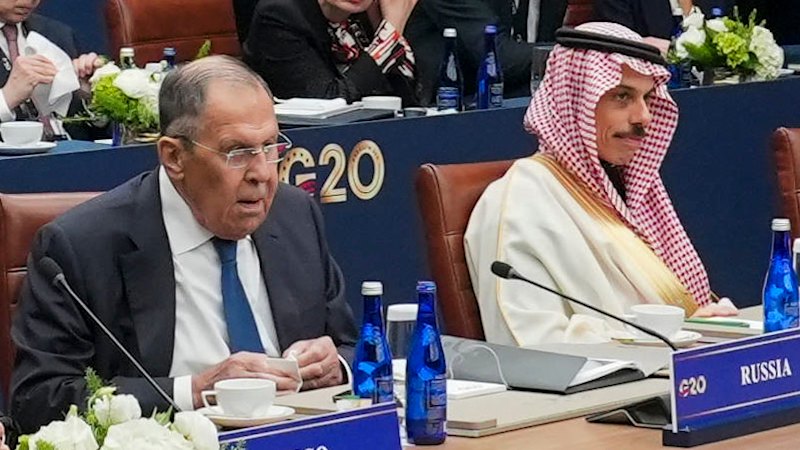
The traditional G20 family photo was cancelled during the 2024 G20 Finance Ministers and Central Bank Governors meeting after European officials refused to stand beside Russian delegates in protest of the ongoing war in Ukraine. Protocol collapsed. What appears on the surface to be a minor scheduling adjustment or a petty squabble over optics is actually a stark indicator of how multilateral diplomacy has ground to a halt, exposing deep fissures between Western allies, Moscow, and the host nations caught in the crossfire.
For decades, the staged group photograph has served as the visual anchor of international summits. Leaders and finance chiefs file onto risers, force polite smiles for the cameras, and project an image of unified global stewardship—even when closed-door negotiations are deadlocked. When the United States, holding the presidency for the relevant track, or host officials are forced to scrap the ritual entirely, it signals that even the lowest bar of diplomatic theater can no longer be cleared.
The Anatomy of a Diplomatic Boycott
The decision to cancel the photo did not happen in a vacuum, nor was it a sudden whim. According to diplomatic reporting from the event, European representatives made it clear behind closed doors that appearing in a unified frame with Russian officials—specifically Russian Finance Minister Anton Siluanov and Central Bank Governor Elvira Nabiullina, or their designated proxies—was politically untenable back home.
Consider the domestic pressure facing European finance ministers. Voters across the European Union are dealing with elevated energy costs, defense spending hikes, and economic stagnation tied directly to the conflict in Eastern Europe. A photograph showing a French, German, or British minister standing shoulder-to-shoulder with a senior Kremlin official would immediately circulate on social media and front pages, handing ammunition to domestic opposition parties and undermining Europe's unified stance on sanctions.
Washington found itself in a familiar bind. US Treasury officials have spent the better part of three years trying to keep the G20 functional enough to address global debt restructuring, climate finance, and macroeconomic stability while simultaneously leading the effort to isolate Moscow economically. Cancelling the family photo became the path of least resistance. By removing the visual requirement of unity, the organizers prevented an embarrassing walkout on live television, though the absence of the photo spoke just as loudly.
Why the G20 Cannot Simply Expel Russia
A common question among casual observers is why the G20 does not simply revoke Russia's membership, much like the G8 did in 2014 when it reverted to the G7 following the annexation of Crimea. The answer lies in the fundamental structure of the group.
Unlike the G7, which is an informal bloc of aligned, advanced Western democracies plus Japan, the G20 has no formal charter, no permanent secretariat, and no mechanism for expelling a member state. Decisions within the G20 operate strictly by consensus. Any attempt to formally remove Russia would require unanimous agreement from all other nineteen members—a non-starter given the geopolitical realities of the forum.
Key emerging economies within the G20—most notably China, India, Brazil, and South Africa—have consistently resisted Western efforts to turn the economic forum into an arena for security condemnations. For New Delhi or Brasília, maintaining open diplomatic and trade channels with Moscow is a matter of national interest, encompassing everything from discounted crude oil and fertilizers to defense hardware.
If the United States and European nations pushed too aggressively to bar Russian delegates from the room, they risk alienating the Global South. A walkout by China or India in solidarity with the principle of non-exclusion would effectively destroy the G20 as a premier forum for international economic cooperation, leaving Western powers talking only to themselves—a role the G7 already fulfills.
The Slow Death of the Joint Communiqué
The cancelled family photo is merely the most visible symptom of a broader paralysis affecting G20 proceedings since February 2022. The real damage happens in the drafting rooms where diplomats spend sleepless nights negotiating the joint communiqué—the formal statement issued at the end of every summit outlining shared policy commitments.
Prior to 2022, communiqués were painstakingly crafted to reflect consensus on trade, taxation, and financial regulation. Since the invasion of Ukraine, those negotiations have routinely devolved into semantic trench warfare over a single paragraph describing the geopolitical situation.
Western nations demand explicit language condemning Russian aggression. Moscow, backed passively or actively by Beijing, blocks any text that characterizes the conflict as a war or assigns blame. The result has been an unprecedented string of summits ending without a formal communiqué, forcing host nations to issue a unilateral Chair's Summary instead.
This shift matters far beyond diplomatic pride. Without a consensus communiqué:
- Multilateral development bank reforms lose high-level political momentum, delaying billions in potential lending to developing nations.
- Global debt relief frameworks, such as the G20 Common Framework, stall because major bilateral creditors like China and Western nations cannot agree on burden-sharing rules in an atmosphere of mutual distrust.
- Cross-border regulatory standards for artificial intelligence, cryptocurrency, and corporate taxation face fragmented implementation as national priorities override collective agreements.
When officials cannot even agree to stand on the same set of risers for sixty seconds, expecting them to coordinate complex sovereign debt restructurings becomes an exercise in optimism.
Optics Versus Substance in Modern Statecraft
Critics of the European boycott argue that refusing a photograph is empty virtue signaling that achieves nothing on the ground in Ukraine while actively harming global economic governance. There is weight to this critique. Skipping a photo op does not stop artillery shells, nor does it tighten enforcement on sanction-busting shell companies. To diplomats from developing nations in Asia, Africa, and Latin America, Western preoccupation with seating charts and photo frames often looks like an indulgent distraction from urgent crises like sovereign debt defaults and food insecurity.
Yet dismissing diplomatic optics entirely misunderstands how international politics operates. Visuals are currency. For Moscow, the primary objective at international gatherings since 2022 has not been passing resolutions, but rather demonstrating that Western efforts to turn Russia into a global pariah have failed.
Every handshake in a hallway, every bilateral pull-aside with a non-Western minister, and every smiling group photo is beamed back to domestic audiences in Russia as proof of normalcy and diplomatic resilience. By denying the Kremlin that visual asset, European officials are fighting an information war on the margins of an economic summit.
| Diplomatic Mechanism | Traditional Function | Post-2022 Reality |
|---|---|---|
| The Family Photo | Visual proof of global unity and shared stewardship | Cancelled or modified to avoid legitimizing Russian presence |
| Joint Communiqué | Consensus policy roadmap for global finance | Replaced by non-binding Chair's Summaries due to vetoes |
| Bilateral Pull-Asides | Informal deal-making and tension reduction | Restricted to aligned blocs; severe chill between West and Russia |
| Host Nation Agenda | Focused on macroeconomics, debt, and climate | Hijacked by security disputes and geopolitical point-scoring |
The Burden on Host Nations
The diplomatic deep freeze places an extraordinary burden on the countries rotating through the G20 presidency. Recent and upcoming hosts—including Indonesia, India, Brazil, South Africa, and the United States—must act as tightrope walkers.
When Brazil hosted the G20 in 2024, President Luiz Inácio Lula da Silva prioritized fighting global hunger and taxing the ultra-rich, attempting to keep geopolitical conflicts off the main agenda. Even so, the shadow of Ukraine and the conflict in Gaza dominated press briefings and behind-the-scenes wrangling.
Host nations have had to invent creative workarounds just to keep meetings from collapsing. During the 2023 summit in New Delhi, Indian diplomats brokered a last-minute compromise on the communiqué text by referencing UN Charter principles on territorial integrity without explicitly naming Russia—a linguistic tightrope act that allowed Western leaders to claim they defended international law while allowing Moscow to sign off on the document without admitting guilt.
However, linguistic gymnastics cannot bridge every divide. As the presidency rotates back to the United States in 2026, the logistical and political contradictions become even sharper. Hosting a summit on American soil requires issuing visas to Russian delegates under host-country obligations, a move that inevitably triggers backlash from lawmakers in Washington while simultaneously forcing US officials to manage European allies who refuse to share a stage with those very guests.
A Fragmented Future for Global Governance
The cancellation of a group photograph will not trigger a market crash or alter interest rate trajectories. Central bankers will still adjust monetary policy based on inflation data, and treasury departments will still manage sovereign bond auctions.
What the incident confirms is the fragmentation of the post-Cold War international order into competing, overlapping blocs. The G20 was born out of the 1997 Asian financial crisis and elevated to a leaders' summit during the 2008 global financial meltdown precisely because the G7 was no longer large enough to manage systemic global shocks on its own. The core premise of the G20 was that economic interdependence would force geopolitical rivals into the same room to solve shared problems.
That premise is failing. Economic statecraft—sanctions, export controls, tariffs, and industrial subsidies—has become the primary weapon of geopolitical competition rather than a bridge between nations. When finance ministries operate as extensions of national security councils, the collegiality required for a functioning multilateral forum evaporates.
Diplomatic protocols exist to lubricate friction between adversaries who still need to do business together. When those protocols are abandoned to satisfy domestic political realities, the room for quiet back-channel diplomacy shrinks even further, leaving global institutions hollowed out precisely when systemic crises demand collective action.


