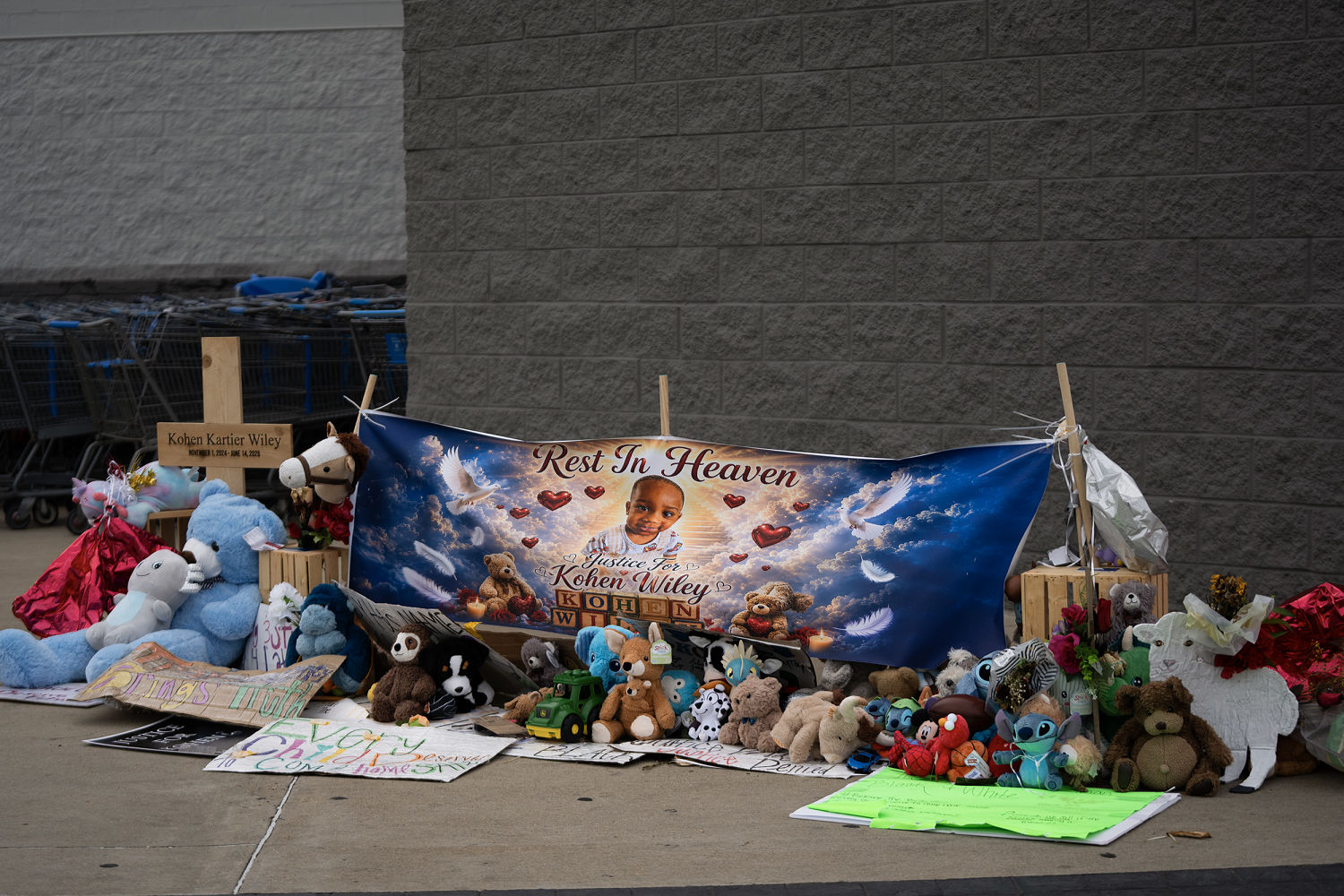
A parking lot should never become a crime scene, especially when a toddler is in the backseat. Yet that is exactly what happened outside a Mississippi Walmart, leaving a one-year-old boy dead and a family demanding answers that officials seem slow to provide. The official narrative surrounding the tragic death of Zae'Kuan Robinson started unraveling the moment an independent autopsy entered the picture. Now, the family's legal team is openly questioning who actually fired the fatal shot.
When a tragedy like this occurs, the public expects a straightforward timeline. We want clear facts from law enforcement. Instead, the details emerging from Canton, Mississippi, point to a deeply troubling gap between what police claim happened and what the physical evidence suggests. This isn't just about a botched investigation. It is a stark reminder of why families can rarely afford to rely solely on state-issued findings when law enforcement officers are involved in a lethal encounter.
The Discrepancies in the Canton Police Narrative
The initial reports from the Canton Police Department painted a chaotic picture. A high-speed pursuit, a suspect fleeing into a crowded retail area, and gunfire. In the immediate aftermath, state investigators focused heavily on the actions of the suspect. They implied the danger originated entirely from the fleeing vehicle.
But the family's attorney, Carlos Moore, refused to let the narrative set in stone. He commissioned an independent autopsy to verify the trajectory and origin of the bullet that ended a baby's life.
What that private medical examination revealed completely disrupted the state's timeline. The independent autopsy showed a bullet trajectory that complicates the official theory. It suggests the fatal round may not have come from the suspect's weapon at all. Instead, the angle and positioning raise the harrowing probability that law enforcement gunfire accidentally struck the child during the chaotic confrontation.
This kind of revelation changes the entire legal dynamic. It shifts the conversation from a tragic case of collateral damage caused by a criminal to a potential case of systemic negligence and reckless discharge of firearms by the people sworn to protect the public.
Why Independent Autopsies are Vital for Justice
State investigators have a structural bias. That is a hard truth to accept, but history proves it repeatedly. When the Mississippi Bureau of Investigation takes over a case involving local police officers, the process slows down. Information gets locked away behind a wall of ongoing investigation disclaimers.
Private autopsies act as a necessary counterweight to this official silence.
State Autopsy Process: Often delayed, shielded from public view, controlled by state narrative.
Independent Autopsy Process: Fast, objective, answers directly to the victim's family, challenges assumptions.
An independent medical examiner doesn't care about shielding a police department from a civil lawsuit. They don't look at political fallout. They look at entry wounds, exit wounds, bullet fragments, and tissue damage. In the case of young Zae'Kuan, the private forensic findings provided the family with concrete data points before the state even released its final report.
Relying on a single government source during a police-involved shooting is a massive mistake. Bullet forensics don't lie, but the interpretation of how those bullets traveled can absolutely be manipulated to protect institutions.
Shifting Trajectories and Ballistic Reality
Ballistics involve cold, hard physics. A bullet enters a vehicle at a specific angle based on where the shooter stood relative to the car. If police officers fired from the rear or side while chasing the vehicle, and the bullet trajectory matches that exact angle, the defensive claims of the department start to fall apart.
Carlos Moore pointed out that the physical evidence discovered in the independent review contradicts the early briefings given to the family. The family was led to believe one thing, while the physical body of their child proved another. That is a betrayal on top of an unspeakable loss.
The Human Cost and the Silence of Canton Officials
While the legal battle heats up, the human element of this story gets incredibly heavy. A mother went to a store with her child and left without him. The trauma inflicted on this family is permanent.
What makes it worse is the defensive silence from local officials.
Instead of transparency, the community is getting standard boilerplate responses. Requests for body camera footage are denied or delayed. Press conferences are brief and light on specifics. This lack of communication does nothing to build trust. It creates an environment of intense suspicion.
When a city remains silent after a child is killed in a public space, they aren't protecting the integrity of an investigation. They are protecting themselves. The residents of Canton deserve to know if the tactics used by their police department put innocent bystanders at unacceptable risk. High-speed pursuits into crowded commercial zones are inherently dangerous. When officers pull their weapons in those areas, the margins for error disappear completely.
Immediate Steps to Force Accountability
The family isn't waiting around for the state to do the right thing. They are taking direct action to ensure this case isn't swept under the rug.
First, they are demanding the immediate release of all unedited body camera footage from every officer present at the scene. Video evidence is the ultimate equalizer when autopsies and police reports clash.
Second, the legal team is pushing for federal oversight. The Department of Justice needs to look at the pursuit policies and use-of-force guidelines used by the Canton Police Department. Local agencies cannot be trusted to investigate themselves impartially when the stakes are this high.
If you want to support accountability in cases like this, pay attention to local administrative decisions. Demand that your local leaders implement strict rules regarding police chases in retail districts. Public safety should mean protecting the public from the chaos of a chase, not just catching a suspect at any cost.
The tragedy in Mississippi shows that without independent intervention, the truth gets buried deeper than the victims. We must keep the pressure on the system until every fact comes to light. Missing details must be exposed. The memory of Zae'Kuan Robinson demands nothing less than absolute clarity and real, systemic reform.