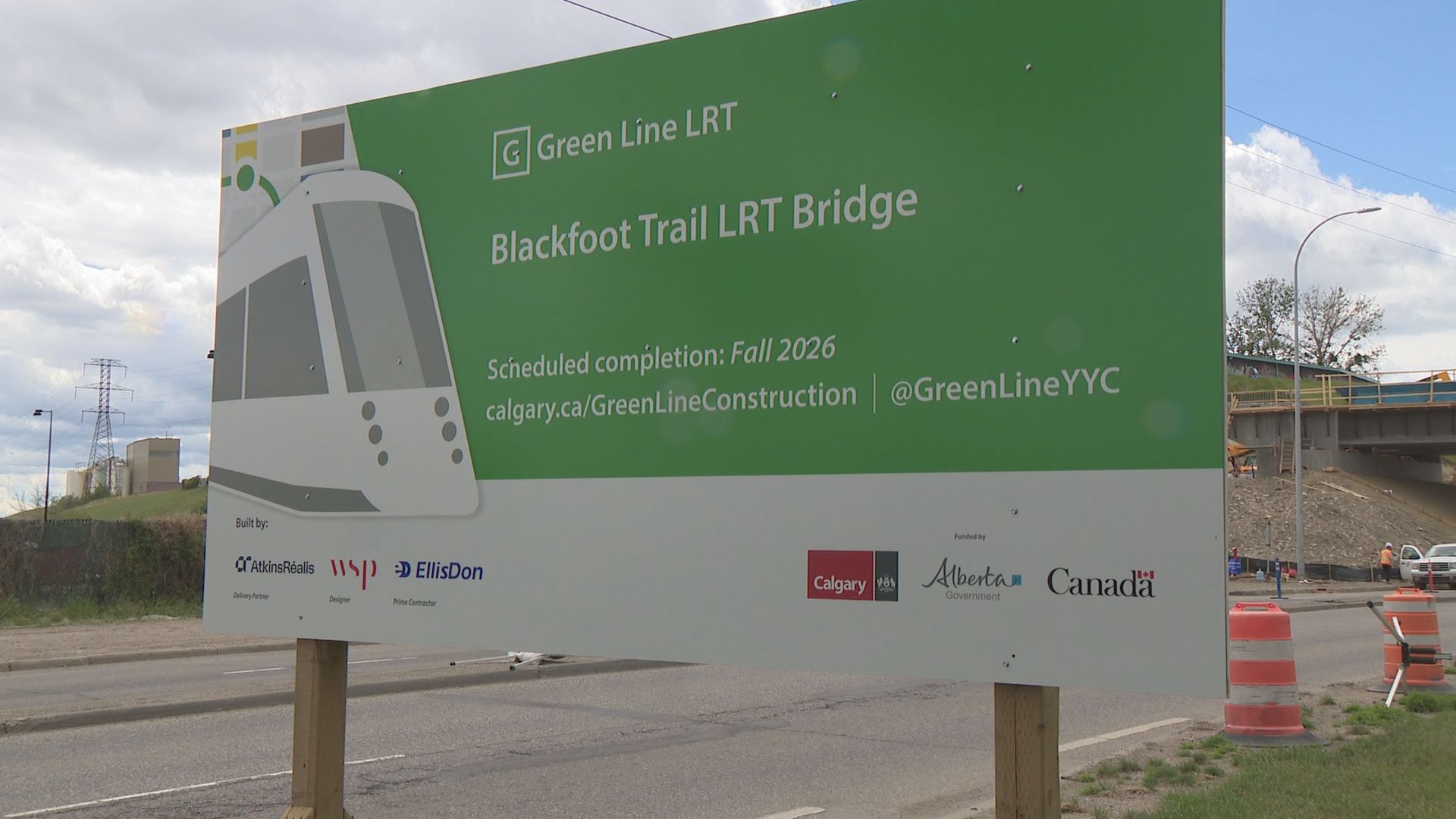
Municipal megaprojects often fail due to structural alignment deadlocks rather than engineering shortfalls. The proposal by Calgary Mayor Jeromy Farkas to temporarily pause the core downtown segment of the $6.25-billion Green Line Light Rail Transit (LRT) system and reallocate capital toward suburban southern extensions exposes a fundamental economic trade-off: immediate suburban utility maximization versus systemic long-term network integration. This strategic pivot aims to resolve an ongoing funding and alignment stalemate between the City of Calgary and the Government of Alberta, yet it introduces operational risks and altered capital efficiency variables.
To accurately evaluate the validity of de-linking the downtown core from the Green Line’s periphery, the project must be assessed through quantitative engineering and fiscal frameworks. The current plan focuses on Phase 1, which runs from the southeast industrial node of Shepard to the Event Centre/Grand Central Station. However, the system faces structural friction regarding how to cross the central business district to unlock ridership in the deep north and far south.
The Core-Periphery Capital Allocation Model
The strategic pivot proposed by the municipality relies on a structural substitution framework. By deferring the construction of the complex downtown corridor, the city intends to redirect capital to the southern extension toward Seton, leveraging an existing, unencumbered right-of-way. This decision can be analyzed using a three-part structural framework.
                    [ Capital Envelope: $6.25 Billion ]
                                     |
                -------------------------------------------
               |                                           |
    [ Deferred Core Corridor ]                  [ Accelerated Periphery ]
    - Subterranean vs. Elevated Deadlock         - Seton Southern Extension
    - High-Density Capital Demands               - Low-Cost Right-of-Way
    - $244M Sunk Tunneling Cost                  - Immediate Suburban Utility
               |                                           |
                -------------------------------------------
                                     |
                       [ Systemic Network Friction ]
                       - The Inter-Segment Bus Bridge
                       - Structural Demand Destruction
1. Capital Velocity and Marginal Cost of Track-Kilometers
The engineering complexity of the downtown core requires high-density capital expenditure. Subterranean tunneling through the central business district involves substantial utility relocation, structural reinforcement of adjacent skyscrapers, and complex underground station excavation. Data indicates that $244 million has already been spent on studying and preparing for a downtown tunnel alignment that the provincial government subsequently rejected.
By contrast, the right-of-way from Shepard south to Seton (including nodes like McKenzie Towne, Auburn Bay, Mahogany, and the South Health Campus) is largely protected and surface-grade. The marginal cost per track-kilometer in the southern periphery is significantly lower than in the urban core. Pausing the core allows the municipality to maximize the physical footprint of the track laid per dollar spent in the short term.
2. The Inter-Segment Bus Bridge and Demand Destruction
The proposed operational workaround for the paused core is a "bus bridge"—a fleet of high-frequency buses transferring passengers between the southern rail terminus at the Event Centre and existing transit lines or northern nodes.
In transportation economics, forced transfers introduce a time and psychological penalty that alters commuter behavior. The total travel time function can be expressed as:
$$T_{total} = T_{rail1} + T_{transfer} + T_{bus} + T_{rail2}$$
Where $T_{transfer}$ represents the non-linear friction of exiting a rail platform, waiting for a bus, navigating mixed urban traffic, and re-boarding a secondary rail vehicle. This transfer friction causes demand destruction, lowering ridership projections compared to a continuous rail link. Commuters facing a multi-modal transfer often revert to private automobiles, reducing the farebox recovery ratio of the active southern segment.
3. Jurisdictional Funding Silos and Fiscal Asymmetry
The Green Line's financial architecture is a tripartite structure involving municipal, provincial, and federal capital contributions. The current stalemate stems from conflicting design priorities tied to these funding streams:
- The Provincial Position: The Government of Alberta has allocated $1.5 billion, conditional on an elevated, above-ground alignment along 10th Avenue and 2nd Street S.W. The province argues this model avoids the financial risks of tunneling, expands coverage by five stations, and increases projected ridership by 60% relative to a truncated tunnel option.
- The Municipal and Local Business Position: A city-level assessment reveals that 83% of businesses and property owners along the proposed elevated corridor oppose above-ground tracks due to concerns over visual impacts, noise, and localized property devaluation. However, broader public polling shows 65% general support for the elevated line to ensure project progression.
- The Federal Direct-Partner Hypothesis: The mayoral strategy floats the possibility of bypassing provincial constraints by partnering directly with the federal government to fund a future phase-two downtown tunnel. This approach assumes federal willingness to absorb an asymmetric share of infrastructure risks without matching provincial funds, a scenario that overlooks established tri-party infrastructure financing conventions in Canada.
Strategic Implications for Regional Rail Connectivity
The debate over the Green Line’s alignment choice extends beyond local rapid transit to impact broader regional rail integration. The design of the downtown core will establish the geometric constraints for future rail corridors connecting Calgary to the Calgary International Airport (YYC) and the Bow Valley/Banff passenger rail corridor.
                          [ Downtown Core Grid ]
                                    |
          -----------------------------------------------------
         |                                                     |
  [ Elevated Alignment ]                               [ Tunnel Alignment ]
  - Fixed 10th Ave/2nd St Geometric Plane               - Subterranean Grade Separation
  - Limits Co-Location with Heavy Passenger Rail       - Preserves CPKC Rail Corridor Space
  - High Spatial Friction for Multi-Modal Hubs          - Enables High-Velocity Regional Hubs
An elevated light rail system creates a fixed geometric plane within the urban grid. This above-ground infrastructure limits options for co-locating heavy passenger rail or high-velocity airport links within the same central right-of-way.
The Bow Valley Passenger Rail Coalition and adjacent planning bodies emphasize preserving space within the CPKC rail corridor. A subterranean or carefully separated downtown transit alignment protects this corridor, allowing the city center to function as an integrated multi-modal hub.
Conversely, selecting a restrictive above-ground light rail path could create spatial bottlenecks, complicating or blocking future high-capacity regional rail connections.
Operational Risk Analysis of the Suburban-First Strategy
Prioritizing suburban track expansion over core connectivity alters the long-term risk profile of the project. While it offers immediate political and visible construction progress in the south, it introduces three major structural liabilities.
Postponed Inflationary Compounding
De-scoping the downtown segment to a future phase does not eliminate its structural necessity; it merely delays it. In civil engineering, deferred construction is subject to inflationary compounding on labor, structural steel, concrete, and specialized tunneling equipment. The capital saved by building south today may be offset by higher costs for the downtown core tomorrow, reducing the purchasing power of future funding allocations.
North-Central Transit Purgatory
The Green Line was conceived as an un-bifurcated transit spine linking north-central Calgary to the southeast. Accelerating the southern leg while stalling the core leaves north-central communities without rapid transit infrastructure.
Because northern extensions require a connection through the core to access maintenance facilities and the wider network, a pause on downtown construction delays transit access for northern riders. This creates an imbalance in municipal infrastructure distribution.
The Stranded Asset Risk of the Maintenance and Storage Facility
The operational backbone of the Green Line—the Maintenance and Storage Facility (MSF)—is located in the south at Shepard. If the southern line is extended to Seton while the downtown core is paused, the entire fleet remains isolated on the south side of the Bow River.
The system cannot scale its rolling stock or optimize network-wide maintenance schedules until it achieves a contiguous rail connection. The MSF effectively functions under a constrained capacity regime, serving a single suburban branch rather than an integrated urban network.
Realignment Framework
To break the jurisdictional deadlock without causing long-term demand destruction or compromising regional rail integration, project leadership must move away from binary choices (Tunnel vs. Elevated) and apply a structured alignment framework.
| Evaluation Metric | Option A: Provincially Mandated Elevated Line | Option B: Mayoral Deferred Core / Southern Push | Option C: Segmented Hybrid with CPKC Corridor Integration |
|---|---|---|---|
| Capital Efficiency | High (Maximizes stations/dollar via above-ground builds) | Medium (Low suburban costs, but high future core inflation) | High (Optimizes existing industrial rights-of-way) |
| Ridership Retention | High (Continuous rail, 60% projected volume increase) | Low-Medium (Suppressed by bus-bridge transfer friction) | High (Preserves continuous central line flow) |
| Regional Rail Compatibility | Low (Creates geometric bottlenecks in central core) | Deferred (Postpones resolution, increasing planning risk) | High (Integrates with Bow Valley and Airport rail corridors) |
| Local Business Acceptance | Low (83% opposition along the immediate core corridor) | High (Avoids immediate downtown disruption) | Medium (Minimizes urban core footprint through shared rights-of-way) |
Rather than pursuing a full downtown pause or an entirely elevated route through resistant business districts, the optimal approach is a segmented hybrid alignment. This strategy requires establishing a grade-separated corridor that utilizes the existing CPKC rail right-of-way through the downtown edge, avoiding the high costs of deep tunneling while preventing the visual and spatial impacts of an elevated line on retail streets.
This hybrid model preserves regional rail connection points, removes the need for an inefficient bus bridge, and keeps provincial funding intact by avoiding a subterranean design. This approach maintains continuous rail connectivity, balances local business concerns with regional transit goals, and ensures the system functions effectively across the entire urban network.


