When a former president and current returning executive broadcasts a digital graphic redefining one of the world's most heavily guarded maritime chokepoints as personal sovereign property, foreign ministries do not laugh. They mobilize. Donald Trump posting an image depicting the Strait of Hormuz as "Trump Strait" on Truth Social sent immediate shockwaves through diplomatic channels in Washington, Tehran, and European capitals. This cartographic provocation arrived in the wake of a flat rejection by the White House of a seven-day Iranian framework proposal aimed at reopening the vital waterway and establishing a managed ceasefire. Beneath the bluster of internet imagery lies a dangerous tightening of military and economic tensions in the Persian Gulf, where every miscalculation carries nine-figure energy market consequences and the latent threat of open regional conflagration.
To understand why a social media map posted in the quiet hours of the morning carries immense weight, one must examine the physical and strategic reality of the geography involved. Approximately one-fifth of the world’s petroleum consumption passes through the narrow waters separating Oman and Iran. For decades, international law and naval dominance have maintained this corridor as open international waters under the doctrine of transit passage. By renaming the waterway on a digital canvas, the administration signals a fundamental rejection of traditional diplomatic norms, treating sovereign waters and strategic international bottlenecks as contested imperial real estate. It is a psychological weapon deployed to rattle military planners in the Islamic Revolutionary Guard Corps while telegraphing to domestic audiences an image of absolute dominance.
Cartography as Coercion
The rejection of Iran's proposed seven-day truce reveals how far diplomatic channels have deteriorated. Tehran's diplomatic corps floated a framework that hinged on the lifting of sweeping U.S. sanctions and a cessation of naval blockades in exchange for easing restrictions on commercial tanker traffic. From the perspective of Iranian negotiators, the offer was a pragmatic concession born of severe economic contraction and mounting pressure from domestic unrest. From the vantage point of the Oval Office, however, negotiations are viewed through an entirely different lens. Senior administration officials interpreted the proposal not as a gesture of genuine compromise, but as a sign of weakness—a desperate maneuver by a cornered regime attempting to claw back lost revenue without making fundamental concessions on its nuclear enrichment program or regional proxy networks.
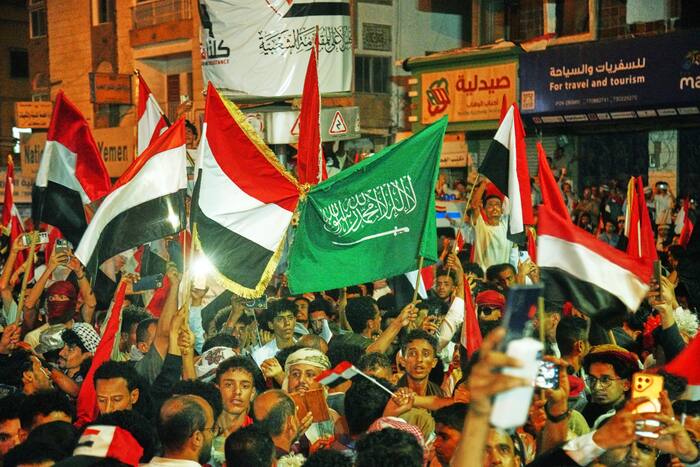
Military analysts tracking movements across the region note that this diplomatic impasse has translated directly into kinetic friction. Recent weeks have witnessed a steady drumbeat of U.S. airstrikes targeting strategic nodes along the Iranian coast, including installations on Qeshm Island near the mouth of the gulf. In direct retaliation, Iranian forces and allied regional militias have expanded their operational scope. Drone attacks striking military installations in Bahrain underscore the vulnerability of forward-deployed American assets in the theater. Meanwhile, Houthi advances in southern Yemen demonstrate that Tehran's network of regional partners remains fully operational and capable of opening multiple pressure points simultaneously. The Strait of Hormuz itself has become a theater of asymmetric warfare, highlighted by reports of tanker incidents and mining activity that drive maritime insurance premiums to astronomical heights.
The Economic Anatomy of the Chokepoint
The diplomatic frostiness is further complicated by friction between Washington and its traditional Gulf partners, particularly Saudi Arabia and the United Arab Emirates. While Riyadh and Abu Dhabi share Washington's deep hostility toward Iran's regional ambitions, leaders in both capitals have privately cautioned American counterparts against undertaking large-scale, open-ended military engagements that could destabilize their own economic modernization projects. These Gulf monarchies live within striking distance of Iranian missile arsenals. For them, a full-scale regional war is an existential nightmare, not a campaign talking point. Consequently, when the White House signals that it is no longer actively pursuing a negotiated diplomatic settlement with Tehran, Gulf capitals respond with quiet alarm, scrambling to maintain backchannel communications with Iranian diplomats to insulate themselves from the fallout.
History teaches us that symbolic gestures in times of high tension rarely remain purely symbolic. When geopolitical actors begin redrawing maps in digital spaces, military commanders on the ground adjust their rules of engagement accordingly. The naval task forces operating under the Fifth Fleet are currently maintaining a heightened state of readiness that leaves very little margin for error. A stray drone, an aggressive maneuver by an Iranian fast attack craft, or a misidentified merchant vessel can instantly transform a war of words into a shooting war. The decision to reject the Iranian ceasefire proposal means that both nations are locked into a trajectory where deterrence relies entirely on the threat of overwhelming force rather than diplomatic off-ramps.
Examining the economic dimensions of this standoff reveals why the stakes are exceptionally high for global markets. Energy traders have spent months pricing in the persistent threat of supply disruptions in the Persian Gulf. Every time rhetoric escalates—whether through presidential map posts or retaliatory strikes on radar installations—crude futures experience violent swings. While domestic American oil production buffers the U.S. economy from the worst shocks, economies in Europe and Asia remain acutely vulnerable to any prolonged closure of the strait. Insurance syndicates in London have steadily raised war-risk premiums for vessels transiting the Gulf, adding millions of dollars in operational costs to every single cargo voyage. These costs inevitably trickle down to global consumers, acting as a persistent tax on international commerce.
Diplomatic Breakdowns and Regional Spillover
The domestic political calculus in Washington also plays a critical role in shaping this aggressive posture. Foreign policy and domestic politics are inextricably intertwined in an election cycle environment. Projecting uncompromising strength abroad remains a potent rallying cry for the administration's political base. By framing the confrontation with Iran in stark, almost theatrical terms, political strategists seek to eclipse domestic vulnerabilities and economic anxieties. Yet, this strategy carries inherent risks. If a localized escalation spirals out of control, the political costs can shift rapidly against an administration perceived as stumbling into an unintended military entanglement.
Looking closely at the mechanics of the Iranian response, one finds a regime deeply fractured between hardline security apparatuses and pragmatic technocrats. The Islamic Revolutionary Guard Corps views confrontation as an existential imperative to secure its domestic political dominance and control over black-market smuggling networks. When civilian diplomats attempt to broker ceasefires, hardline commanders frequently undercut those efforts by initiating kinetic actions, such as the recent drone strikes against coalition facilities in Bahrain or maritime harassment operations in the Gulf. This internal incoherence within Tehran's power structure makes traditional diplomacy extraordinarily difficult for Western negotiators, who often find themselves unsure of whether the counterpart across the table speaks for the actual centers of power.
The role of proxy networks deserves deeper scrutiny when analyzing current Middle East developments. Iran's deterrence strategy relies heavily on the network of non-state actors stretching from Lebanon to Yemen. While direct military exchanges between Washington and Tehran capture newspaper headlines, the shadow war fought through these proxies dictates the day-to-day security reality. Houthi movements threatening shipping lanes in the southern Red Sea and Bab-el-Mandeb strait operate in tandem with militias targeting American installations in Iraq and Bahrain. This multi-front pressure strategy is designed to impose cumulative costs on the United States and its allies, making the maintenance of a forward military posture increasingly expensive and politically taxing.
The Domestic Calculus of Maximum Pressure
Intelligence assessments compiled by regional defense attachés suggest that neither side desires an all-out conventional war, yet both are trapped in a security dilemma where restraint is routinely interpreted as weakness. When Washington conducts localized strikes on Qeshm Island, it feels compelled to demonstrate resolve. When Iran absorbs those blows without responding, its deterrent credibility suffers domestically and regionally. Therefore, retaliation becomes mandatory. This action-reaction cycle creates a self-fulfilling prophecy of escalation. The posting of the "Trump Strait" map serves as a psychological manifestation of this dynamic—an effort to claim psychological territory when physical dominance remains contested and elusive.
Maritime security experts emphasize that reopening the Strait of Hormuz under current conditions would require a comprehensive security architecture that neither Washington nor Tehran is currently willing to negotiate. A genuine resolution demands confidence-building measures, clearly defined maritime boundaries, and neutral third-party verification mechanisms. Instead, the current trajectory points toward sustained militarization. Naval escorts for commercial shipping have become standard operating procedure, turning commercial transits into heavily guarded military convoys reminiscent of historical naval blockades. This environment stifles regional economic integration and forces international shipping companies to invest heavily in tracking systems, security personnel, and alternative routing strategies wherever feasible.
The Perils of Automated Escalation
As the standoff extends into its current phase, the risk of miscalculation remains the single most dangerous variable in the entire equation. Modern military technology operates at speeds that frequently outpace diplomatic decision-making processes. Automated defense systems on naval vessels possess reaction times measured in milliseconds, leaving very little room for human intervention if a false positive occurs on a radar screen. When political leaders engage in provocative rhetoric and symbolic territory claims, they compress the diplomatic safety buffer, leaving military commanders with tighter parameters and heavier burdens.
The broader implications for global order are profound. The unceremonious dismissal of international maritime norms through digital cartography signals a broader decay of multilateral governance structures. When major powers treat internationally recognized trade routes as personal or national spoils of political conflict, the rules-based international order suffers a quiet, cumulative erosion. Smaller nations watching these developments take note, realizing that global commerce and sovereign security increasingly depend on the raw exercise of power rather than adherence to international treaties or maritime law.
This dangerous dance across the waters of the Persian Gulf shows no signs of abating. The refusal to engage in meaningful diplomatic dialogue, combined with an escalation of kinetic actions across multiple regional theaters, ensures that the Persian Gulf remains one of the most volatile regions on the planet. Whether the current posture of maximum pressure results in a forced capitulation by Tehran or triggers an unintended regional conflagration will depend entirely on how steady the hands are at the steering wheel of power during the coming weeks of crisis.