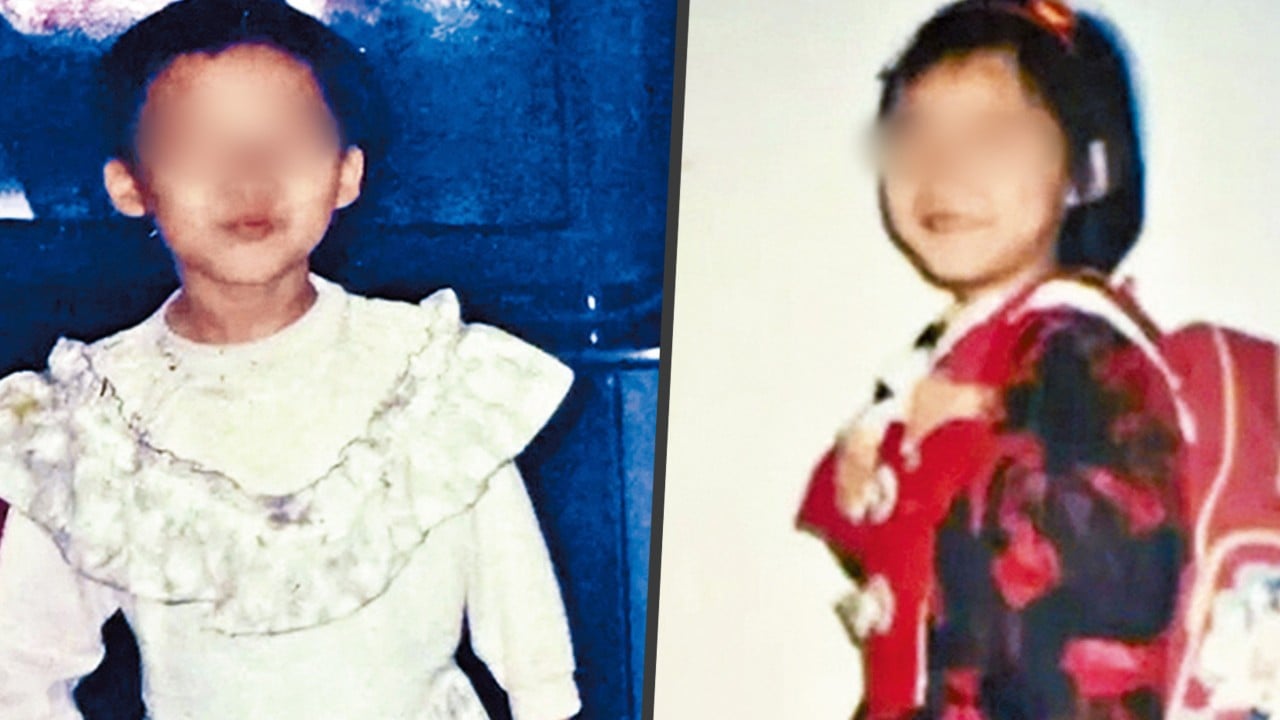
Imagine growing up, building a career, and living your entire life just a short drive away from your biological family without ever knowing they existed. It sounds like a script written for television. Yet, for Huang Xiaolin and Li Hui, this bizarre reality became clear decades after a simple hospital error. Born at Qingyuan People's Hospital in Guangdong Province back in October 1989, these two women were separated from their actual parents for 37 years.
They lived only four to five kilometers apart. Think about that distance. They likely breathed the same air, shopped in the same markets, and walked past each other on the street, all while carrying out lives mapped out by a catastrophic administrative failure. When truth finally surfaces decades later, it doesn't arrive softly. It shatters identities.
The Anatomy of a 1989 Hospital Mix-Up
How does an infant swap happen in a modern maternity ward? Back in 1989, conditions at Qingyuan People's Hospital were basic. Staffing was stretched thin, and power outages occasionally plunged the maternity ward into darkness.
The hospital didn't use identification wristbands for newborns. Instead, nurses relied on loose paper registration cards tucked directly into or tied onto the babies' blankets. It's a shocking lack of security by today's standards. All it took was a moment of distraction, a shift change, or a sudden blackout for those paper tags to get mixed up.
Huang and Li were born just 55 minutes apart. After delivery, staff took the newborns away to weigh them and cut their umbilical cords before moving them to a communal nursery. Somewhere during that brief window of separation, the infants went to the wrong mothers.
Divergent Paths and Lost Decades
The psychological weight of a misplaced identity is heavy. Huang grew up in a household with a civil servant father and a mother working at a public institution. Her parents divorced in 1994, shaping her early family dynamic. For years, she felt an underlying sense of displacement, questioning her background long before she took action.
In July 2022, Huang took a DNA test that proved she wasn't biologically related to the parents who raised her. That discovery kicked off a grueling search. By April 2025, local police contacted Li to provide a DNA sample to help piece together Huang's biological lineage.
Li's upbringing looked entirely different. She grew up in a farming family that ran a small local grocery store. Financial pressures forced her to leave vocational school after just one year so she could work and support her family.
When forensic tests confirmed the truth in mid-2025, the reality set in. Zhu, the woman who raised Li, was actually Huang's biological mother. Meanwhile, Huang's raising father and Yu—the woman who raised Huang—were Li's true biological parents.
Seeking Accountability Through the Courts
You can't rewind 37 years of lost time. When the women and their families approached Qingyuan People's Hospital for answers and historical maternity records from 1989, they hit a wall. The hospital claimed the records were gone. Staff members pointed out that many workers from that era had either retired or passed away, effectively brushing off institutional responsibility.
Faced with institutional stonewalling, the families took legal action. They filed a lawsuit against Qingyuan People's Hospital, accusing the facility of severe medical negligence. They are seeking over 2.6 million yuan, roughly 360,000 US dollars, to cover emotional distress, legal fees, and financial support losses. Li alone is seeking more than 1.41 million yuan for family-related support payments.
A hospital representative stated that the matter is now moving through judicial channels and will depend entirely on the court's ruling. But money doesn't fix a fractured past. When Li and Huang finally met face-to-face in a shopping mall café, they described the encounter as nervous, exciting, and deeply awkward. Li eventually accepted the reality after seeing undeniable physical resemblances to her biological father and brother.
Hospital negligence leaves permanent scars. Modern parents take barcode scanners, biometric footprinting, and electronic security bands for granted. Cases like this serve as a stark reminder that administrative shortcuts carry lifelong human costs.