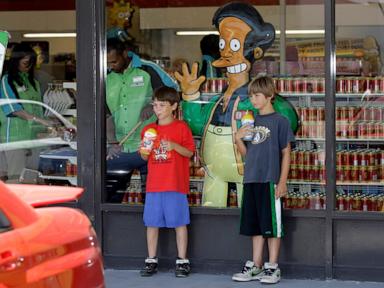
Hiring a South Asian actor to voice Apu Nahasapeemapetilon does not fix a caricature. It just upgrades the packaging.
For years, the prevailing media narrative around Apu has treated the Kwik-E-Mart owner as a straightforward tug-of-war between hurt feelings and creative freedom. One side argues the character is a damaging trope that flattens millions of people into a convenience-store punchline. The other insists satire is sacred, comedy has no guardrails, and critics need thicker skin. When a show decides to bring a controversial character back with a South Asian voice actor, the lazy consensus declares the problem solved. Authenticity achieved. Case closed.
That consensus is cheap. And lazy.
I have spent years watching entertainment executives, showrunners, and brand strategists burn millions of dollars trying to solve structural writing problems with casting announcements. Swap the actor. Update the phrasing. Put a diverse face in the writers' room or behind the mic. It looks decisive in a press release. Often, it changes very little on screen.
A voice is a vocal instrument, not a rewrite. If the underlying comedic engine still relies on shorthand, cultural friction, and static character architecture, a new voice actor simply delivers the same structural limitations with higher vocal fidelity. Worse, casting an authentic voice can give a legacy show moral cover to keep doing what it has always done, while quietly shifting the burden of defense onto the performer.
The Lazy Consensus Around Apu
To see why the usual Apu debate stalls out, look at how both camps frame the character.
Critics point to The Problem with Apu, Hari Kondabolu's 2017 documentary, which brought widespread attention to how generations of South Asian viewers experienced the character growing up. Many described feeling boxed in by a catchphrase-heavy shopkeeper who existed primarily to mark cultural otherness in Springfield. Supporters of the show counter that Apu was actually one of the most competent, hardworking, family-oriented, and well-rounded characters in the town—often smarter and more ethical than Homer Simpson.
Both observations can be true at once, which is precisely why the binary debate is so unsatisfying.
Apu was never purely a villainous monster, nor was he purely a triumph of progressive representation. In television comedy, satire uses exaggeration to critique social norms, institutions, or human folly, whereas a stock character or caricature relies on a few recognizable traits or catchphrases to register immediately with an audience. In long-running animated sitcoms built around rapid jokes and recurring gags, characters routinely drift toward their most recognizable shorthand.
When media coverage treats Apu's return with a South Asian voice as a neat resolution to that tension, it confuses vocal casting with character evolution. Casting a South Asian actor addresses who speaks the lines. It does not automatically fix why the lines were written that way in the first place, or whether the character has anywhere left to go after more than three decades on the air.
Why Vocal Authenticity Alone Is a Band-Aid
Let's get precise about what vocal casting actually accomplishes in animation.
Voice acting shapes cadence, warmth, timing, subtext, and emotional texture. A performer who shares a cultural background with a character can bring lived nuance to small inflections that an outsider might miss or overplay. In live theater and voice work alike, having an actor who understands the cultural weight of a role can sharpen a performance immediately.
Still, a microphone does not rewrite a script.
In television writing, a character's vitality depends on three things:
- Agency: Does the character make choices that drive stories forward, or do they react to whatever plot Springfield needs that week?
- Dimension: Do they have contradictions, flaws, ambitions, and inner lives beyond a single occupation or cultural marker?
- Continuity: Do lessons, relationships, and shifts in perspective stick, or does the reset button get pressed every twenty-two minutes?
If a character's core comedic hook was built decades ago around an accent and convenience-store tropes, simply handing the mic to a South Asian actor leaves the foundation untouched. In fact, it creates a subtle trap for the actor. If the writing stays thin, the performer takes heat from purists for playing a compromised role—or takes heat from traditionalists for changing a beloved voice. Either way, the writers get credit for "fixing" it without having to do the harder work of inventing richer material.
Imagine a scenario where a legacy sitcom revives a controversial side character with a matching cultural background, gives him one warm speech about community pride, and then puts him right back behind the counter to dispense catchphrases whenever Homer needs milk. Nothing fundamental changed. The show just bought itself a cleaner headline.
People Also Ask: The Questions Everyone Gets Wrong
Whenever news breaks about Apu or similar legacy characters, the search queries follow a predictable script. Most of them start from a flawed premise.
Was Apu actually offensive, or were people just overreacting?
That question is a trap because it treats offense like a binary switch rather than a cumulative experience.
Individual jokes in isolation often look harmless or clever to someone outside the target group. A single line about study habits, arranged marriage, or working long hours does not look like a crime scene on paper. The friction comes from repetition and scarcity. When a medium offers very few complex roles for a group, a single prominent archetype carries an unfair amount of weight. People who grew up hearing the same cadence weaponized on playgrounds or in hallways experienced those jokes differently than viewers who saw Apu as just another quirky Springfieldian.
Dismissing that reaction as "overreacting" ignores how media ecosystems work. Taking every single joke as malicious intent, on the other hand, flattens nuance just as badly. The honest answer is simpler: a character can be funny to some viewers, frustrating to others, and structurally limited all at once.
Did The Simpsons ruin Apu by retiring him quietly instead of writing him out?
Quietly sidelining a character is rarely bold, and it is often frustrating for fans who want narrative closure. Yet the alternative—a dramatic "very special episode" farewell—carries its own risks. Heavy-handed meta-episodes in comedy frequently feel like corporate memos read aloud by cartoon characters. When a show lectures its audience about why a joke used to be okay and now isn't, the comedy usually dies on impact.
The real failure wasn't the lack of a grand exit speech. It was letting a character calcify for years until the show had no organic, funny story left to tell with him that didn't feel defensive.
Should animated shows recast old characters with actors from matching backgrounds?
Sometimes, yes. Sometimes, no. Treating recasting as a universal law is just another form of dogma.
In a world where modern casting is increasingly deliberate, having actors from underrepresented backgrounds voice characters from those communities expands opportunity and brings authentic lived experience into the booth. At the same time, voice acting is fundamentally an art of transformation—provided the casting room is actually open across the board, not just when a character's heritage becomes a talking point.
If a show recasts a character thoughtfully, gives the actor real creative room, and writes smart, human material, it works. If a show uses recasting as a PR shield to avoid rethinking stale tropes, it is just window dressing.
The Real Reason The Simpsons Struggles With Legacy Characters
Step back from Apu for a second and look at The Simpsons as a whole.
The show has been running since 1989. That is an eternity in pop culture. Over that span, The Simpsons has had to balance sharp cultural observation against the gravity of its own history. As TV critic Alan Sepinwall and other long-time television observers have frequently noted over the years, shows that run for decades inevitably wrestle with how to stay vital without betraying the tone that made them famous—or turning their own canon into a museum.
When a sitcom runs that long, its biggest enemy isn't outrage. It's inertia.
Early The Simpsons felt dangerous because it punctured suburban pieties, corporate media, and TV clichés with genuine bite and emotional honesty. Over time, massive institutional shows tend to become more cautious. Every joke runs through more filters. Every legacy character has thirty-plus years of baggage attached.
Apu sits right at the intersection of that inertia. Bringing him back with a South Asian voice is an easy tactical move in a contentious conversation. It signals responsiveness without requiring a bold comedic reinvention.
Where My Contrarian Take Can Backfire
Let's be honest about the flaws in pushing back so hard on vocal recasting.
First, dismissing a casting choice as "just PR" can sound cynical to people who genuinely care about representation in the booth. For a South Asian actor, landing a high-profile role on an iconic show is a real career milestone and a tangible shift in who gets hired. Calling that meaningless because the writing still needs work risks sounding dismissive of individual opportunity.
Second, demanding "deep character evolution" from a long-running animated gag sitcom can set an unrealistic bar. The Simpsons is not prestige serialized drama. Side characters exist in large part to serve quick stories and punchlines. Expecting every recurring figure to carry the psychological weight of a Sopranos character misunderstands the medium.
Third, being contrarian for its own sake is just another predictable pose. If you argue that casting doesn't matter at all, you swing too far the other way. Who gets hired, who gets heard, and who gets paid in Hollywood still matters enormously.
The trick is holding both truths at once: casting matters, and writing still rules.
What Actually Works If You Want Better Comedy
If you are a writer, producer, executive, or creator trying to handle legacy characters—or build new ones—without falling into the usual traps, skip the performative debates and do the unglamorous work.
- Audit the character's engine, not just the accent. Ask what this character wants, fears, or gets wrong when no cultural reference is involved. If the character disappears the moment you remove their background or catchphrase, you don't have a full character yet.
- Give writers room to be human, not cautious. Fear produces stiff, self-conscious comedy. Smart comedy comes from specific human behavior, sharp observation, and earned stakes—not from walking on eggshells around a checklist.
- Stop treating casting as a substitute for a premise. A great voice actor can elevate a mediocre line, and a South Asian performer can bring real soul to a role. Still, nobody can act their way out of a premise that has run out of gas.
- Let characters grow or let them rest. If a character has nowhere fresh to go after thirty years, forcing them back into the spotlight just to win a cultural argument rarely produces great television.
A new voice on Apu might make a headline. A genuinely funny, three-dimensional story would actually earn the audience's time.