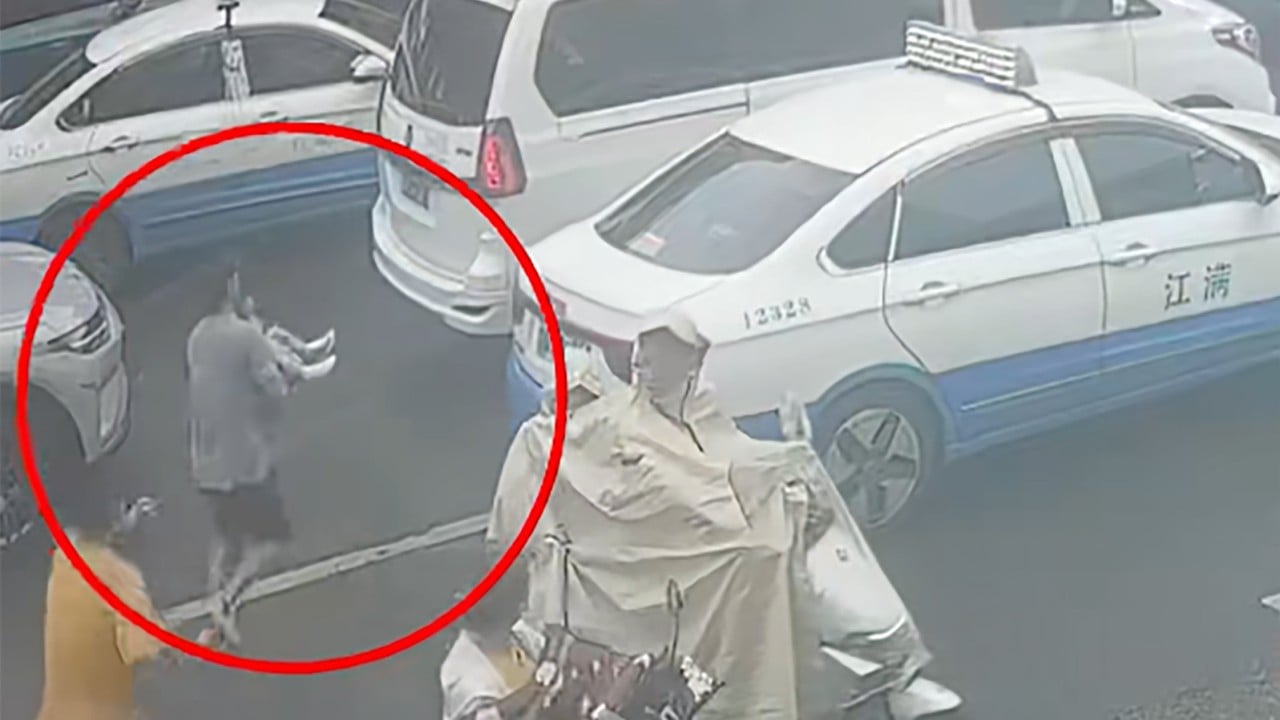
The internet loves a rogue savior. A toddler is unconscious in the back of a taxi. The clock is ticking. The cabby, fueled by pure adrenaline and civic duty, decides the rules of physics and society no longer apply. He guns the engine, flies down the wrong side of the road, blows through four red lights, and deposits the child at the emergency room door. The media throws a parade. Dashcam footage goes viral. The driver gets a cash bonus and a shiny plaque.
This is a disaster masquerading as a miracle. Recently making news in related news: The Burgenstock Mirage Why the US-Iran Peace Talks in Switzerland Are Structured to Fail.
We need to stop applauding traffic vigilantes. Every time we celebrate a driver who turns a two-ton metal box into a blind missile in the name of medical urgency, we are reinforcing a deadly illusion. We are cheering for raw luck, ignoring systemic failure, and actively encouraging behavior that puts more bodies in the ICU than it pulls out.
The feel-good narrative surrounding these incidents is a symptom of a deeper, more dangerous ignorance about public safety, risk management, and the cold reality of emergency medicine. Further details into this topic are covered by Associated Press.
The Cold Math of Traffic Risk
Let’s look at the actual physics of the "heroic shortcut."
When a driver decides to run a red light or travel against the flow of traffic, they are operating under the cognitive bias that their urgency reduces everyone else's risk. It does not. Traffic systems rely on predictability. The moment an unexpected vehicle enters an intersection at high speed against the signal, the probability of a multi-vehicle collision skyrockets.
Imagine a scenario where a cab driver saves three minutes by driving against traffic but possesses a 15% chance of T-boning an oncoming vehicle. If that collision occurs, you no longer have one unconscious toddler; you have an unconscious toddler trapped in a crushed chassis, a severely injured taxi driver, and a family of four in an oncoming sedan who just became collateral damage.
Emergency vehicle operators do not just drive fast; they drive with systemic advantages. They possess sirens that emit specific frequencies designed to penetrate acoustic insulation in modern cars. They have strobe arrays that command visual attention. Most importantly, they undergo hundreds of hours of specialized training in defensive evasive maneuvers and intersection management.
A cabby has none of this. He has a horn, a hazard light button, and a prayer.
Statistically, civilian transport of critical medical patients via erratic driving is a losing gamble. Data from traffic safety institutes consistently shows that intersection accidents involving vehicles disobeying signals are among the most lethal. You are attempting to solve a medical crisis by creating a kinetic crisis.
The Illusion of the Medical Golden Hour
The underlying justification for these reckless drives is almost always the "Golden Hour"—the idea that every second saved directly correlates to a life preserved. In trauma medicine and acute pediatric emergencies, time matters, but stabilization matters more.
Moving an unstable, unconscious patient at high speeds in a standard vehicle offers zero medical intervention during transit. If a child is suffering from an obstructed airway, severe anaphylaxis, or status epilepticus, driving 80 miles per hour on the wrong side of the road does not stop the underlying pathology.
What happens inside a speeding taxi? The patient is tossed around the backseat. A panicked parent is attempting to hold them without a proper restraint. Every sudden brake, sharp turn, and acceleration introduces forces that can worsen cervical spine injuries, exacerbate internal bleeding, or cause vomiting and subsequent aspiration.
+---------------------------+-----------------------------------+
| Civilian Taxi Transport   | Emergency Medical Services (EMS)  |
+---------------------------+-----------------------------------+
| Zero en-route monitoring  | Real-time vitals and ECG tracking |
| No airway management      | Intubation and oxygen delivery    |
| High risk of crash        | Regulated emergency transit       |
| Zero hospital preparation | Pre-arrival notification to ER   |
+---------------------------+-----------------------------------+
An ambulance is not just a fast van; it is a mobile intensive care unit. When paramedics arrive, treatment begins on the living room floor. They secure the airway, establish intravenous access, administer targeted pharmacology, and stabilize the patient before the wheels even turn. Furthermore, they communicate directly with the receiving hospital, ensuring a trauma team is waiting at the bay. A cab pulling up to a crowded ER drop-off zone unannounced creates a chaotic handoff that can waste the very minutes the driver broke the law to save.
The Failure of the First Mile
When a citizen feels compelled to hijack a public roadway to transport a dying child, it is not a heartwarming story about community spirit. It is a damning indictment of the local emergency dispatch infrastructure.
Why wasn't an ambulance there within six minutes?
In many urban environments, structural failures plague the first mile of emergency response. Traffic congestion, poorly optimized dispatch algorithms, underfunded ambulance fleets, and public ignorance of when to call emergency services create a vacuum. When the state fails to provide timely emergency transit, citizens resort to desperate, chaotic measures.
By framing the cab driver as a hero, city officials and media outlets successfully pivot the conversation away from their own operational deficits. The narrative becomes about individual bravery rather than institutional failure. It allows municipal governments to escape accountability for inadequate EMS coverage, poor traffic management systems, and a lack of public education on bystander medical intervention.
Instead of funding more ambulances or implementing smart traffic signals that can clear paths for emergency vehicles automatically, cities hand out medals to taxi drivers. It is cheaper to celebrate a rogue hero than it is to fix a broken system.
Stop Funding the Viral Outrage and Praise Cycle
The media’s obsession with these stories creates a dangerous feedback loop. Drivers see these videos, read the glowing comments, and internalize the idea that if they are ever in a similar situation, they should emulate that behavior.
They are being taught that laws are optional if your intentions are pure.
This creates an environment of unpredictable vigilantism on the road. The next driver who tries this might not be a seasoned cabby with decent reflexes; it might be a panicked teenager or an elderly driver who lacks the spatial awareness to navigate a busy intersection against the light. The result will not be a viral video with a happy ending; it will be a multi-car pileup on the evening news.
We need to shift our cultural metric of a hero. A real hero in this situation is the bystander who knows how to perform CPR, the dispatcher who calmly instructs a parent on how to clear an airway over the phone, and the driver who pulls over to the right to let a legitimate ambulance pass.
The next time you see a headline about a civilian driver running red lights to rush someone to the hospital, do not share it. Do not like it. Demand to know why the ambulance network failed, question the safety of the passengers who were forced to endure a high-speed gamble, and remember that public safety belongs to predictable systems, not rogue actors on a streak of pure luck.