In 1971, while the art world buzzed over traditional studio works, sculptor Charles Ross packed his bags and headed into the American Southwest. He wasn't looking for a gallery. He was looking for a place where earth and sky met in absolute precision.
Five decades later, that search has yielded Star Axis, an 11-story high naked-eye observatory built directly into the side of a remote mesa in New Mexico. Made of granite, sandstone, stainless steel, bronze, and raw earth, it spans over a tenth of a mile wide. Yet, despite its staggering ambition, Ross remains far less household a name than his peers Michael Heizer or James Turrell.
That lack of mainstream name recognition is a massive oversight. Ross isn't just another artist playing in the sand. He's arguably the last living pioneer of monumental land art, using mathematical physics to build a direct bridge to the cosmos.
The Obsession Behind Star Axis
Most people think of art as something static—a canvas on a wall or a bronze figure in a plaza. Land art flipped that notion on its head in the late 1960s, turning the natural landscape itself into the canvas.
Ross, who earned a degree in mathematics from UC Berkeley before pursuing fine art, approached the movement from a distinct angle. He didn't just want to manipulate dirt. He wanted to frame celestial mechanics.
Star Axis Elements:
* Star Tunnel (aligned with Earth's axis)
* Solar Pyramid (tracks seasonal light)
* Hour Chamber (observes one hour of star motion)
* Equatorial Chamber (observes celestial equator)
* Shadow Field (captures moving shadows)
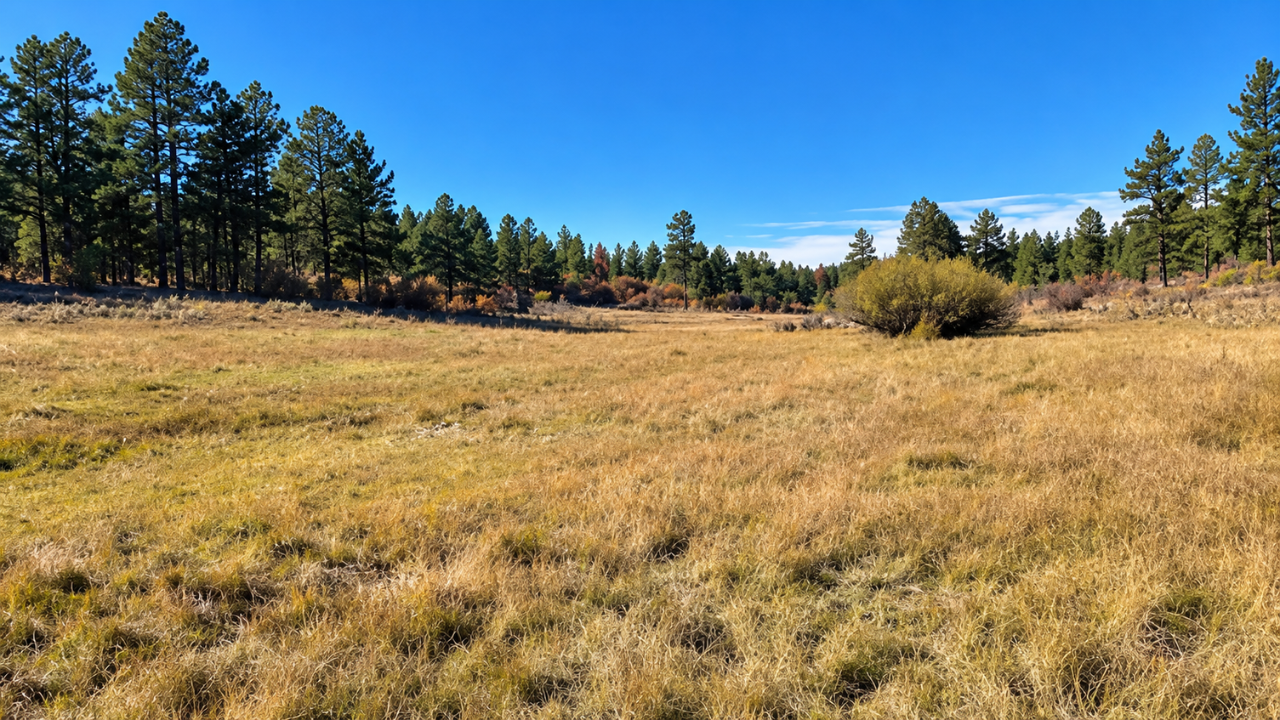
After spending four years flying over and surveying the desert, Ross settled on a remote mesa in eastern New Mexico. He bought the land and began construction in 1976.
The centerpiece of Star Axis is the Star Tunnel, a massive stairway excavated 75 feet straight into the earth and aligned precisely with the Earth's axis. As you walk up its 147 steps, the aperture at the top frames the sky in a way that visually reveals Earth's 26,000-year axial precession—the subtle wobbling motion of our planet through space.
You aren't just looking at the sky. You're walking through deep astronomical time.
Science as an Artistic Medium
What makes Ross standout isn't just the physical scale of his work, but his reliance on uncompromising physical laws.
Before Star Axis, Ross made a name for himself with light and solar works. In his series Sunlight Convergence/Solar Burns, he used large lenses to focus raw sunlight onto wooden panels every day for a year. The resulting scorch marks mapped out the sun's actual path across the sky, creating a physical record of the planet's orbit.
"Star Axis offers a whole-body experience of star geometry," Ross noted, emphasizing that the artwork aims to trigger an intuitive, physical awareness of space rather than just an intellectual one.
Working alongside astronomers from the University of Washington, Ross calibrated every angle of Star Axis. The handrails of the central tunnel are even inscribed with dates spanning from 11,000 BC to 15,000 AD, allowing visitors to locate their position in cosmic history relative to where Polaris sits in the frame.
Why Modern Audiences Are Hungry for Monumental Land Art
We live staring at tiny backlit screens. Everything is instant, fleeting, and digital.
Massive earthworks operate on the complete opposite frequency. They require physical presence, long travel, and patience. Projects like Michael Heizer's City in Nevada (which took half a century to complete) and James Turrell's Roden Crater in Arizona reflect a rare commitment to permanence.
Star Axis belongs in this exact tier of monumental achievement. It forces us to slow down to match the speed of planetary motion.
- It strips away modern distractions.
- It grounds the human body in physical geology.
- It turns complex astrophysics into an immediate sensory experience.
Experience Star Art and Solar Geometry Yourself
While full public access to remote land art sites like Star Axis is often restricted or heavily managed due to ongoing conservation efforts, you don't have to trek into the deep desert to engage with cosmic art.
- Visit Public Light Architecture: Seek out permanent prism installations and light sanctuaries created by Ross in urban centers, such as the Dwan Light Sanctuary in Montezuma, New Mexico, or major light installations in public buildings across North America.
- Track Local Solar Events: Pay attention to how ancient and modern architects align structures with solstices and equinoxes.
- Engage with Naked-Eye Astronomy: Step away from light-polluted cities during major celestial events to experience dark skies directly, experiencing the spatial dynamic that drew land artists out west in the first place.