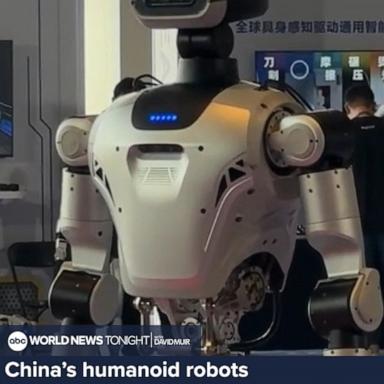
The race to build a functional bipedal machine has shifted from a Silicon Valley laboratory experiment to a brutal war of attrition in the industrial corridors of Shenzhen and Shanghai. While Western firms like Tesla and Figure AI dominate social media with polished, hand-picked clips of robots folding shirts or navigating stable environments, China has quietly moved into the "brute force" phase of development. This is no longer about proving a concept. It is about a state-mandated directive to flood the global market with hardware that is cheap enough to fail and abundant enough to dominate.
By the end of 2025, the global shipment of humanoid robots surpassed 13,000 units. Nearly 80% of those machines were manufactured in China. This isn’t a coincidence of geography. It is the result of a concentrated effort by the Ministry of Industry and Information Technology (MIIT) to treat humanoid robots exactly like smartphones and electric vehicles: products that must be mass-produced at scale to drive down component costs until international competition is priced out of existence. Recently making waves lately: The Brutal Truth About the AI Spending Bubble.
The Strategy of Aggressive Mediocrity
The current Chinese lead in robotics is not necessarily one of superior intelligence, but of superior availability. Companies like AgiBot and Unitree are not waiting for their software to reach "General Intelligence" before shipping units. They are pushing hardware out the door today. In 2025 alone, AgiBot shipped over 5,100 units, while Unitree crossed the 5,000 mark. For comparison, Tesla's Optimus remains largely confined to controlled testing environments in Fremont, with Elon Musk admitting in early 2026 that the platform was not yet in material use across his own factories.
China’s competitive advantage lies in the localization rate of core components. As of 2026, over 70% of the sensors, actuators, and harmonic drive gears used in Chinese humanoids are produced domestically. This has crashed the cost share of components by 25% in a single year. While a high-end research robot in the West might cost $150,000, Unitree’s G1 model entered the market at approximately $16,000. Further insights regarding the matter are explored by Ars Technica.
At this price point, the robot doesn't need to be perfect. It only needs to be "good enough" for basic tasks like chip loading or simple logistics. The Chinese philosophy is simple: let the software catch up while the hardware occupies the factory floor.
The Industrial Ecosystem Advantage
The speed of iteration in Shenzhen is difficult to replicate in the West. When a robotics startup in Shanghai needs a custom-designed joint actuator, they can have a prototype in their hands within 48 hours. In North America or Europe, that same process often takes weeks or months due to fragmented supply chains.
- Shenzhen’s Output: The city manufactured nearly 8 million service robots in 2025, creating a massive, overlapping supply chain that feeds the more complex humanoid sector.
- Massive Investment: The State Grid Corporation of China recently allocated 6.8 billion yuan (roughly $1 billion) to deploy a "humanoid army" of 8,500 robots to maintain its power grid.
- Factory Testing: Unlike the West’s focus on diverse "home helper" scenarios, Chinese manufacturers like BYD and NIO are already integrating hundreds of robots from Ubtech into their automotive assembly lines.
These are not just pilot programs; they are live-fire exercises in industrial automation. The goal is to reach a total national output of 2.1 million units by 2030.
The Software Gap and Physical Limitations
Despite the hardware dominance, the "brain" of the Chinese humanoid remains its primary weakness. Investigative analysis of these machines shows they still lack the precision and dexterity required for unstructured environments. They are mostly deployed in site-specific trials where the environment is highly mapped and predictable.
Battery technology remains a hard ceiling for everyone. Even the most advanced Chinese models are restricted to 1–4 hours of active use. In a 24/7 industrial environment, this creates a logistical nightmare of charging rotations that often offsets the labor savings of replacing a human worker.
Furthermore, current AI models struggle with the "long tail" of physical tasks. A robot can be trained to pick up a specific box 10,000 times in a lab, but if that box is slightly wet, torn, or placed at an odd angle, the system often freezes. Chinese firms are attempting to solve this via reinforcement learning and massive data collection from their deployed units, but they are still chasing the "sim-to-real" transfer capabilities seen in Western research labs.
The Looming Geopolitical Crackdown
The rapid proliferation of Chinese-made humanoids is already triggering security alarms in Washington. In 2025, U.S. congressional investigations into "backdoor vulnerabilities" in Chinese robotics hardware highlighted concerns that these machines, equipped with high-resolution cameras and LiDAR, could serve as mobile surveillance platforms in sensitive infrastructure.
There is also the matter of subsidies. The "AI Plus" initiative in China has funneled billions into robotics hubs, creating an environment where companies can survive while selling hardware at or below cost. This mirrors the trajectory of the solar panel and EV industries, suggesting that trade barriers and tariffs on Chinese robotics are almost certain to follow in late 2026 and 2027.
Economic Viability vs Laboratory Hype
For a humanoid robot to be truly viable, the cost must fall by at least another 50% while the mean time between failures (MTBF) must double. Currently, these machines are mechanically complex, featuring hundreds of joints and sensors that represent hundreds of potential failure points. In a high-stakes manufacturing environment, a robot that breaks down once every 40 hours is a liability, not an asset.
Chinese manufacturers are betting that by controlling the entire stack—from the rare earth metals used in magnets to the AI models running the "cerebellum"—they can out-evolve these problems faster than their global competitors. They aren't trying to build the smartest robot first. They are trying to build the first 100,000 robots, knowing that whoever owns the data from those first 100,000 machines will eventually own the intelligence that runs them.
The era of the "viral demo" is over. The industry has entered a phase where the winner will be determined by who can manage a supply chain, not who can produce the best-rendered video of a robot doing a backflip. China has already built the forge; the only question left is whether their software can eventually match the relentless pace of their assembly lines.
The strategy is clear: saturate the market, lower the price, and become the unavoidable foundation of the automated world. If the West cannot find a way to match the scale of Chinese manufacturing, they may find themselves with the smartest robots in the world, and nowhere to build them.