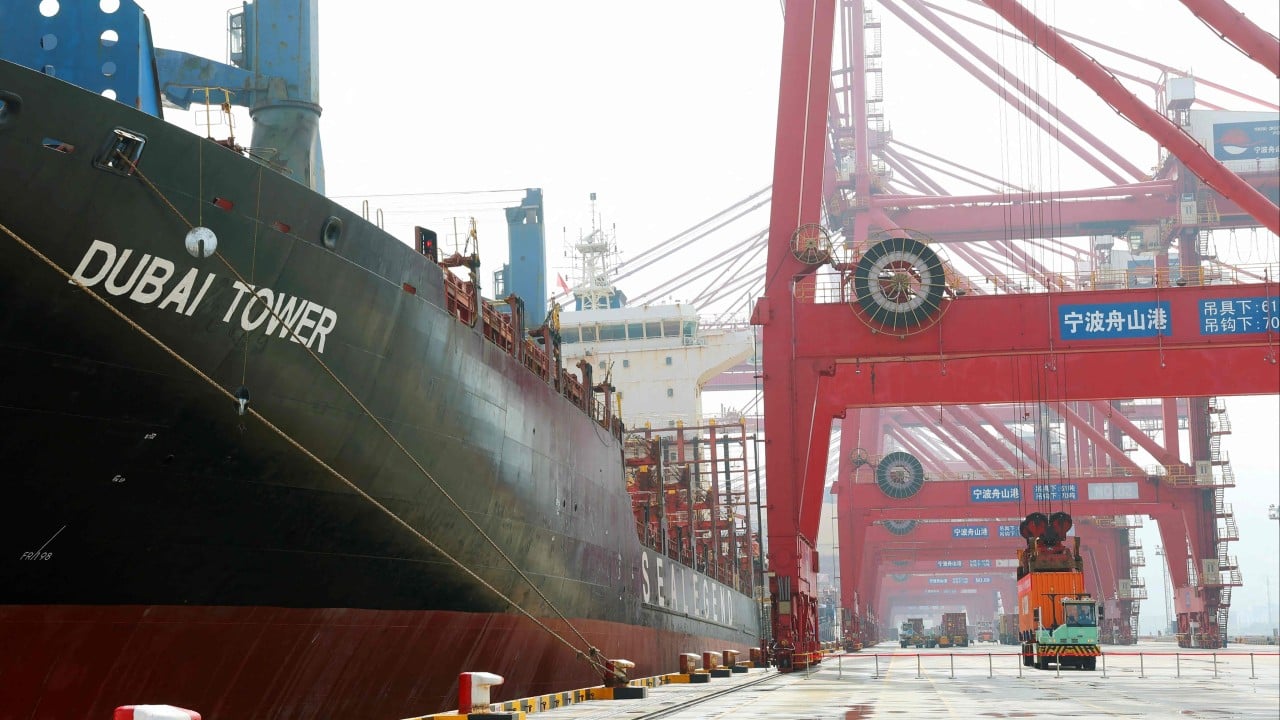
Traditional maritime logistics are breaking down. When geopolitical friction in the Middle East chokes off the Red Sea and the Suez Canal, supply chains bleed money and time. Shippers can no longer rely on century-old maritime pathways without risking severe delays. That vulnerability explains why Chinese operators are pushing containers straight through the top of the world.
Sea Legend officially launched a scheduled commercial container service across Russia's Northern Sea Route. The inaugural voyage left Ningbo, carrying high-value green technology components like lithium-ion batteries and photovoltaic modules toward Felixstowe in the United Kingdom. Instead of spending forty days crawling around the troubled Arabian Peninsula and through the Mediterranean, this route cuts transit down to roughly twenty days.
You are looking at a fundamental shift in Eurasian transport geography. But don't mistake this for an overnight replacement for conventional shipping lanes. The reality of northern logistics is far more complex than a simple map shortcut suggests.
Anatomy of the Ice Silk Road
The operational corridor hugging Russia's northern coast is often dubbed the Ice Silk Road. For decades, it remained an impassable frozen expanse fit only for nuclear icebreakers and specialized research vessels. Climate shifts and shrinking multi-year pack ice have altered that equation entirely.
Consider the sheer velocity of the journey. A vessel departing from eastern Chinese manufacturing hubs can dock at major European ports in less than three weeks. That beats traditional sea routes by half and undercuts the overland rail alternatives by several days.
The timing is far from accidental. Ongoing escalations involving Iran, Red Sea security threats, and Houthi militant activity have made traditional southern passages hazardous. Global cargo owners are desperate to bypass volatile chokepoints like the Bab al-Mandeb Strait and the Strait of Hormuz. The Arctic offers a geographic escape hatch, avoiding conflict zones entirely.
The Hidden Costs and Real Barriers
Before you assume every cargo vessel will pivot north, look at the economic friction. Operating in polar waters isn't cheap. Standard container ships cannot simply cruise into ice-choked coordinates.
Vessels require specific structural certifications, ice-class hull reinforcements, and adherence to the International Maritime Organization's Polar Code. Insurance premiums skyrocket for northern latitudes. Freight rates along the Northern Sea Route run nearly double the standard costs associated with traditional Suez transits, often ranging between eight thousand and eight thousand five hundred dollars per forty-foot equivalent unit.
Moscow holds the keys to the kingdom here. Russia's state-owned nuclear enterprise, Rosatom, manages the route, issues mandatory transit permits, and coordinates the deployment of nuclear-powered icebreakers required to escort commercial fleets safely. This creates an unusual geopolitical alignment. Since international sanctions isolated Moscow following its invasion of Ukraine, the Kremlin has grown heavily reliant on Beijing. Trade cooperation in the high north serves mutual strategic interests, binding Russian energy logistics closer to Chinese industrial demand.
Seasonality and Environmental Realities
Logistics managers must contend with brutal seasonal constraints. The Northern Sea Route is only commercially viable for a narrow window each year, typically running from July through October when ice packs recede. For the remaining months, the corridor freezes solid, forcing operators back to traditional southern lanes.
Environmental watchdogs raise valid alarms about scaling up maritime traffic in pristine polar ecosystems. Burning heavy fuel oil in fragile northern latitudes accelerates soot deposition on remaining ice sheets, while the risk of an environmental catastrophe in remote waters complicates rescue and cleanup efforts. Despite these warnings, commercial pressure to secure resilient supply chains overrides ecological caution for many state-backed operators.
Other East Asian economies are watching closely. Regional competitors like South Korea and Japan are running their own assessments and trial voyages to evaluate whether regular northern transits can fit into their long-term supply strategies. They want the speed advantages without taking on the regulatory exposure or operational hurdles tied exclusively to Russian state infrastructure.
Moving Forward With Northern Logistics
This regular service functions primarily as a strategic hedge rather than an immediate wholesale replacement for global shipping architecture. When Middle Eastern conflicts flare and insurance rates spike in the Red Sea, having a functional northern alternative prevents total paralysis for high-value time-sensitive exports.
Evaluate your own supply chains for seasonal resilience. If you manage shipments sensitive to transit volatility between East Asia and Northern Europe, monitor how these polar services scale through the autumn window. Factor in higher charter fees against the potential cost of sitting idle behind a regional geopolitical blockade. The polar pivot is no longer a theoretical exercise. It is actively reshaping how goods move across a fractured globe.
China's Arctic 'Ice Silk Route' Begins Amid Strait of Hormuz Crisis
This video provides an in-depth look at how China's new Arctic shipping service is unfolding amidst escalating Middle Eastern security crises and Strait of Hormuz disruptions.
http://googleusercontent.com/youtube_content/1