Mainstream media outlets love a good digital brawl. When Chinese nationalist accounts and Turkish ultranationalists trade insults over Xinjiang on X and Weibo, foreign desks rush to frame it as a spontaneous clash of civilizations. They treat hashtags like grassroots diplomacy. They assume angry replies represent genuine geopolitical shifts.
They are wrong.
Having spent fifteen years tracking cross-border information operations and digital diplomacy across Eurasia, I have watched analysts burn millions of dollars misinterpreting astroturfed outrage as organic public sentiment. The viral "war of words" between Chinese and Turkish social media users is not a bottom-up eruption of ethnic solidarity or patriotic defense. It is an asymmetric, heavily curated theater performance where domestic political survival matters infinitely more than what actually happens in Urumqi or Kashgar.
If you want to understand why these flare-ups happen, stop reading the translated tweets. Look at the state budgets, the platform architectures, and the real-world trade ledgers that both sides conveniently ignore while yelling online.
The Lazy Consensus of Digital Populism
Standard coverage of Sino-Turkish online friction relies on a predictable script. First, an event triggers outrage—a statement from an athlete like Mesut Özil, a diplomatic visit, or a viral video allegedly showing conditions in Xinjiang. Second, Turkish users invoke pan-Turkic brotherhood, referring to Uyghurs as Doğu Türkistan (East Turkestan) brethren. Third, Chinese accounts—ranging from state-affiliated diplomats to anonymous "Little Pink" (xiaofenghong) nationalists—swarm the mentions with counter-narratives about counter-terrorism, poverty alleviation, and Western hypocrisy.
Journalists then package this as "rising tensions between Beijing and Ankara."
This framing fails because it treats two fundamentally incompatible information ecosystems as equal combatants in a neutral town square. They are not.
Turkish social media operates in a semi-open, hyper-polarized domestic environment where opposition parties routinely weaponize the Uyghur issue to attack President Recep Tayyip Erdoğan’s government for perceived weakness toward Beijing. Meanwhile, Chinese social media operates behind the Great Firewall, where outbound rage on Western platforms like X is selectively permitted, amplified, or throttled by state censors depending on the diplomatic temperature of the week.
When a Chinese account argues with a Turkish account on X, you are not witnessing a debate between two citizens. You are watching a state-sanctioned narrative apparatus collide with a domestic Turkish political wedge issue.
Asymmetric Platforms and the Illusion of Symmetry
To analyze this accurately, we have to define the mechanics of information asymmetry in state-aligned digital spaces.
In Turkey, platforms like X (formerly Twitter) and Instagram serve as primary battlegrounds for domestic electoral politics. Over 50,000 Uyghurs live in Turkey, forming the largest diaspora community outside Central Asia. Their presence gives the issue immediate, visceral weight in Istanbul and Ankara. When Turkish nationalists trend hashtags attacking China, their primary target is rarely Xi Jinping. Their target is usually Ankara’s ruling coalition, demanding to know why Turkish leaders stay quiet while accepting Chinese infrastructure loans and currency swaps.
In China, the dynamic is inverted. Domestic platforms like Weibo and Douyin strictly filter discussions of Xinjiang. Unapproved commentary—even aggressively nationalist commentary that deviates from the official Foreign Ministry line—is scrubbed immediately. Therefore, when waves of pro-Beijing accounts flood Turkish hashtags on international platforms, that activity does not happen in spite of state censorship. It happens because the state apparatus either initiated it or deliberately opened the valve.
Researchers at the Australian Strategic Policy Institute (ASPI) and the Stanford Internet Observatory have repeatedly documented how coordinated networks linked to Chinese state entities utilize Western platforms to drown out critical hashtags with repetitive, high-volume visual spam—scenic photos of Xinjiang, dance videos, and standardized talking points.
Calling this a "war of words" between "users" is like calling a drone strike a fistfight. One side is venting domestic political frustration; the other is executing an information-space denial strategy.
Follow the Money While the Hashtags Burn
The loudest evidence that this digital war is pure theater lies in the bilateral trade data that neither side wants trending.
While Turkish social media erupts over human rights and pan-Turkic solidarity, Ankara and Beijing have quietly deepened their economic interdependence. China is Turkey’s largest import partner in Asia, with bilateral trade consistently hovering above $40 billion annually. Turkey remains heavily reliant on Chinese capital for mega-infrastructure projects, including the Kumport terminal in Istanbul—controlled by a consortium led by COSCO Shipping—and critical energy and rail corridors tied to the Belt and Road Initiative.
Even more telling is the trajectory of Turkey’s extradition treaty with China, signed in 2017 and ratified by Beijing in 2020. While Ankara has stalled on full parliamentary ratification due to fierce domestic backlash fueled by those very social media campaigns, Turkish authorities have quietly tightened the screws on Uyghur activists inside Turkey through administrative measures, residency permit delays, and third-country deportations.
Consider a scenario where an Istanbul-based importer of Chinese electronics watches a nationalist hashtag trend at number one in Turkey. He might retweet a condemnation of Beijing’s policies to signal solidarity to his peers, then spend the afternoon wiring funds through a Turkish state bank utilizing a People's Bank of China swap line to settle his Shenzhen supplier's invoice.
Outrage is free. Capital is expensive.
Both governments understand this distinction perfectly. Beijing tolerates a certain level of anti-China noise on Turkish social media because it knows Ankara’s economic vulnerability prevents that noise from turning into sanctions or diplomatic ruptures. Conversely, Ankara allows nationalist rhetoric to boil over online because it acts as a harmless pressure valve for domestic discontent, sparing the government from taking costly geopolitical action against a vital financial backer.
Dismantling the Common Misconceptions
If you are trying to read the geopolitical tea leaves through these viral flare-ups, you are asking the wrong questions. Here is what actually drives the friction—and why the standard assumptions collapse under scrutiny.
Does online outrage force Ankara to confront Beijing?
No. In fact, it often produces the exact opposite result. Every time a major social media storm erupts in Turkey over Xinjiang, Turkish diplomats work overtime behind closed doors to reassure Beijing that the rhetoric does not reflect official state policy. High-level visits—such as Turkish Foreign Minister Hakan Fidan’s trip to Urumqi and Kashgar in 2024—demonstrate how Ankara actively manages Beijing’s sensitivities. Fidan walked a tightrope, acknowledging the historical Turkic-Islamic heritage of the cities while explicitly reaffirming Turkey’s commitment to China’s territorial integrity and counter-terrorism cooperation. The tweets scream confrontation; the diplomacy whispers accommodation.
Are Chinese netizens organically defending national pride?
Partially, but the mechanism is heavily distorted. Genuine nationalist sentiment exists among young Chinese internet users, cultivated through decades of patriotic education and amplified by state media framing Western criticism as an existential plot to contain China’s rise. However, the sheer volume and uniformity of English- and Turkish-language replies during a flare-up point to organized amplification rather than spontaneous outrage. Ordinary Chinese citizens using a VPN to bypass the Great Firewall rarely spend their evenings translating state talking points into Turkish unless incentivized or directed by coordinated networks.
Is this a clash between Pan-Turkism and Han Nationalism?
That framing gives both ideologies far too much credit for coherence. Pan-Turkism in Turkey is fragmented across competing political factions—from secular Kemalists to religious conservatives and far-right ultranationalists—who cannot even agree on domestic economic policy, let alone a unified foreign policy toward Central Asia and China. Meanwhile, Beijing’s messaging on Xinjiang is not framed around Han ethnic supremacy; it is framed around state sovereignty, secular modernization, and anti-separatism. Treating this as an ancient tribal feud ignores the modern bureaucratic realities driving both capitals.
The Blind Spots of the Contrarian View
Dismissing social media wars as pure distraction carries its own risk: underestimating how manufactured outrage can accidentally box leaders into corners they never intended to enter.
Politicians in Ankara are not immune to the monsters they feed. When nationalist sentiment reaches a fever pitch online ahead of a tight local or national election, even a pragmatic leader like Erdoğan can be forced into making symbolic concessions—delaying a trade agreement, hosting a diaspora figure, or softening a pro-Beijing statement—to avoid bleeding votes to opposition parties like the İYİ Party or the Zafer Party.
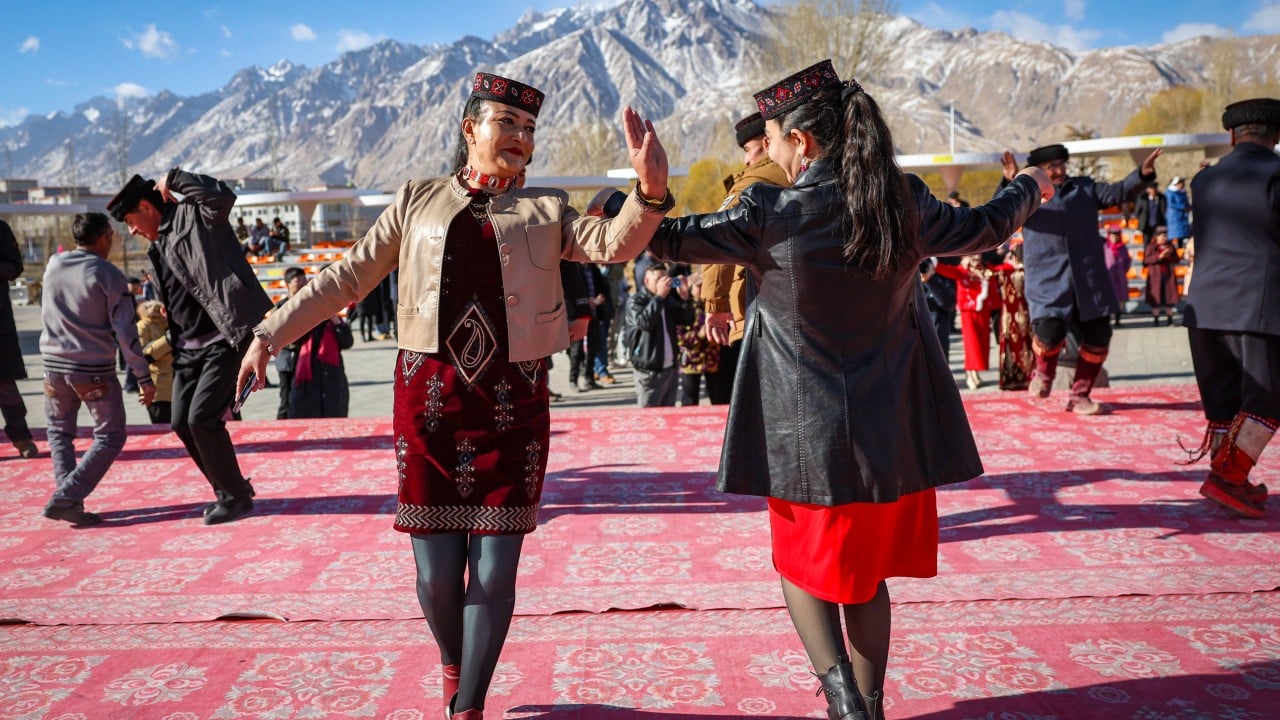
Similarly, Beijing’s "Wolf Warrior" style of digital pushback frequently backfires. Flooding Turkish hashtags with tone-deaf propaganda videos of smiling Uyghur dancers does not persuade Turkish skeptics; it infuriates them, turning passive observers into vocal critics and handing ammunition to anti-China politicians in Ankara. Information operations designed for domestic Chinese consumption often look grotesque and condescending when exported raw into a foreign cultural context.
How to Actually Read Sino-Turkish Tensions
If you are an analyst, investor, or journalist tracking the relationship between China and Turkey, stop monitoring hashtag volume. Volume measures bot activity and performative anger, not policy shifts.
Instead, track three concrete indicators that reveal the true temperature between Beijing and Ankara:
- Central Bank Swap Line Renewals and Expansions: Watch the monetary plumbing between the Central Bank of the Republic of Turkey (CBRT) and the People’s Bank of China (PBOC). When Ankara needs foreign currency liquidity to stabilize the lira, anti-China rhetoric from official channels drops to zero immediately.
- Visa and Residency Enforcement in Istanbul: Monitor the administrative treatment of the Uyghur diaspora in neighborhoods like Zeytinburnu and Sefaköy. Sudden crackdowns on NGOs, delays in long-term residency renewals, or quiet detentions signal that Ankara is making behind-the-scenes concessions to Beijing, regardless of what is trending on X.
- Chinese Foreign Direct Investment (FDI) Approvals: Pay attention to Turkish regulatory approvals for Chinese electric vehicle manufacturers (like BYD’s $1 billion plant deal in Manisa), battery suppliers, and port operators. Industrial policy tells you where Ankara’s true priorities lie.
Social media flame wars are designed to capture your attention and convince you that noise equals power. It does not. While nationalist accounts burn bandwidth trading insults over history and identity, diplomats and central bankers are quietly signing the contracts that actually decide who owns the infrastructure. Watch the wire transfers, not the timelines.