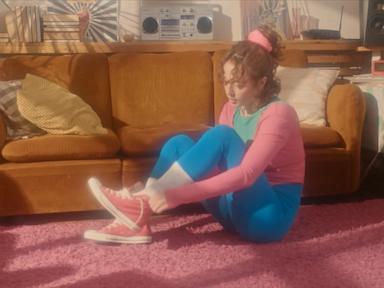
The casting of an untrained student scouted entirely through a social video platform for the lead role in the acclaimed film Dear You is not an isolated stroke of luck. It marks the acceleration of a quiet revolution. For decades, the path to Chinese screen stardom ran strictly through three elite institutions: the Beijing Film Academy, the Central Academy of Drama, and the Shanghai Theatre Academy. Today, that cartel is collapsing. Directors are bypassing traditional auditions entirely, using social media algorithms as their primary scouting departments to find raw talent capable of delivering the unvarnished realism modern audiences demand.
The shift is structural, economic, and permanent.
The Death of the Prestigious Screen Test
For generations, the "Big Three" acting academies held a monopoly on the faces seen on Chinese screens. Admission was a golden ticket, fiercely contested by hundreds of thousands of hopefuls who underwent grueling physical and artistic examinations. The industry assumed that years of classical training in vocal projection, stage movement, and literary analysis were mandatory prerequisites for carrying a feature film.
That assumption is dead.
Audiences have grown weary of the polished, clinical perfection taught in classical classrooms. Academy graduates often carry a theatrical stiffness that fails to translate to the intimate, high-definition demands of modern cinema. They project to the back row of a theater, even when the camera is inches from their face.
When the creators of Dear You sought their heroine, they did not send casting calls to agent offices in Beijing. They scrolled. They looked for someone who did not know how to act for a stage, but who knew how to exist naturally in front of a lens.
Modern filmmaking favors the hyper-realistic. Directors of independent and mid-budget dramas want faces that carry the weight of ordinary life, not the carefully curated symmetry of a professional model. A student filming mundane daily vlogs in a messy dormitory room offers a level of authenticity that cannot be manufactured in a rehearsal hall.
The Algorithmic Cattle Call
The mechanics of this new scouting pipeline are surprisingly systematic. Casting directors no longer wait for headshots. Instead, they employ dedicated teams to scrape platforms like Xiaohongshu, Bilibili, and Douyin, searching for specific micro-expressions, vocal cadences, and regional dialects.
This is algorithmic scouting. It treats social platforms as a massive, continuous screen test.
[Traditional Casting Pipeline]
Elite Academies -> Talent Agents -> Auditions -> Screen Tests -> Cast

[Algorithmic Casting Pipeline]
Social Video Platform -> Algorithmic Scraping -> Direct Outreach -> Immediate Cast
When a casting director watches a self-produced video on a phone, they see the performer in their natural habitat. They see how the individual reacts to light, how they handle silence, and how they connect with an audience without the aid of a script. The algorithm has already done the heavy lifting of audience testing. If a creator's quiet, reflective videos have garnered hundreds of thousands of views, it proves a fundamental cinematic truth: people like looking at them, and their presence commands attention.
This represents a massive democratization of opportunity, but it also introduces a cold, metric-driven cynicism to the creative process.
Cheap Talent with Built In Audiences
The rise of the amateur star is driven by harsh financial realities. The Chinese film industry has faced significant economic headwinds, with production budgets shrinking and investors demanding faster, more guaranteed returns on their capital.
Academy-trained actors, even those fresh out of school, come with expectations of standard industry rates, management representation, and union-adjacent demands. An amateur student discovered on a video platform does not. They are cheap. They are grateful. They are highly compliant on set, lacking the artistic egos that can sometimes derail independent productions.
More importantly, they arrive with an existing distribution channel.
When an actor with a following on a video platform is cast, the production inherits that audience immediately. The student's journey from an ordinary dorm room to a major film set becomes a compelling narrative that plays out in real-time across social networks. The marketing campaign for Dear You did not begin with a theatrical trailer; it began with the lead actress documenting her transition from student to film star on the very platform where she was discovered.
This built-in marketing loop reduces the financial risk for producers. The film secures a dedicated base of viewers before a single frame of footage is edited.
The Illusion of Democratic Casting
It is tempting to view this shift as a victory for the common person, a breaking of the elitist gatekeeping that has long characterized the entertainment industry. But a closer inspection of the system reveals a different, more precarious reality for these overnight sensations.
Classical training exists for a reason. It equips an actor with the psychological tools necessary to handle the emotional toll of intense dramatic work. An amateur actor might deliver a devastatingly authentic performance in their first film because they are essentially playing a version of themselves, tapping into raw, unmediated personal experience.
But what happens on the second film? Or the third?
Without a foundation in technique, many of these viral stars struggle to replicate their initial success when asked to play characters distant from their own lived experiences. They lack the physical stamina required for sixteen-hour shoot days, the vocal control to prevent strain, and the emotional boundaries needed to step out of a traumatic scene once the director calls cut.
Once the novelty of their discovery wears off, the industry often discards them in favor of the next viral sensation. The algorithmic pipeline is efficient, but it is also entirely indifferent to the long-term career survival of the talent it consumes.
The success of Dear You will undoubtedly inspire a wave of similar casting experiments across the industry. Production houses will continue to monitor feed trends, looking for the next untrained face to elevate to stardom. For the students filming vlogs in their bedrooms, the camera on their phone is no longer just a tool for self-expression. It is a lottery ticket. But like all lotteries, the system is designed to benefit the house, leaving the winners to navigate the harsh realities of sudden fame without a script.